


Categorization:Harness Component
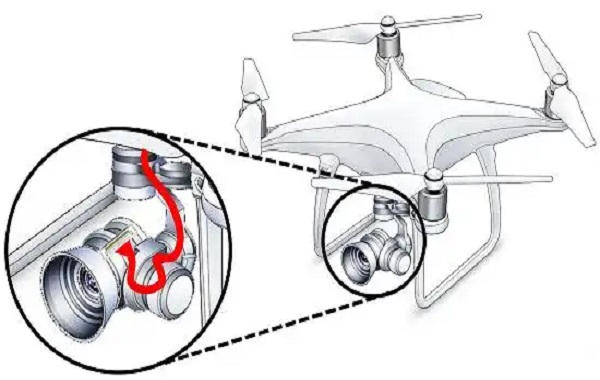
One, the shielding advantages of extremely fine coaxial cable束
Extremely thin coaxial cable束 adopts coaxial structure, with the inner conductor and shielding layer distributed concentrically. The shielding layer is usually composed of metal braid or metal foil, which can effectively isolate external electromagnetic interference. At the same time, the reasonable design of the signal loop and the shielding layer structure can significantly reduce crosstalk and attenuation during the transmission of high-frequency signals. In drones, the stability of image transmission, flight control signals, and sensor data depends on this shielding advantage, greatly enhancing the system's anti-interference capability.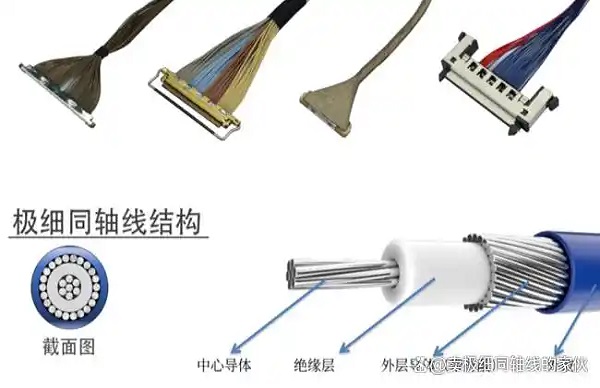
Lightweighting and Flexible Design
The flight performance of drones highly depends on weight control. Extremely thin coaxial cable bundles have a small diameter, light weight, and good flexibility, allowing for complex wiring in limited spaces. This design not only saves internal space of the body but also reduces signal loss caused by cable bending, further ensuring the stability of data transmission and providing support for high-performance operation of drones.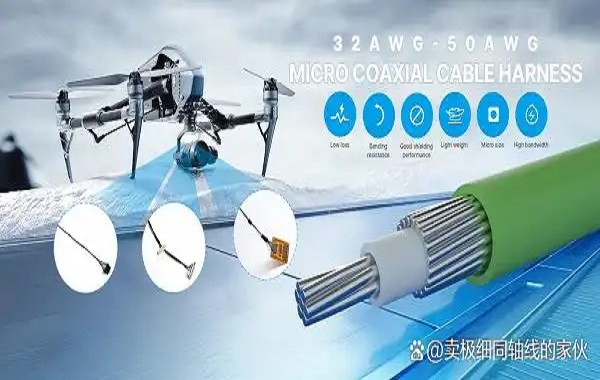
Stability and Reliability
Drones often operate in complex environments, susceptible to external electromagnetic and weather conditions. The ultra-fine coaxial cable bundle, with its high-density shielding and durable structure, can maintain signal stability even after long-term use, providing continuous and reliable signal support for flight control systems, communication modules, and sensors, ensuring stable flight of drones in complex mission environments.
“Without the consent or authorization of this site, no one shall reproduce, reprint, distribute, cite, change, broadcast or publish the content in whole or in part in any form, nor shall there be any other violation of the copyright of this site.