


Categorization:Harness Component

High-speed stability requirements for AI systems
The internal data links of AI devices are extremely complex. High-speed signal channels such as MIPI, eDP, PCIe, and USB4 require stable transmission at rates of several Gbps or even tens of Gbps. Any distortion or delay in the signal may cause abnormal model computation. Extremely fine coaxial cables, with precise impedance control and excellent electromagnetic shielding performance, can maintain high signal integrity in high-speed differential signals, significantly reduce EMI interference and crosstalk risks, thereby ensuring the high-speed and stable operation of AI systems.
Customizable structure to meet diverse needs
Different AI system architectures, modules, and interfaces have differentiated requirements for cable length, bending radius, and interface type. Customizable ultra-thin coaxial cables can flexibly adjust conductor diameter, sheath material, and shielding layer structure, and can be designed for equal-length differential pairs for MIPI or PCIe links. This customized flexibility allows developers to accurately balance signal performance, space utilization, and heat dissipation requirements, accelerate the prototype verification and product development cycle, and meet the diverse needs of AI applications.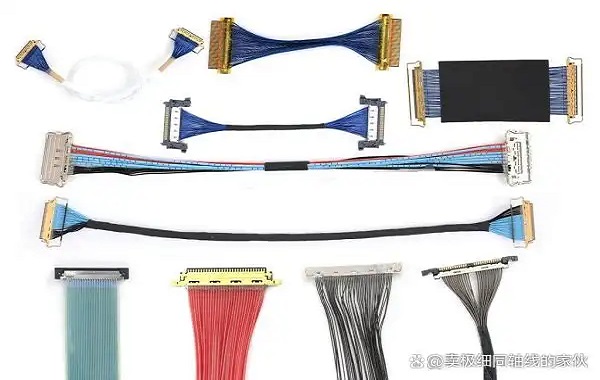
Three, reliable connection ensures long-term stability
AI equipment operates for long periods in high-frequency, high-temperature, or complex environments, which places extremely high requirements on the heat resistance and bend resistance of cables. High-quality ultra-fine coaxial cables use silver-plated copper conductors and high dielectric insulation materials, ensuring low signal attenuation while also enhancing fatigue resistance, supporting over a million dynamic bends. This high-reliability solution provides stable connections for AI robots, vision modules, and edge computing platforms, serving as the foundation for the long-term stable operation of the system.
“Without the consent or authorization of this site, no one shall reproduce, reprint, distribute, cite, change, broadcast or publish the content in whole or in part in any form, nor shall there be any other violation of the copyright of this site.