


Categorization:Harness Component
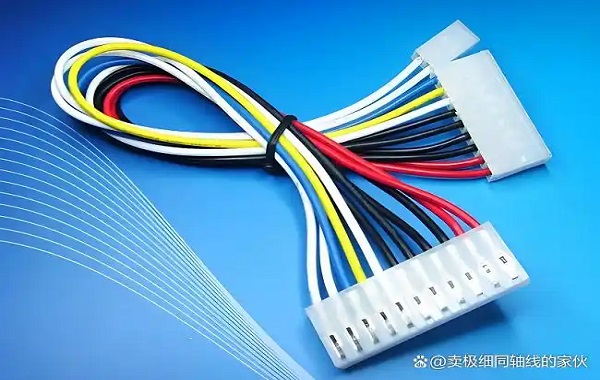
A: Fine coaxial beam transmission and quality
The extremely fine coaxial cable束 consists of a central conductor, insulating layer, shielding layer, and outer sheath, and is widely used for internal high-speed signal transmission in applications such as high-speed camera modules, AI platforms, drones, and vehicle-mounted systems. In these scenarios, signal performance not only depends on conductivity, but is also affected by impedance matching, insertion loss and return loss, crosstalk and EMI, as well as delay and phase error factors. The traditional concept of "good enough conductivity" is not sufficient to meet the requirements for stable transmission of high-speed signals.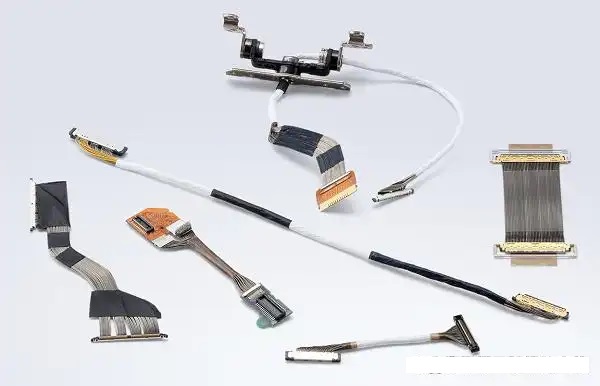
High-speed signal turns conduction into conduction quality
In high-speed signal links, cables are no longer just conductors but transmission media, with signal propagation more like the coupling of electromagnetic waves between conductors and media. Any impedance mismatch, shielding defect, or processing error can cause reflections, interference, or communication errors. Therefore, determining whether a cable harness is qualified is not about whether it can be powered on, but about whether the signal can pass through stably, completely, and at high speed, ensuring the reliability of high-speed data transmission.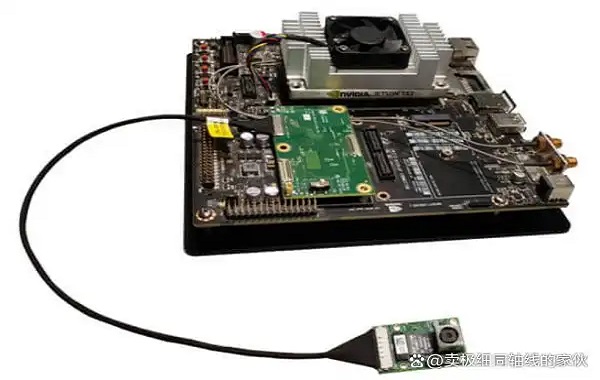
Three, the design误区of just making it conductive
If still using the thinking of high-speed harness design, it may lead to poor signal integrity, high system error rate, insufficient reliability, and difficult debugging. The problem is often not a broken wire, but signal attenuation or phase drift, which is difficult to identify with the naked eye. Modern high-speed systems require harnesses to have stability, low loss, anti-interference, and high consistency on the basis of ensuring conductivity to truly support high-performance applications.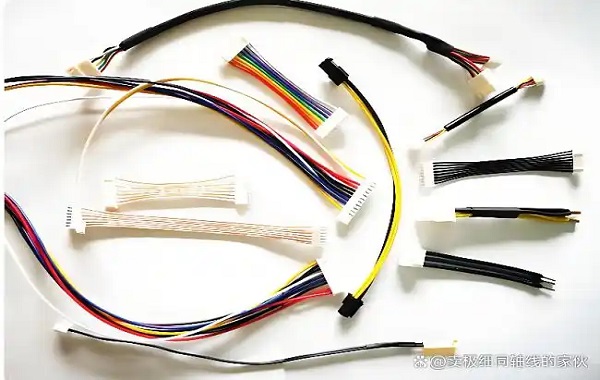
“Without the consent or authorization of this site, no one shall reproduce, reprint, distribute, cite, change, broadcast or publish the content in whole or in part in any form, nor shall there be any other violation of the copyright of this site.