

Categorization:Harness Component

High-Speed Characteristics and Challenges of MIPI Interface
MIPI interfaces in the Jetson Orin platform use differential signal transmission with speeds reaching several Gbps. High-speed signals have very high requirements for impedance matching, timing consistency, and anti-interference ability; any slight deviation can lead to data loss, image distortion, or system crash. Therefore, the cable harness connecting the camera to the motherboard must have precise impedance control, low loss and crosstalk, good shielding, and length delay matching to ensure stable and reliable high-speed data transmission.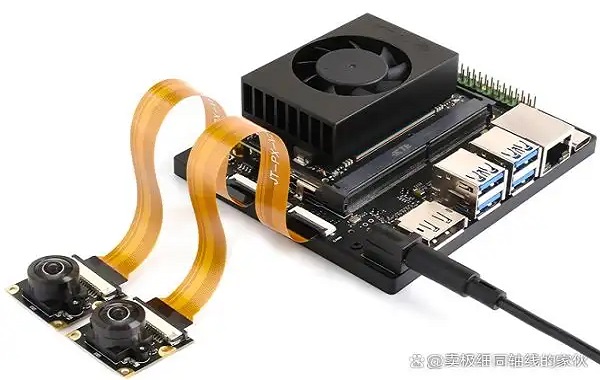
The structural advantages of ultra-fine coaxial beam
The extremely thin coaxial cable bundle consists of a central conductor, insulating layer, woven shield layer, and outer sheath, with a diameter of only 0.8~1.3mm, yet it can carry high-frequency high-speed signals. Compared to FFC or ordinary ribbon cables, it has higher signal integrity, excellent flexibility, and high-density lightweight characteristics, making it suitable for wiring in narrow spaces or movable structures. It can be customized for the number of channels, length, impedance, and interface form, enabling it to meet the different system requirements of the Jetson Orin multi-channel MIPI interface. It is an ideal cable material for achieving high bandwidth, low interference, and high reliability.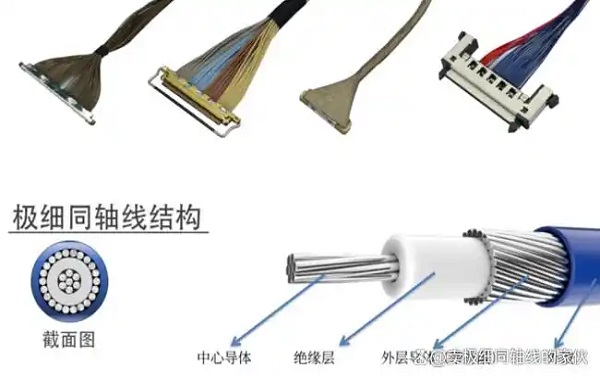
Three, strict requirements of Jetson Orin platform for wiring
The Jetson Orin multi-camera system requires each MIPI channel to have precise impedance, consistent delay, and high shielding performance and mechanical reliability. In environments of repeated bending, vibration, or insertion and removal, the cable harness must still maintain signal integrity. System-level verification includes signal integrity analysis, insertion and removal life, bending, and high-temperature aging tests. Only high-quality, precision-manufactured ultra-fine coaxial cable harnesses can meet the strict requirements of the high-speed MIPI interfaces on the Jetson Orin platform and achieve synchronous, high-speed, and reliable data transmission over multiple channels.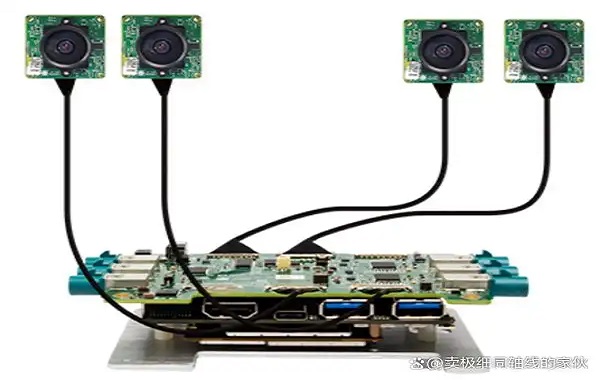
“Without the consent or authorization of this site, no one shall reproduce, reprint, distribute, cite, change, broadcast or publish the content in whole or in part in any form, nor shall there be any other violation of the copyright of this site.