


Categorization:Harness Component
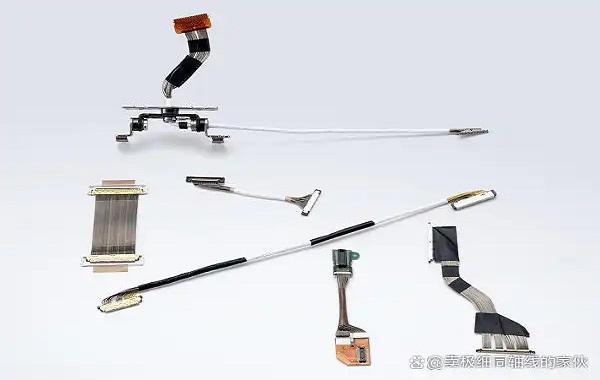
The structural characteristics of extremely fine coaxial lines
The ultra-fine coaxial cable is composed of a central conductor, insulating medium, shielding layer, and outer sheath. The diameter is usually within the range of 0.3mm to 0.5mm. Although tiny in volume, it has excellent shielding performance and signal integrity. Compared with traditional ribbon cables or flexible flat cables, its independent shielding structure can significantly reduce electromagnetic interference (EMI) and maintain the stability of high-speed signal waveforms, making it the preferred cable material for high-speed interfaces such as MIPI, eDP, USB4, PCIe, and others. High-quality materials and precise manufacturing ensure impedance continuity and low loss characteristics, enabling it to perform exceptionally well in high-speed transmission scenarios.
Two, key factors affecting transmission rate
The transmission rate of extremely thin coaxial cables is affected by various factors, including conductor line diameter and material loss, signal integrity, transmission length, and shielding and interference control. The finer the conductor, the more pronounced the high-frequency loss, so silver-plated copper or low-loss insulating materials are often used to reduce attenuation; impedance continuity and insertion loss directly determine inter-symbol interference and error rate; the longer the transmission length, the more serious the signal attenuation, and the performance is usually best within a few tens of centimeters; when multiple cables are densely routed, shielding and grounding design are crucial to ensuring the stability of high-speed signals. Rational design of these factors is necessary to achieve high-stability high-speed transmission in actual engineering.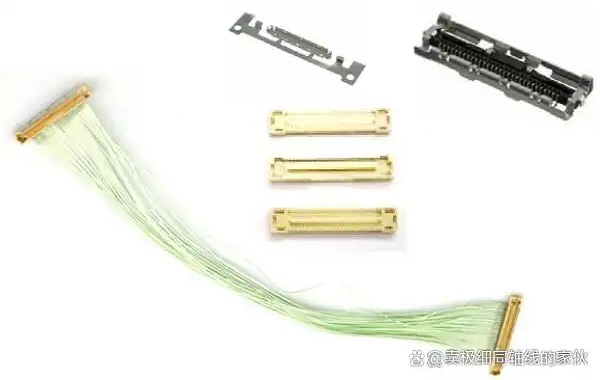
Three, practical speed and application suggestions for extremely fine coaxial lines
Based on application and experimental results, the transmission performance of ultra-fine coaxial cables can be divided into three levels: ordinary design 1-10 Gbps is suitable for MIPI D-PHY, LVDS, and USB3.0 interfaces; high-performance design 10-20 Gbps is widely used in eDP, PCIe Gen3-Gen4, and Thunderbolt3 systems; top-level solutions can support 30-40 Gbps per channel under conditions of high-quality shielding, short distance (10-30 cm), and high-precision assembly. In actual applications, it is recommended to prioritize short-distance high-speed interconnection, ensure impedance continuity and connector quality, pay attention to shielding design, and reserve speed margin to ensure system stability and reliability.
“Without the consent or authorization of this site, no one shall reproduce, reprint, distribute, cite, change, broadcast or publish the content in whole or in part in any form, nor shall there be any other violation of the copyright of this site.