


Categorization:Harness Component
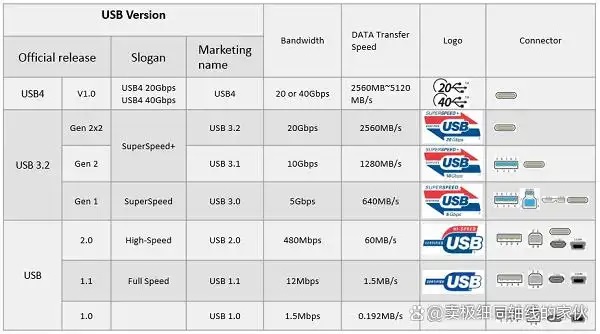
Structure and Characteristics of Ultra-Fine Coaxial Beam
The extremely fine coaxial cable bundle consists of a central conductor, insulating medium, shielding layer, and outer sheath, with a diameter usually below 0.5 mm. Compared with traditional twisted pair cables, it has more stable impedance, lower signal loss, and superior shielding performance. The precise coaxial structure enables it to maintain signal integrity in multi-channel, high-speed differential signal transmission, making it particularly suitable for laptops, camera modules, industrial equipment, and VR/AR devices that are sensitive to space and require high-speed transmission.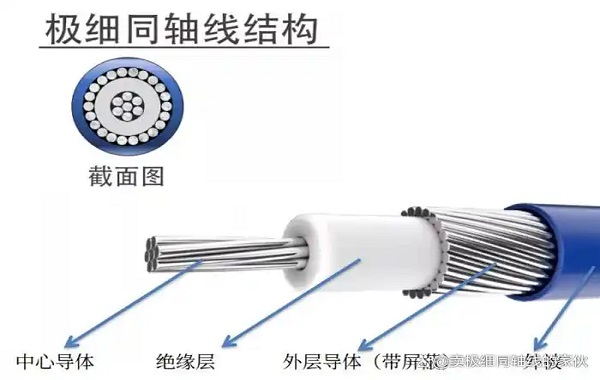
Secondly, the new requirements for harnesses due to USB interface upgrade
Each USB upgrade brings higher data rates and signal frequencies, with USB 3.x reaching 5~20 Gbps and USB 4 capable of up to 40 Gbps. Traditional twisted pair structures are difficult to meet the requirements of signal integrity. In high-speed USB systems, cables not only need to carry high-frequency signals but also need to兼顾power supply, video, and multi-channel data transmission tasks, which sets extremely high standards for impedance consistency, signal attenuation, and shielding performance. Ultra-thin coaxial cables, with their stable differential impedance, low loss, and excellent shielding properties, have become the ideal choice for high-speed USB interfaces.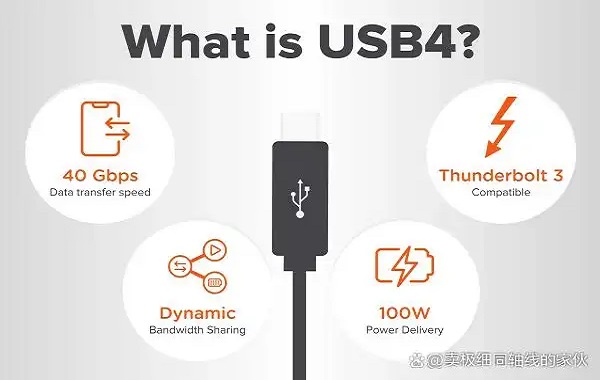
Three, ultra-fine coaxial cable supports USB3.x and USB4 capabilities
The experiment and application show that ultra-fine coaxial cable束 can support high-speed differential signals ranging from 5 Gbps to 40 Gbps, maintaining a differential impedance of 90~100Ω, ensuring the opening of high-speed signal eye diagrams. Within the frequency range of 10~20 GHz, it still maintains low reflection and low insertion loss, meeting the electrical performance requirements of USB Gen2×2 (20 Gbps) and USB4 Gen3 (40 Gbps). Its shielding structure can also effectively reduce EMI interference, ensuring signal stability in a multi-channel parallel transmission environment.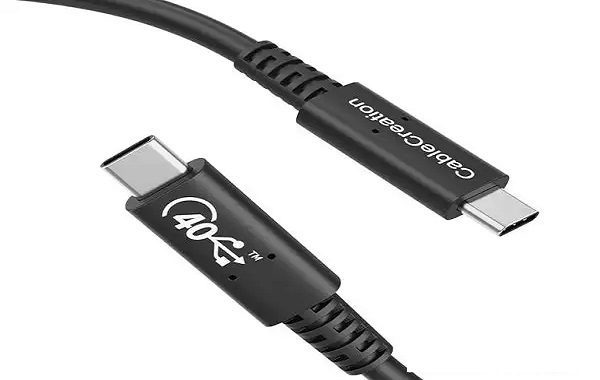
Four, Application Advantages and Design Considerations
Extremely thin coaxial cable束 is characterized by excellent signal integrity, strong shielding capability, small size, flexible wiring, and strong compatibility, while also featuring high reliability and resistance to bending. During design, attention must be paid to strictly controlling impedance matching, reasonably controlling cable length, avoiding excessive bending, and ensuring effective shielding grounding. Typical applications include internal USB-C module connections in laptops, high-end monitors and docks, AI camera modules, and industrial automotive electronic devices, ensuring signal integrity and reliability in high-speed, multi-channel environments.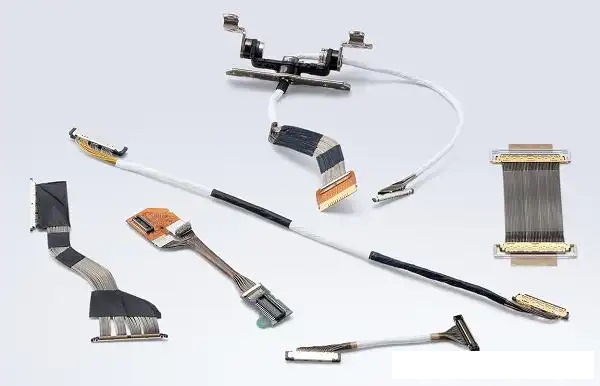
“Without the consent or authorization of this site, no one shall reproduce, reprint, distribute, cite, change, broadcast or publish the content in whole or in part in any form, nor shall there be any other violation of the copyright of this site.