

Categorization:Harness Component
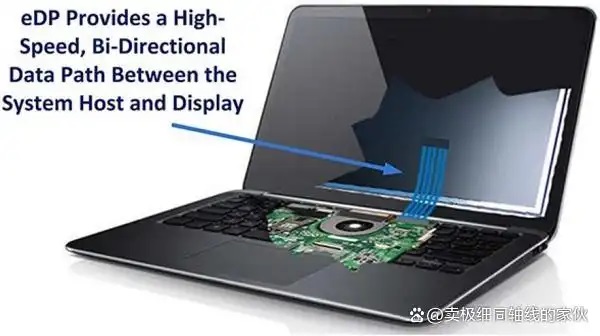
Why is the eDP signal prone to distortion?
eDP signal belongs to high-speed differential signal, with transmission rates typically reaching 2.7Gbps and even above 5.4Gbps. At such high speeds, any impedance mismatch, crosstalk, or attenuation may cause waveform distortion and eye diagram closure, leading to screen flickering, color distortion, brightness abnormalities, and even issues like screen flickering or black screen. Factors affecting these problems include cable structure, conductor material, wiring layout, and interface welding accuracy, with the selection of the wire itself being the core factor determining signal quality.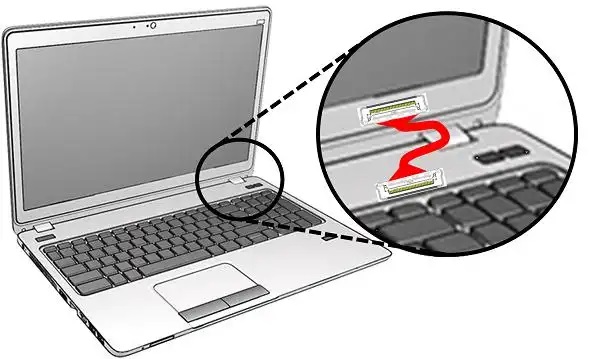
The importance of ultra-fine coaxial beam
Compared to traditional FFC (flexible flat cable) solutions, ultra-fine coaxial cable assemblies (micro coaxial cable) are favored as the preferred solution for high-resolution eDP cable assemblies due to their independent shielding, stable impedance, and low-loss characteristics. Each ultra-fine coaxial cable consists of a central conductor, an insulating layer, a shielding layer, and an outer sheath. Silver-plated copper conductors improve high-frequency transmission efficiency, the precise shielding layer effectively suppresses electromagnetic interference and reduces crosstalk, and strict impedance control ensures the complete transmission of differential signals. For 4K and even 8K display modules, ultra-fine coaxial cable assemblies can ensure signal stability and image clarity, and have become the standard configuration for high-end laptops, vehicle-mounted control systems, and industrial display systems.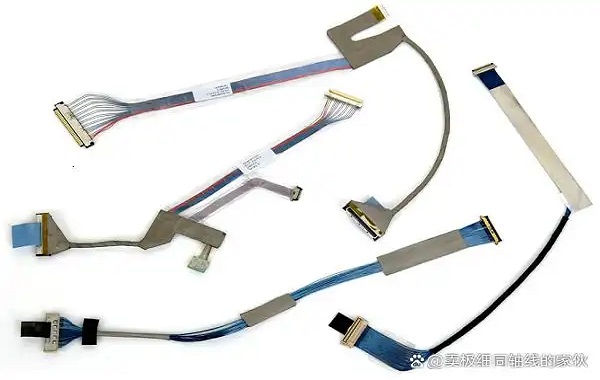
From manufacturing to assembly matching problem
The signal quality of the eDP interface not only depends on the wire material but is also closely related to the welding accuracy of the connector, cable length, bending radius, and wiring layout. Any minor error in the process may cause discontinuity in the signal path, affecting transmission performance. In practical applications, an excellent cable design usually combines system impedance, wiring planning, and equipment EMC requirements for comprehensive optimization to ensure the stability and reliability of the whole machine. Only by pairing high-quality ultra-fine coaxial cables with precise technology and design verification can the potential of the eDP high-speed interface be truly released, achieving stable and clear display effects.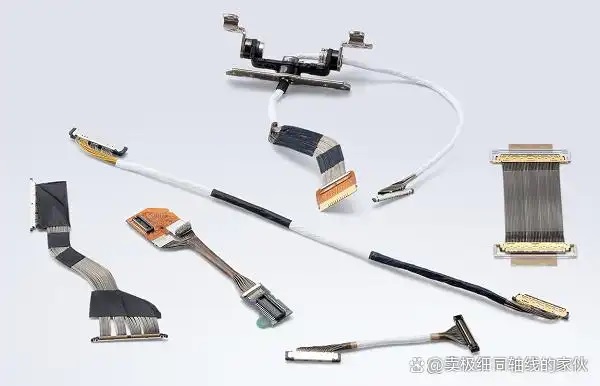
“Without the consent or authorization of this site, no one shall reproduce, reprint, distribute, cite, change, broadcast or publish the content in whole or in part in any form, nor shall there be any other violation of the copyright of this site.