

Categorization:Harness Component
LVDS signal characteristics
LVDS employs low voltage differential transmission, with paired signal lines effectively canceling out external interference, featuring advantages such as low power consumption, low noise, high speed, and strong anti-interference capability, and is widely used in display panels, camera modules, and industrial vision systems. Its performance highly depends on the cable structure, and impedance mismatch, crosstalk, or signal attenuation can lead to system instability, especially in high-speed and high-density applications, where strict requirements are placed on the wire materials.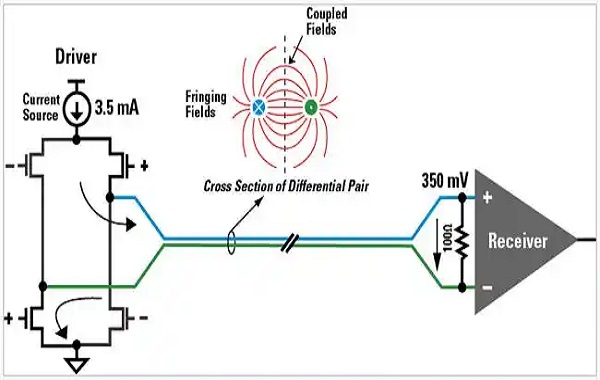
The advantages of ultra-fine coaxial beam
Extremely thin coaxial cable bundles consist of conductors, insulating layers, shielding layers, and outer sheaths. Their diameter is extremely small, allowing for high-density wiring in narrow spaces. They have the advantages of independent shielding to reduce interference, precise impedance control to reduce reflections, adaptability to high-frequency and high-speed transmission, and flexibility and compactness for routing in tight spaces. Compared to traditional twisted pairs or FFC ribbon cables, they can significantly improve signal integrity and stability in high-speed, high-density, and strong interference environments.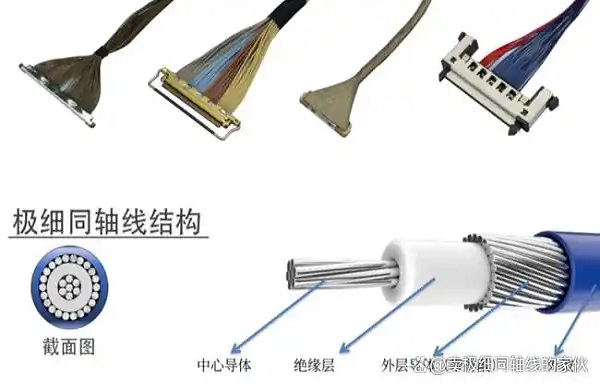
Is it the optimal solution for LVDS?
The extremely thin coaxial cable bundle is not the only choice for all LVDS applications. Its cost and wiring complexity are higher than that of twisted pair or FFC cables, and it has slightly lower flexibility and higher requirements for the symmetry of the wire pairs. Overall, in applications with high system speeds, strong interference, or limited space, the extremely thin coaxial cable bundle is the best solution; while in scenarios with moderate speeds, low interference, or cost sensitivity, shielded twisted pair or FFC cables still have advantages.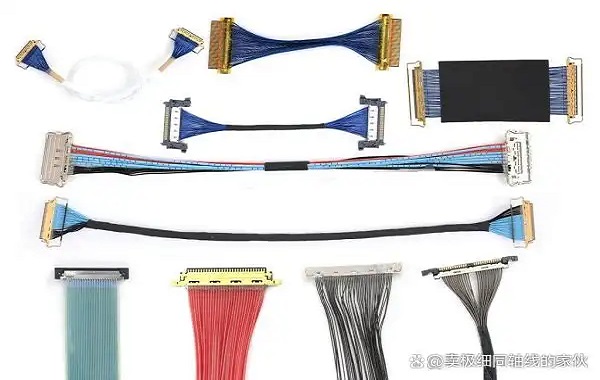
“Without the consent or authorization of this site, no one shall reproduce, reprint, distribute, cite, change, broadcast or publish the content in whole or in part in any form, nor shall there be any other violation of the copyright of this site.