With the widespread application of drones in aerial photography, surveying, security, and other fields, the performance requirements for camera modules are continuously increasing. The internal space of a drone's body is compact, and ordinary cables are difficult to meet both high-speed transmission and flexible wiring needs. The extremely thin coaxial cable (Micro Coaxial Cable) has become an ideal wiring solution for drone camera modules due to its high-speed transmission, lightweight, anti-interference, and high reliability, ensuring stable transmission of high-definition video and image data during flight.
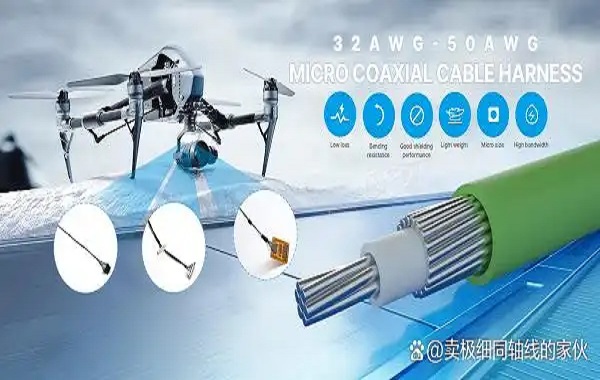
One, the core advantages of micro coaxial cable
Extremely thin coaxial cables have significant characteristics such as high-speed transmission, flexibility, lightness, anti-interference, and high reliability. They can stably support high-speed interfaces such as MIPI, USB3.0, and achieve real-time transmission of high-definition video and image data. With extremely small diameter and flexible wiring, they are very adaptable to the complex internal structural layout of drones. The multi-layer shielding and grounding design can effectively prevent electromagnetic interference during the flight process, and the connectors with mechanical locking structures can also prevent interface loosening caused by vibration or impact, thereby ensuring the long-term stable operation of the imaging system.
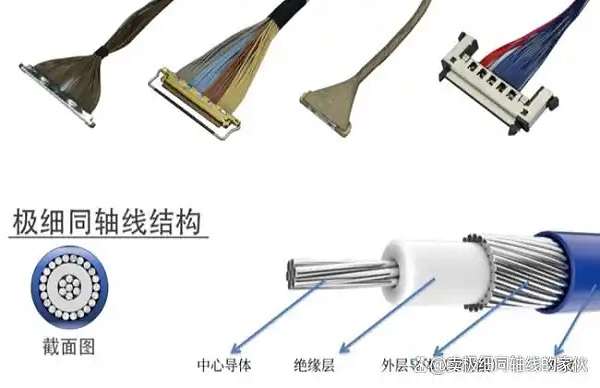
Part Two: Design and Selection of Drone Camera Module Interface
In the drone camera module, the micro coaxial cable can be matched with the module through horizontal or vertical insertion and removal interfaces. Horizontal insertion and removal is suitable for scenarios where the body height is limited, which can save vertical space; vertical insertion and removal is equipped with EMI shielding and multi-point grounding design, suitable for extremely compact camera modules. For different drone structures, customized cable materials with bend resistance and wear resistance can also be selected. When selecting, comprehensive consideration should be given to the interface standard, spatial layout, usage environment, and cable length to ensure the stability and mechanical reliability of signal transmission.
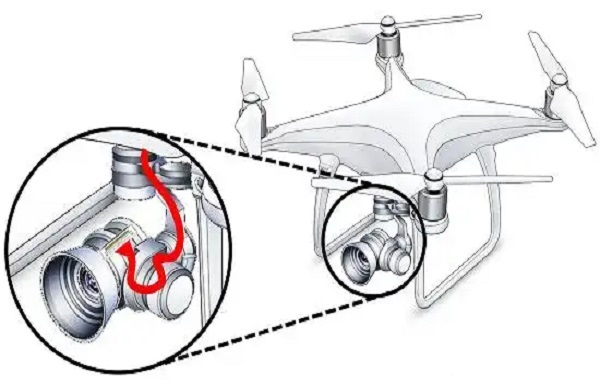
Three, Application Suggestions and Wiring Optimization
In the design of drones, it is particularly crucial to rationally plan the routing of extremely thin coaxial cables. The cable length should be controlled within an appropriate range, avoiding excessive length or excessive bending to prevent signal attenuation, and prioritizing interfaces with mechanical locking and high shielding performance in high-vibration environments. By optimizing cable routing and interface selection, the extremely thin coaxial cables can not only ensure high-speed image transmission for the drone's camera module but also enhance the overall stability and service life of the equipment, enabling drones to maintain excellent performance in complex environments.
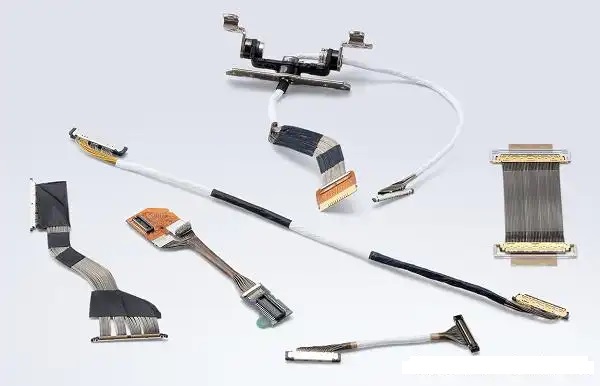
Extremely thin coaxial cable束, with its high speed, agility, anti-interference, and high reliability, has become the core solution for wiring drone camera modules. Through reasonable selection, interface matching, and wiring optimization, it can ensure stable and high-quality transmission of the imaging system under compact bodies and high-vibration environments.
I am
Suzhou Huichengyuan Electronic TechnologyWe have been focusing on the design and customization of high-speed cable harnesses and ultra-fine coaxial cable harnesses for a long time, providing reliable high-speed interconnect solutions for our customers. For more information or customization services, please contact
Manager Yin: 18913280527 (WeChat number same)。