


Categorization:Harness Component
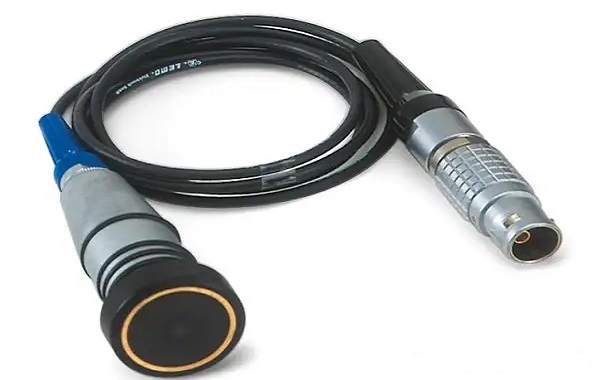
The signal transmission challenges of ultrasonic probes
The ultrasonic probe needs to simultaneously process high-frequency excitation signals and low-energy echo signals, both of which place extremely high requirements on the impedance control, shielding performance, and loss indicators of the transmission path. Any minor interference, reflection, or attenuation can lead to increased image noise, reduced resolution, and even misjudgment of detection results. Therefore, the beam must not only be capable of high-speed transmission but also take into account the integrity of the weak signals and the spatial constraints of the complex probe internal structure.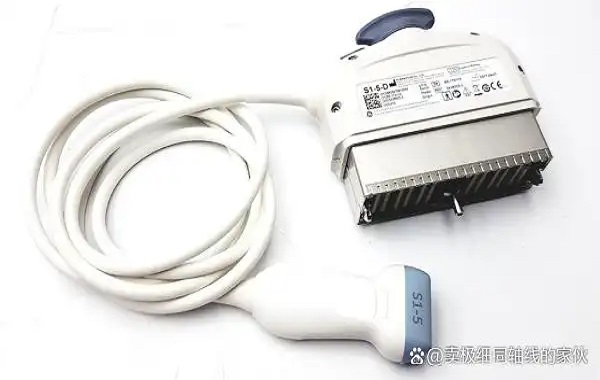
The core technical advantages of ultra-fine coaxial beam束
The ultra-fine coaxial cable bundle stands out in ultrasonic probes due to its highly structured advantages designed for signal integrity. Strict impedance control significantly reduces reflection and distortion; independent metal shielding effectively isolates external electromagnetic interference; the fine wire diameter at the 36-50AWG level achieves extremely dense wiring; excellent flexibility and bend resistance enhance the probe's stability and lifespan. More importantly, its low loss and low capacitance characteristics ensure the true reproduction of high-frequency signals during transmission, making imaging more refined and detection more accurate.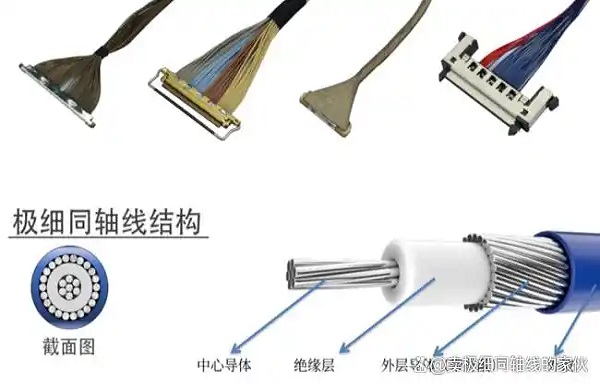
Section 3: Application Value and System Enhancement
Ultrasonic probes can achieve higher signal-to-noise ratio and clearer image performance with the help of extremely fine coaxial cable bundles, enhancing the accuracy of medical diagnosis and the reliability of industrial non-destructive testing. At the same time, the high-density integration and modular connection of the cable bundles help optimize the internal layout of the probe, accelerate product design iterations, and reduce assembly and maintenance difficulties. Against the backdrop of continuous evolution in high-performance probe design, micro coaxial cable has become an important driving force for system performance improvement.
“Without the consent or authorization of this site, no one shall reproduce, reprint, distribute, cite, change, broadcast or publish the content in whole or in part in any form, nor shall there be any other violation of the copyright of this site.