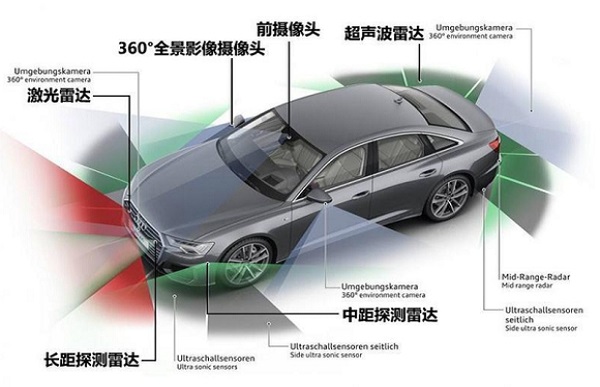
With the development of AI devices, vehicle-mounted cameras, laptops, and wearable devices, there is an increasing demand for high-speed transmission cables. Micro coaxial cable, due to its high bandwidth, small size, and strong anti-interference ability, has become an important interconnection method inside modern electronic devices. To achieve stable high-speed transmission, the core lies in the integrated design and control of capacitance, inductance, and impedance.
The impact of capacitance on high-speed signals
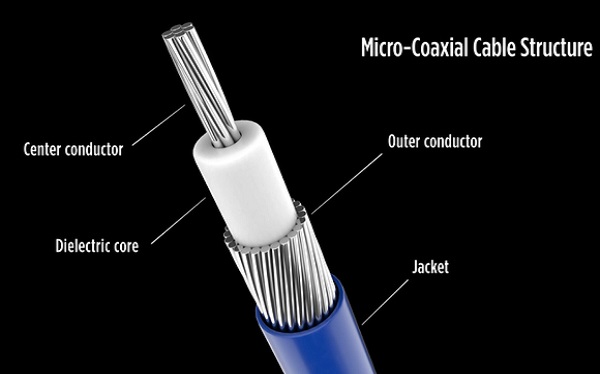
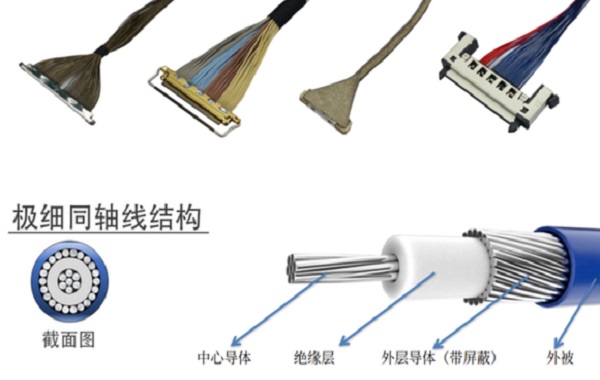
The ultra-fine coaxial cable consists of an inner conductor, a dielectric layer, and an outer shielding layer. The dielectric material determines the cable's capacitive characteristics. Excessive capacitance can easily lead to a slower signal rise time, affecting transmission speed. To enhance bandwidth performance, low dielectric constant materials are often used to maintain good signal transmission capability under high-frequency conditions and to reduce delay and coupling effects.
The role of inductance in electromagnetic control
When high-speed signals flow in the inner conductor, the outer conductor forms a reverse current, forming a closed magnetic path. Appropriate inductance can maintain waveform stability and reduce crosstalk; however, if the inductance is too high, it will cause high-frequency signal loss and waveform distortion. Therefore, in structural design, high-density weaving or metal foil layers are usually adopted to achieve lower inductance paths and more stable shielding performance.
III. Signal Integrity and Impedance Matching
Capacitance and inductance together determine the characteristic impedance of a very thin coaxial cable. When the impedance matches the system port, signal reflection is minimized, resulting in a clearer eye diagram. If the impedance deviation is too large, it can cause reflections and distortions, leading to an increase in error rate. Therefore, it is necessary to strictly control the thickness of the dielectric, the size of the conductor, and the shielding structure during manufacturing to ensure impedance consistency and improve overall signal integrity.
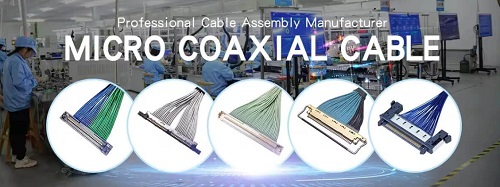
Extremely fine coaxial cables can achieve high-speed signal transmission in miniaturized structures, with their advantages coming from the precise balance of capacitance, inductance, and impedance. As the demand for bandwidth continues to increase in fields such as AI, vehicle-mounted imaging, VR/AR, and others, the electromagnetic structure design of such cables will become crucial for ensuring system performance.
I am
Suzhou Huichengyuan Electronic TechnologyFocused on the customized design of high-speed signal cables and ultra-thin coaxial cables, providing reliable high-speed interconnection solutions for customers. For further information, welcome to contact
Manager Yin: 18913280527 (WeChat number same)。