


Categorization:Harness Component
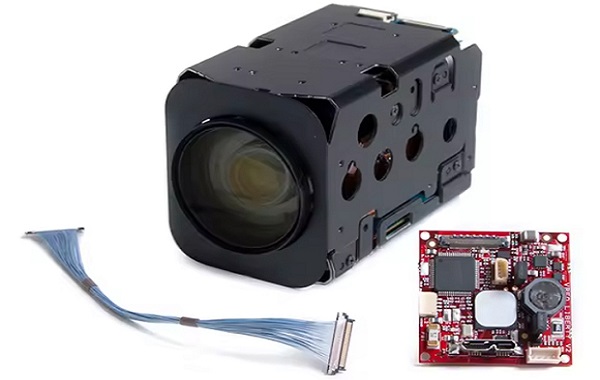
The causes of crosstalk
Crosstalk refers to the phenomenon where a signal is conducted from one wire to a neighboring wire, mainly originating from capacitive coupling and inductive coupling. When the wires are too close to each other, parasitic capacitance will partially transmit the signal to the adjacent wire, and the magnetic field generated by high-speed current will also induce voltage, forming induced crosstalk. In addition, incomplete shielding or poor grounding will amplify the crosstalk effect, and discontinuous impedance will also cause reflected wave interference to adjacent channels, further affecting the signal quality.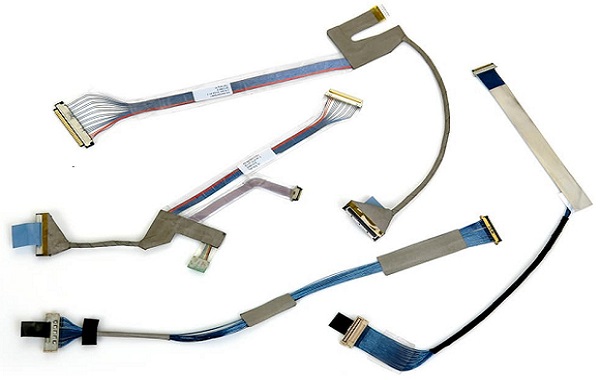
Design Strategies for Reducing Crosstalk
To achieve stable high-speed signal transmission, optimization is required in structural design, wiring, and shielding strategies. Maintaining appropriate spacing between wires and avoiding long-distance parallel arrangement of multiple high-speed signal lines can reduce capacitive and inductive coupling. Adopting staggered, layered, or crossover wiring, as well as a complete and continuous shielding layer and reliable grounding, can help to minimize interference. Controlling impedance consistency and using differential design and local filtering or damping elements when necessary can further suppress high-frequency noise and enhance anti-crosstalk capability. Good manufacturing processes and simulation verification can also ensure stable performance of the cable harness in actual application.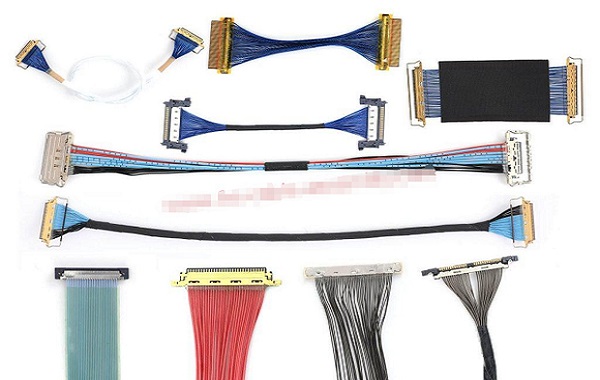
Practical Experience and Application
In practical projects, engineers often use methods such as grouping layouts, adding grounding sleeves or metal isolation layers through high-speed interfaces, designing impedance gradient structures, and layering management of different frequency channels to reduce crosstalk. The combined use of these methods can effectively control crosstalk, ensuring stable, low-noise, and high-reliability high-speed signals in complex environments, and ensuring the overall performance and signal integrity of the whole machine.
“Without the consent or authorization of this site, no one shall reproduce, reprint, distribute, cite, change, broadcast or publish the content in whole or in part in any form, nor shall there be any other violation of the copyright of this site.