


Categorization:Harness Component

Signal integrity and anti-interference capability
MIPI interfaces commonly reach speeds from several hundred Mbps to several Gbps. Insertion loss, reflection, crosstalk, and jitter on the line will directly affect signal quality. Extremely thin coaxial cables are composed of a central conductor, insulating medium, and outer shielding layer, which can stabilize characteristic impedance, reduce reflection and crosstalk, and maintain a clear signal eye diagram with low error rate. Compared with ordinary FFC or ribbon cables, extremely thin coaxial cables exhibit more reliable signal integrity under high-frequency and high-speed conditions.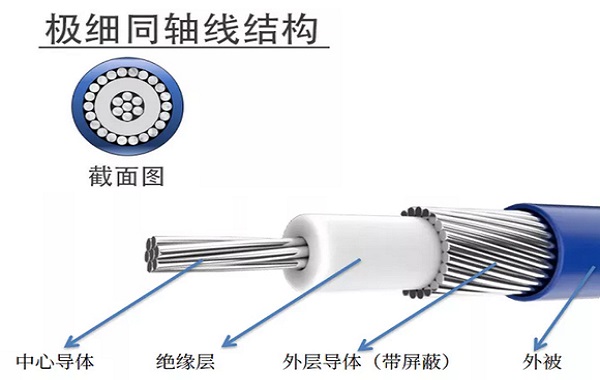
Spatial adaptability and mechanical flexibility
AI module, camera module, drones, robots, and other equipment have limited internal space, so cables need to be small, light, and flexible. The diameter of ultra-fine coaxial cable bundles is typically only a few hundred micrometers to 1 millimeter, making the wiring flexible and easy to arrange in compact spaces. They have high mechanical strength, strong anti-interference capability, and are more suitable for applications involving frequent bending and path turns than traditional ribbon cables.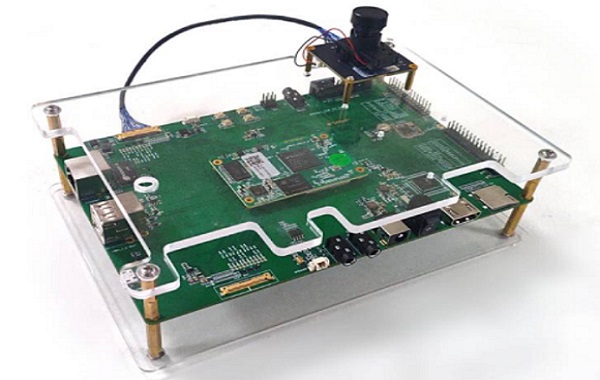
Section 3: Standard Compatibility and Transmission Performance
There are already several manufacturers providing micro-coaxial cable solutions that support high-speed protocols such as USB, eDP, MIPI, PCIe, such as I-PEX CABLINE series, which facilitate the reuse of design experience between different modules and reduce the complexity of debugging. In short-distance transmission, the extremely fine coaxial cable has low attenuation and stable impedance, combined with reasonable termination matching and cable length control, which can ensure stable transmission of high-speed signals and avoid errors and dropped frames.
“Without the consent or authorization of this site, no one shall reproduce, reprint, distribute, cite, change, broadcast or publish the content in whole or in part in any form, nor shall there be any other violation of the copyright of this site.