

Categorization:Harness Component
Part 1: Characteristics and Challenges of Ultra-Fine Coaxial Beam
The extremely fine coaxial cable束 has advantages such as compact structure, high flexibility, and light weight, making it very suitable for applications in areas such as laptop screen hinges that are narrow and require frequent bending. At the same time, the coaxial shielding structure naturally has a certain anti-interference ability. However, due to its fine size, the shielding layer is relatively thin and the space is limited. If reinforcement or signal optimization is not carried out during the design and processing, its anti-interference ability may not fully meet the requirements of high-speed video signals, leading to display anomalies.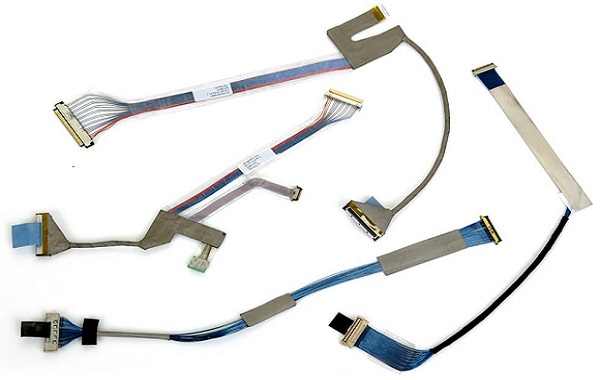
Part Two: Common Interference Sources of Notebook Screen Wires
In practical applications, screen lines are subject to interference from various sources, including high-frequency noise from switching power supplies, backlight driving lines, radio frequency interference from wireless modules, and ground loop problems caused by structural limitations. At the same time, signal coupling may occur due to close parallel wiring with USB, HDMI, power lines, etc., and mechanical fatigue during long-term use may also lead to damage to the shielding layer. Only by fully understanding the sources of interference can effective optimization be carried out at the design stage.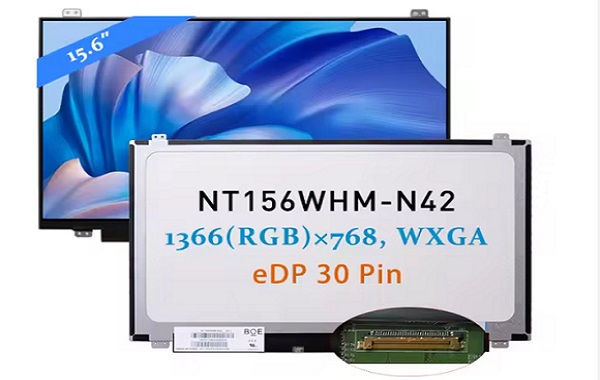
Three: Design Strategies for Enhancing Anti-Interference Ability
The anti-interference capability of notebook screen cables can be improved from multiple aspects such as shielding structure, grounding method, filtering suppression, and wiring optimization. For example, using a composite shielding structure to improve coverage, ensuring that the shielding layer is reliably grounded at both ends; using ferrite magnetic rings or common-mode inductors to suppress high-frequency interference; shortening the screen cable length and avoiding high-voltage and strong interference paths; ensuring the symmetry of differential signals, reducing common-mode noise. In addition, high-quality insulation materials and bending-resistant structural design can also improve the stability of the screen cable during long-term use.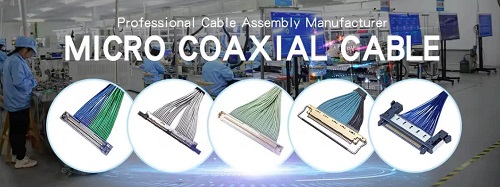
“Without the consent or authorization of this site, no one shall reproduce, reprint, distribute, cite, change, broadcast or publish the content in whole or in part in any form, nor shall there be any other violation of the copyright of this site.