


Categorization:Harness Component
One, advantages and application requirements of ultra-fine coaxial beam
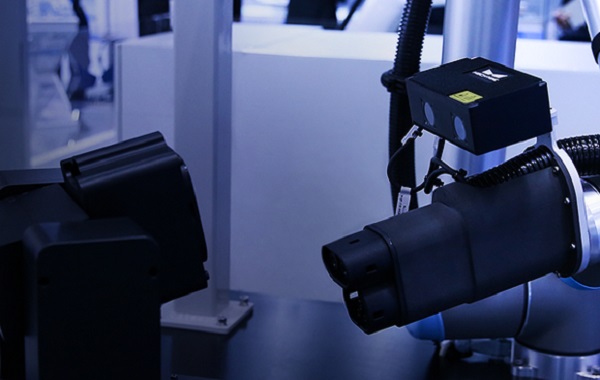
Extremely thin coaxial cable bundles have small dimensions and strong flexibility, maintaining excellent signal transmission capabilities in limited spaces, making them particularly suitable for the small structural layouts of automated equipment. Their coaxial shielding structure can significantly reduce electromagnetic interference and improve the stability of the control system. In application scenarios that require real-time and high reliability, such as industrial robots, intelligent detection equipment, and servo control systems, they can withstand frequent bending and maintain long-term stable operation, serving as a key component in high-speed control links.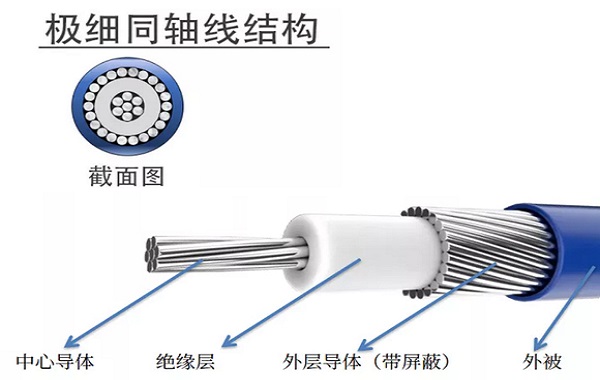
Typical application scenarios and their value
In the automated production line, extremely thin coaxial cable bundles are commonly used for data transmission in high-speed camera modules, signal chains for precise sensors, and control paths for servo motors. They ensure that image acquisition equipment outputs clear data in real-time, maintaining a high response speed for the detection system; in motion control, they provide stable command transmission to avoid positioning or motion errors caused by signal distortion. At the same time, their anti-interference capability makes them particularly suitable for workshops with complex electromagnetic environments, improving the overall system reliability.
Key Selection Criteria for Ultra-Fine Coaxial Cable Assemblies
To ensure that the harness operates at its best in an automated system, it is necessary to comprehensively consider the internal space layout of the equipment, the bending life of the harness, the transmission frequency requirements, and the interface matching. Compact devices require harnesses with smaller wire diameters; equipment with more mechanical movement should prioritize bending resistance; high-speed data links must ensure signal integrity and low loss; and between different control units, it is also necessary to ensure the electrical and mechanical compatibility of the connectors. Rational selection can significantly improve the overall performance and service life of the equipment.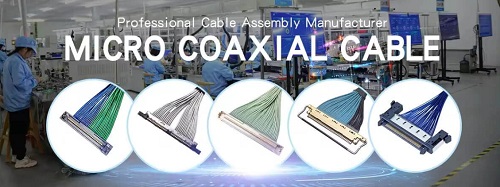
“Without the consent or authorization of this site, no one shall reproduce, reprint, distribute, cite, change, broadcast or publish the content in whole or in part in any form, nor shall there be any other violation of the copyright of this site.