

Categorization:Harness Component
In the internal design of AI servers, edge computing devices, and various high-performance systems, the selection of high-speed interconnect cables is often one of the most challenging aspects for engineers. Common solutions include OCuLink, SlimSAS, PCIe cables, as well as the rapidly emerging ultra-thin coaxial cables (Micro Coaxial Cable) in recent years.
Many people who are working on AI hardware solutions ask me: Which internal connection should I choose for the device—OCuLink, SlimSAS, PCIe cable, or extremely thin coaxial cable?
On the surface, they all achieve high-speed transmission, but the differences in performance, flexibility, and wiring difficulty are very obvious in different application scenarios. So, what are the respective advantages and disadvantages between them?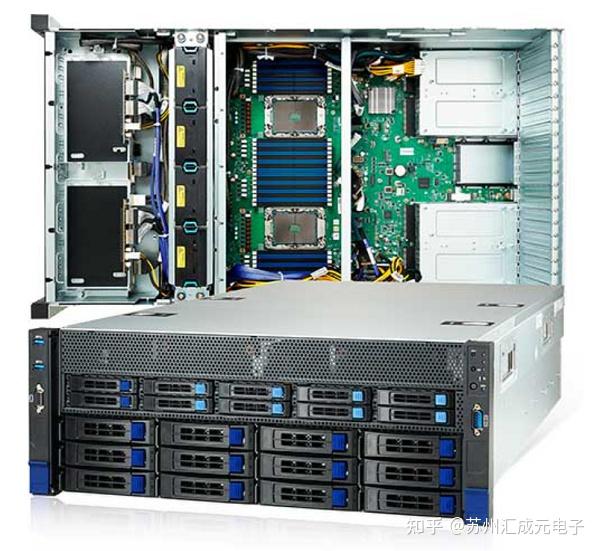
One, characteristics of three mainstream high-speed wires
1. OCuLink:
This is a high-speed connection solution with a high degree of interface standardization, commonly used in high-speed interconnection scenarios such as GPU and motherboard, storage expansion, etc. It has sufficient bandwidth and strong compatibility, but the cables are relatively thick and lack flexibility, making them unsuitable for small spaces.
2. SlimSAS:
SlimSAS is known for its miniaturization and high-density interface design, which is very suitable for storage interconnection within servers. With compact arrangement and stable signal transmission, it is somewhat laborious in complex wiring environments due to limited heat dissipation and flexibility.
PCIe cable:
As an extension of the PCIe bus, it has strong point-to-point transmission capabilities and high protocol compatibility, but its thick wire diameter and difficulty in bending make it not very friendly for compact structures like AI devices.
The common points of these three types of cables are standardization, maturity, and ease of expansion. However, when they are used internally in compact AI systems, they tend to be somewhat "bulky," limiting their space utilization and wiring flexibility.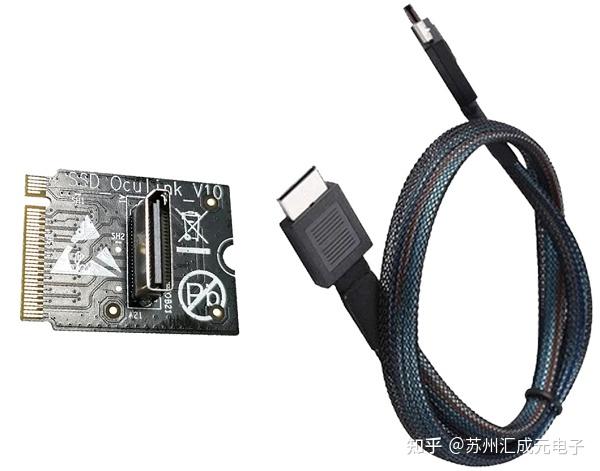
Unique Advantages of Ultra-Fine Coaxial Cable (Micro Coaxial Cable)
In miniaturized AI modules, camera modules, or edge computing devices, an increasing number of engineers tend to choose ultra-fine coaxial cables. The main reasons are as follows:
2.1 High bandwidth, low loss
Extremely thin coaxial cables can stably support high-speed signal transmission for MIPI, PCIe Gen5/Gen6, etc., effectively avoiding eye diagram collapse and reflection issues.
2.2 Excellent flexibility and clothability
The wire diameter is only about 0.2~0.3mm, allowing for flexible wiring in extremely compact body structures, particularly suitable for close-range connections between chips and modules.
Excellent anti-interference performance
The coaxial structure naturally possesses excellent shielding characteristics and can maintain signal integrity in AI high-frequency computing environments.
2.4 Lightweight Design
Compared to traditional high-speed cables, ultra-thin coaxial cables are lighter and are very suitable for the design requirements of mobile devices and edge terminals.
In short, when a project requires high-speed transmission, small size, and flexible routing at the same time, ultra-thin coaxial cables are the more suitable solution.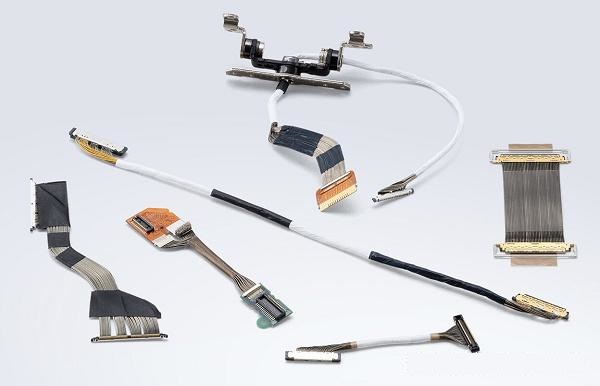
How to choose? The scene determines the answer.
Different application scenarios have different requirements for wire materials:
3.1 If it is a standard expansion between board cards (such as the interconnection between GPU and motherboard), OCuLink or PCIe cable is the preferred choice, as standardized interfaces can reduce design risks.
3.2 If it is about storage interconnection within the case, SlimSAS has an advantage due to its high-density structure.
3.3 For precise interconnections inside AI chips, camera modules, or acceleration cards, extremely thin coaxial cables are the best choice. They not only solve the problem of limited space but also balance high speed and stability.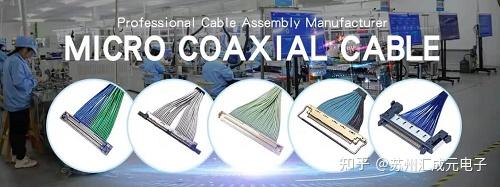
Overall, OCuLink, SlimSAS, PCIe cables, and ultra-thin coaxial cables each have their own advantages: the former excel in expandability, standardization, and interface compatibility; while ultra-thin coaxial cables are more in line with the design trends of the new generation of AI devices in terms of flexibility, miniaturization, and high-speed transmission.
From my actual experience, as AI devices continue to shrink in size and improve in speed, the value of extremely thin coaxial cables will become increasingly prominent.
I am[Suzhou Huichengyuan Electronic]Focusing on the research and development as well as customization of high-speed signal cable harnesses and ultra-fine coaxial cable harnesses, we are committed to providing customers with high-reliability and high-performance interconnection solutions. If you are facing cable selection or signal optimization issues, please feel free to contact us:Manager Yin 18913280527 (WeChat number same)。
“Without the consent or authorization of this site, no one shall reproduce, reprint, distribute, cite, change, broadcast or publish the content in whole or in part in any form, nor shall there be any other violation of the copyright of this site.