In modern electronic devices such as smartphones, tablets, foldable devices, laptops, AR/VR headsets, and medical testing instruments, the micro coaxial cable has become the key "blood vessel" for internal high-speed data transmission. It not only enables high-bandwidth signal transmission in narrow spaces but also possesses excellent electromagnetic interference (EMI) resistance. This article will analyze why the micro coaxial cable is so important in high-speed electronic devices from aspects such as structural design, size characteristics, impedance control, shielding methods, and high-frequency applications.
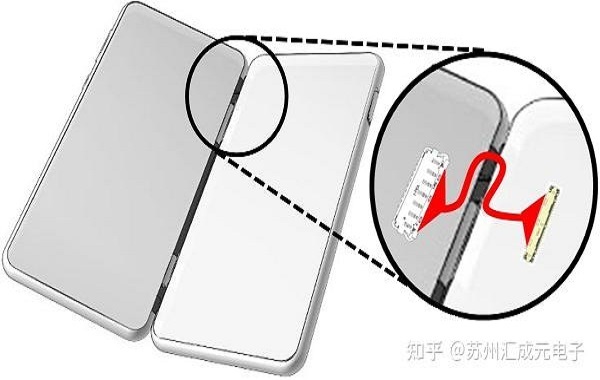
Axial structure and ultra-fine dimensions
The core advantages of micro coaxial cable come from its coaxial structure and slender design.
Coaxial structure
The ultra-fine coaxial cable is composed of a central conductor, dielectric insulating layer, metal shielding layer, and outer sheath. The central conductor is responsible for high-speed signal transmission, the dielectric insulating layer separates the conductor from the shielding layer to ensure impedance stability. The metal braid or metal foil shielding layer can block external EMI interference and prevent signal leakage, while the outer sheath provides mechanical protection and additional insulation. This "signal in the center, shielding on the outside" design is equivalent to establishing a fully enclosed metal tunnel for the signal channel, physically isolating interference to the maximum extent and ensuring stable signal transmission.
Extremely fine size
The diameter of micro coaxial cable is usually between 0.2–1.0 millimeters, extremely thin. According to electromagnetic principles, the thicker the conductor and the longer the transmission path, the more likely it is to act as an "antenna" to receive or transmit electromagnetic waves. The extremely small size greatly reduces the radiation and reception area, making it less susceptible to interference from surrounding high-speed circuits or radio frequency modules in high-density electronic devices, while also facilitating complex space wiring, naturally enhancing the anti-EMI capability.

Impedance control and the diversification of shielding layers
In high-speed signal transmission, impedance discontinuity can lead to signal reflection and superposition, thus causing distortion or secondary interference. Micro coaxial cable achieves impedance consistency through controlling the spacing between the central conductor and the shielding layer, using stable dielectric materials, and high-precision processing, ensuring stable transmission within the frequency range of 1-30GHz or higher, and reducing the risk of reflection and crosstalk from the source.
The shielding layer design can be flexibly selected according to different EMI environments.
Single-layer metal weaving: Suitable for general environments, lightweight, and flexible
Metal foil + woven double shielding: Suitable for environments with strong EMI, such as 5G devices or vehicle electronics
Silver or tin plated copper wire shielding: High shielding efficiency at high frequencies, and has anti-corrosion capability
The diversified shielding solutions ensure that the extremely fine coaxial cables maintain stable anti-interference performance in various working environments.
High-performance Connectors and Complete Protection Chain
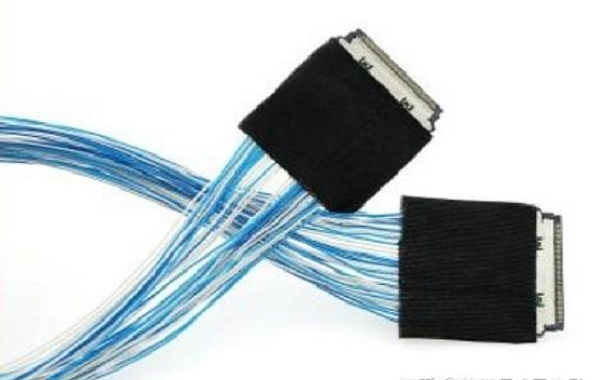
EMI protection is not sufficient only by relying on cable shielding; connector ports may also become interference leakage points. micro coaxial cable is often used in conjunction with high shielding performance connectors (such as the I-PEX ZenShield® series) to form a complete shielding channel from the cable to the connector and then to the PCB, ensuring stable operation of the signal chain in a closed environment and improving overall EMC performance.
Four, advantages of high-frequency and high-speed transmission
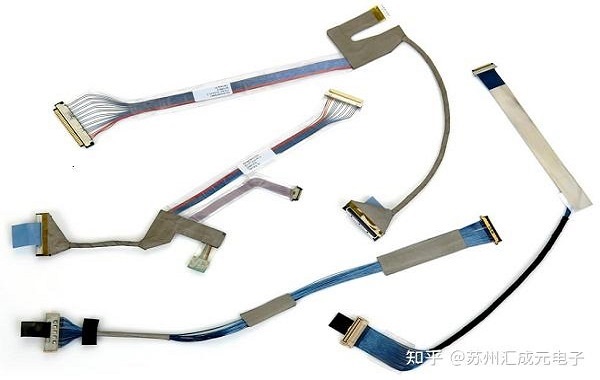
With the continuous increase in internal data link speed of electronic products, the per-channel rate can reach 10Gbps or higher, corresponding to signal frequencies of tens of GHz. Micro coaxial cable can maintain low loss, low crosstalk, and high anti-interference performance at high frequencies, and is suitable for a variety of high-speed interfaces:
MIPI D-PHY / C-PHY Camera and Display Interface
USB4/Thunderbolt high-speed data interface
LVDS / eDP / PCIe high-speed transmission link
These characteristics enable ultra-fine coaxial cables to maintain signal stability and reliability in high-speed transmission, space-limited, and complex interference electronic equipment.
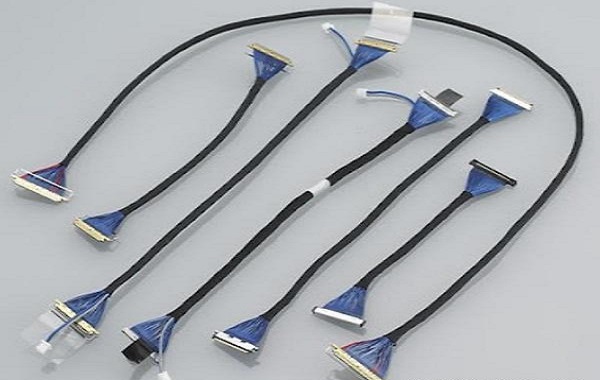
The excellent performance of the micro coaxial cable is derived from its coaxial shielding structure, slender dimensions, precise impedance control, diverse shielding design, and配合 with high-performance connectors. Multiple factors work together to form a complete protective chain, enabling it to maintain stable and reliable signal transmission in high-speed data communication. In modern slim, high-speed, and complex electronic devices, ultra-thin coaxial cables have become an indispensable core interconnect component.
I amSuzhou Huichengyuan Electronic TechnologyLong-term focus on the design and customization of high-speed signal cable harnesses and ultra-thin coaxial cable harnesses, committed to providing customers with stable and reliable high-speed interconnect solutions. For more information, please contact:Manager Yin 18913280527 (WeChat same number)。