


Categorization:Harness Component
In modern high-precision electronic equipment, signal transmission cables play a crucial role. Although common coaxial cables, HDMI, Type-C, and other types are widely used in consumer electronics, in miniaturized and high-density products such as mobile phones, laptops, drones, and medical equipment, extremely fine coaxial cables (Micro Coaxial Cable) are an indispensable invisible "leading role". This kind of cable is thin, flexible, and strong in anti-interference, but have you ever wondered how far it can transmit? This article will delve into the transmission characteristics, length control points, and reference distances in actual applications of ultra-fine coaxial cables.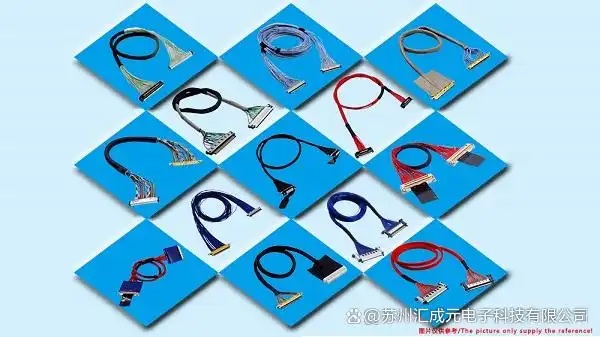
Why control the length of extremely fine coaxial cable bundles?
Extremely thin coaxial cables are widely used inside high-density equipment due to their extremely small diameter (generally between 0.2mm and 1.0mm), high flexibility, and strong anti-interference ability. However, compared with ordinary coaxial cables, they are extremely sensitive to length:
Signal attenuation: The longer the cable, the greater the signal loss, and this is particularly evident in high-frequency digital signals.
Signal delay inconsistency: The different lengths of multiple harnesses can lead to different arrival times for high-speed signals, resulting in "timing offset."
Interference resistance degradation: The risk of electromagnetic interference increases with the use of extra-long wiring, especially when multiple signal lines are laid in parallel.
Therefore, strictly controlling the length of extremely thin coaxial cables during product design and wiring is crucial for ensuring signal integrity and system stability.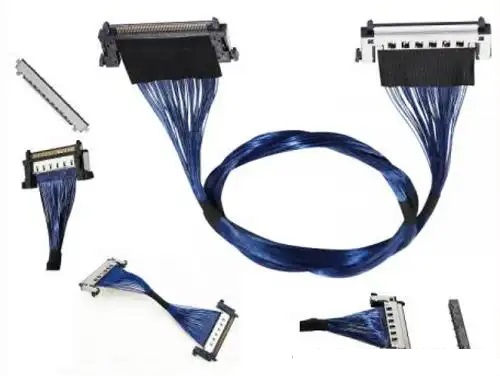
The transmission characteristics of extremely fine coaxial lines
Micro Coaxial Cable has the following advantages compared to ordinary coaxial cable:
Super small volume: suitable for wiring in narrow spaces.
Good high-frequency transmission performance: capable of stable transmission of high-definition video and digital signals.
Strong anti-interference ability: Can maintain signal stability in complex electromagnetic environments.
High flexibility: Resists repeated bending, convenient for wiring inside miniature equipment.
However, due to the small cross-sectional area of the conductor and relatively high resistance, its transmission distance is shorter than that of ordinary coaxial cables, especially in high-speed digital signal applications, where signal attenuation is more obvious.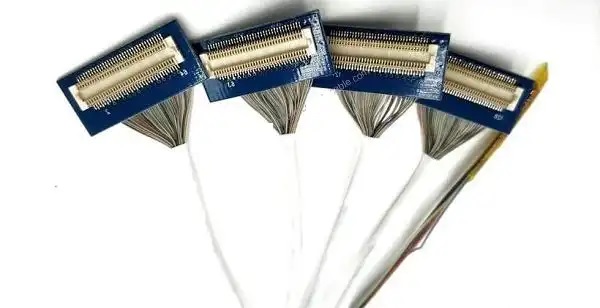
Three, the actual transmission distance of extremely fine coaxial lines
The transmission distance is affected by various factors:
Cable specifications: Different outer diameters (0.2mm, 0.3mm, 0.5mm) and internal structures (single strand, braided, shielding layer types) will affect transmission capability.
Signal Frequency: The higher the frequency, the faster the attenuation. Low-frequency signals (audio, analog signals) can transmit for several meters; high-frequency signals (high-definition video signals) are generally 0.5~3 meters.
Signal type: Digital signals have high requirements for integrity and have relatively short transmission distances; analog signals can tolerate slight attenuation and have slightly longer transmission distances.
Transmission rate: The higher the rate, the stricter the requirements for cable integrity, and the shorter the distance.
• Environmental interference: The effective transmission distance will also be reduced in complex electromagnetic environments or dense layouts.
Micro Coaxial Cable performs very well in short-distance high-speed data transmission, especially suitable for high-definition display screens, laptops, and densely routed cables inside drones. If long-distance transmission is required, it is recommended to use ordinary coaxial cables, optical fibers, or high-speed differential lines as alternatives.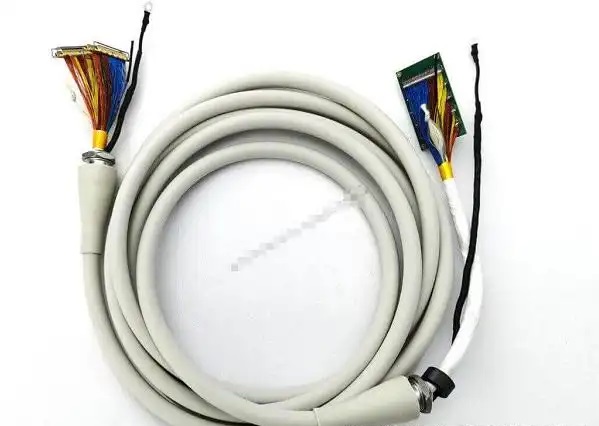
Extremely thin coaxial cables occupy an important position in micro high-precision equipment due to their compactness, flexibility, and high-frequency performance. However, they are extremely sensitive to length, and strict control of cable length must be maintained during design and wiring to ensure signal integrity and anti-interference ability. When selecting materials, comprehensive consideration should be given to the application environment, signal type, transmission rate, and wiring length: for short-distance high-speed transmission, extremely thin coaxial cables are undoubtedly the first choice; for long distances or high-interference environments, it is necessary to consider more suitable solutions such as ordinary coaxial cables or optical fibers.
We have been focusing on the design and customization of high-speed signal cable harnesses and ultra-fine coaxial cable harnesses for a long time, committed to providing stable and reliable high-speed interconnect solutions. If you have any related needs or would like to learn more, please contact: Manager Yin.18913280527 (WeChat same number).
“Without the consent or authorization of this site, no one shall reproduce, reprint, distribute, cite, change, broadcast or publish the content in whole or in part in any form, nor shall there be any other violation of the copyright of this site.