

Categorization:Harness Component
In the trend of high-speed signal transmission and the continuous miniaturization of electronic products, ultra-thin coaxial cables (Micro Coaxial Cable) have been widely used in precision fields such as mobile phones, laptops, medical equipment, drones, and automotive electronics, thanks to their high-frequency low-loss, excellent shielding performance, and excellent flexibility. However, in product exports and domestic sales, the UL, RoHS, and REACH three major safety certifications have become the key links to ensure product safety and compliance. This article will systematically analyze the core requirements of these three types of certifications.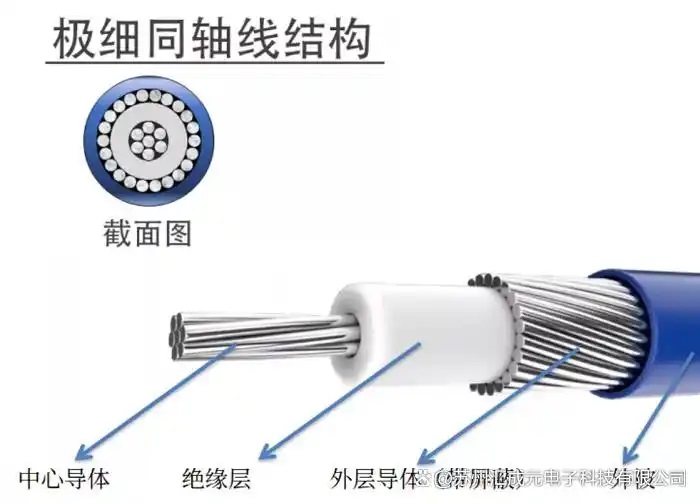
What is a micro coaxial cable (Micro Coaxial Cable)?
Extremely fine coaxial cables, also known as micro coaxial cables, are a type of high-precision coaxial cables with diameters typically ranging from 0.2mm to 1.13mm. Their typical structure includes the inner conductor, insulating layer, shielding layer, and jacket layer. Compared with traditional coaxial cables, they have the advantages of smaller size and higher signal transmission efficiency, especially suitable for high-frequency and high-speed signal transmission and micro-space wiring scenarios.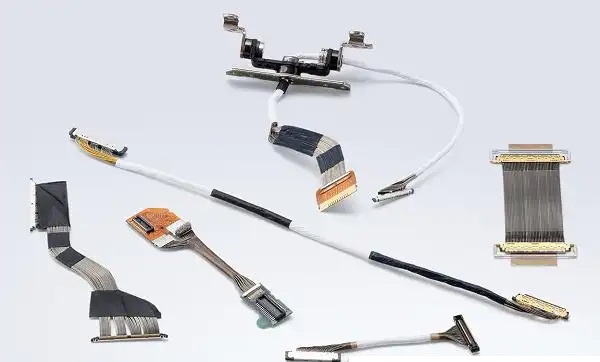
Part 1: Key Points of UL Certification
UL (Underwriters Laboratories, an American insurance company laboratory) is an internationally recognized safety testing organization. Fine coaxial cables usually need to meet the AWM (Appliance Wiring Material) specifications under the UL758 standard, common models include: UL1571, UL10064, UL1354, UL1357, etc.
Key indicators are as follows:
Rated voltage: generally between 30V and 80V.
• Temperature resistance grade: Common specifications are 80℃, 105℃, 125℃;
Flame retardant property: Must pass VW-1 or FT1 flame retardant test.
• Tolerance Range: Commonly used AWG46~AWG32, should be selected according to design requirements;
Insulating materials: It is recommended to use environmentally friendly high-temperature-resistant materials such as FEP, PFA, PEEK, ETFE, etc.
RoHS certification key points
RoHS (Restriction of Hazardous Substances) is an EU directive that restricts the use of hazardous substances in electronic and electrical products, focusing on the restriction of 10 harmful elements such as lead, mercury, cadmium, hexavalent chromium, and polybrominated biphenyls (PBBs) and polybrominated diphenyl ethers (PBDEs).
The RoHS requirements for ultra-fine coaxial cables include:
The insulating layer and sheath layer must pass the RoHS test.
The metal conductor and electroplating layer must meet the requirements of harmful substance limits.
Tin solder and adhesive must use lead-free or low-lead formulations to ensure overall environmental compliance.
Three, REACH certification key points
REACH (Registration, Evaluation, Authorization and Restriction of Chemicals) is a regulation established by the European Union for chemicals, with the core focus on controlling the use of SVHC (Substances of Very High Concern).
Ultra-fine coaxial cable REACH compliance key points:
All raw materials must have a REACH compliance declaration.
Regularly test for the presence of the latest announced SVHC substances (now exceeding 240 items).
Pay special attention to the chemical composition of insulating, sheath, adhesive胶, and shielding layer materials.
Four, suggestions for safety regulation certification procedures
To ensure that the ultra-fine coaxial cable束 smoothly passes through all certifications, it is recommended that manufacturers follow the following procedure:
• The material selection phase is to confirm the compliance with various regulations.
Submit to a third-party laboratory for safety and environmental testing.
Apply or update the UL file to ensure data validity.
Obtain RoHS and REACH test reports and compliance declarations;
Inspection before shipment and retention of records for customer or regulatory review.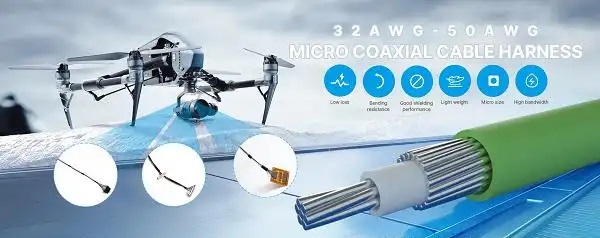
As a core transmission component in the high-precision electronic field, the safety certification of ultra-thin coaxial cables not only determines whether the product can be smoothly exported but also reflects the enterprise's quality management and brand reputation. By reasonably selecting materials, strictly conducting inspections, and continuously paying attention to regulatory updates, manufacturers can steadily advance in the international market, achieving a dual improvement in product safety and competitiveness.
We have been focusing on the design and customization of high-speed signal cable harnesses and ultra-thin coaxial cable harnesses for a long time, committed to providing stable and reliable high-speed interconnect solutions to our customers. If you have any related needs or want to learn more, please feel free to contact: Yin Manager.18913280527 (WeChat same number)。
“Without the consent or authorization of this site, no one shall reproduce, reprint, distribute, cite, change, broadcast or publish the content in whole or in part in any form, nor shall there be any other violation of the copyright of this site.