


Categorization:Harness Component
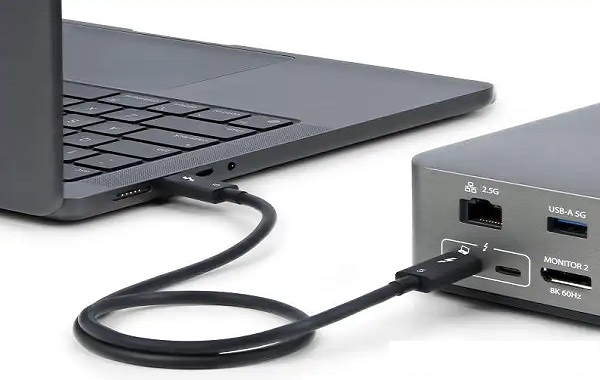
The core of the high-speed channel: ultra-fine coaxial beam
The stability and bandwidth capacity of high-speed channels are inseparable from extremely thin coaxial cable束。 Compared to traditional copper wire, it has a smaller diameter, better shielding performance, and higher signal integrity. In USB4, DP 1.4/2.0, and Thunderbolt 4/5 standards, data transmission rates can reach 20Gbps, 40Gbps, and even 80Gbps, and ordinary wire materials can no longer meet these high-frequency requirements. Therefore, extremely thin coaxial cable束 becomes the core foundation of high-speed channels, ensuring the reliable transmission of high-speed signals, and providing stable support for high-speed data, video, and power supply functions.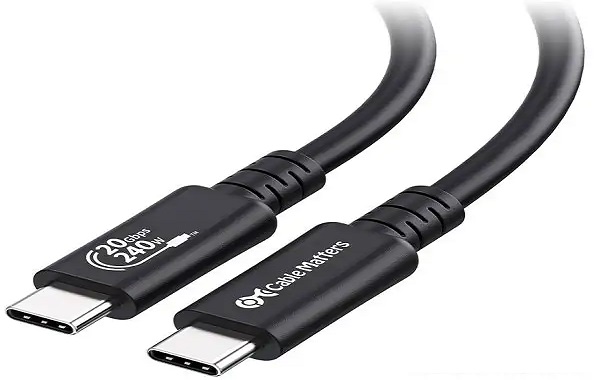
Basic Structure Analysis of Cables
USB, DP, Thunderbolt, and other interfaces may have different standards, but their cable designs follow a similar basic structure, including high-speed signal channels, power and auxiliary channels, shielding systems, and external sheath. The high-speed signal channels consist of multiple extremely thin coaxial cable bundles that form differential signal pairs to achieve high-speed data transmission; the power and auxiliary channels are responsible for providing power to the devices and slow-speed control signals, realizing the PD protocol, device handshaking, or configuration functions; the shielding system uses aluminum foil, metal braid mesh, or multi-layer shielding to effectively reduce electromagnetic interference and improve signal integrity; the external sheath is made of flexible polymer materials to protect the internal structure while also considering the cable's softness and durability. This complete structural design ensures that the cables can maintain signal stability under high-frequency and high-speed conditions while meeting the requirements for power supply and control functions.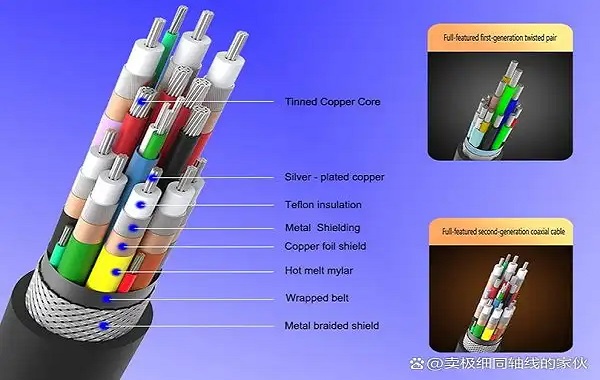
Three, high-speed requirements for different interfaces
Different interfaces have their respective focuses in design. USB4 emphasizes compatibility, not only supporting high-speed data transmission but also considering power transmission (PD), meeting the diverse needs of daily device interconnection; DP is mainly aimed at video transmission, supporting resolutions of 8K or higher, with extremely high requirements for signal integrity and anti-interference performance; the Thunderbolt interface combines data, video, and power functions, with a bandwidth of up to 80Gbps, and has the strictest requirements for impedance control and process accuracy. Regardless of which interface it is, the stability of the high-speed channel cannot be separated from the support of extremely fine coaxial cable bundles, and precise structural design is the fundamental guarantee for stable and efficient high-speed transmission.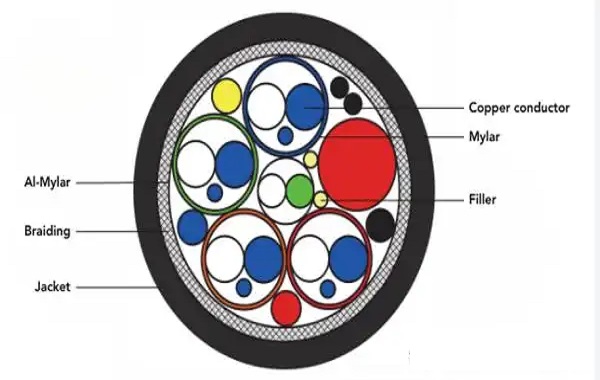
“Without the consent or authorization of this site, no one shall reproduce, reprint, distribute, cite, change, broadcast or publish the content in whole or in part in any form, nor shall there be any other violation of the copyright of this site.