


Categorization:Harness Component
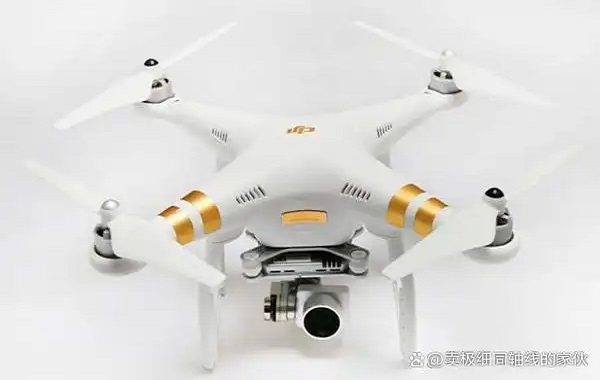
Part one: Characteristics of extremely fine coaxial beam
A super-thin coaxial cable bundle is a very small diameter coaxial cable consisting of an inner conductor, insulation layer, shielding layer, and sheath. It is compact in size and can be used in narrow spaces within modules. It also has stable impedance and low insertion loss, ensuring high-speed signal transmission quality. Good shielding effectiveness can effectively resist electromagnetic interference, allowing drones to maintain clear and stable images during flight, making it an indispensable core component of aerial photography camera modules.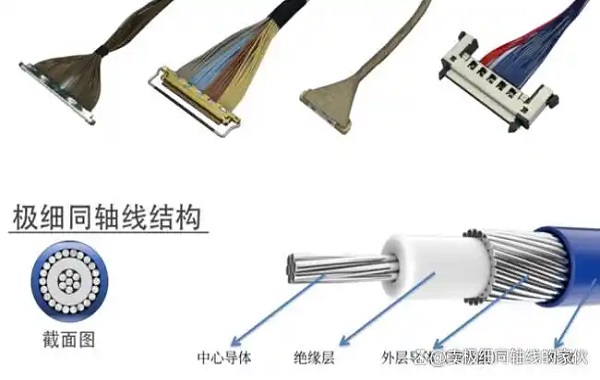
Section 2: Requirements for Cable Harnesses for Drone Camera Modules
Drones have stringent requirements for ultra-thin coaxial cable bundles, not only for high-speed transmission but also for lightweight, flexibility, and durability. The cable bundle must be as light as possible to reduce the flight load, while the outer diameter must be suitable for the internal space layout of the module. In terms of signal, it is necessary to ensure smooth high-resolution video transmission without impedance mismatch or signal attenuation. In terms of interference resistance, the cable bundle must shield against various wireless and transmission signal interferences. At the same time, the cable bundle needs to adapt to the motion of the gimbal, be able to bend frequently without damage, and have the ability to withstand high and low temperatures, humidity changes, and vibration to ensure long-term reliable use.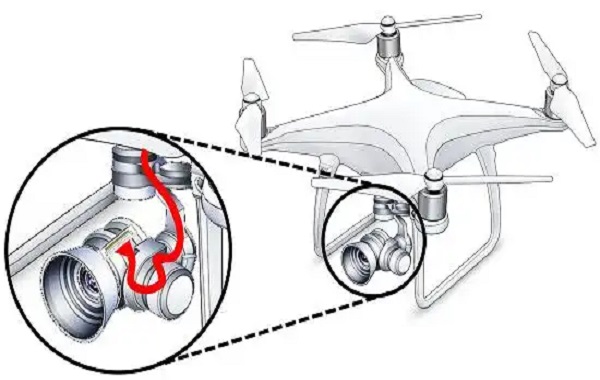
Three, selection thinking
When selecting a very thin coaxial cable bundle, it is first necessary to clarify the signal transmission requirements, and then choose an appropriate cable diameter based on the internal space of the drone and the connector layout. At the same time, attention should be paid to electrical and mechanical properties to ensure low insertion loss, good shielding, and the ability to withstand bending and vibration. Ultimately, it is also necessary to verify the stability under flight conditions through actual machine testing to avoid image distortion or interruption due to an unsuitable cable bundle.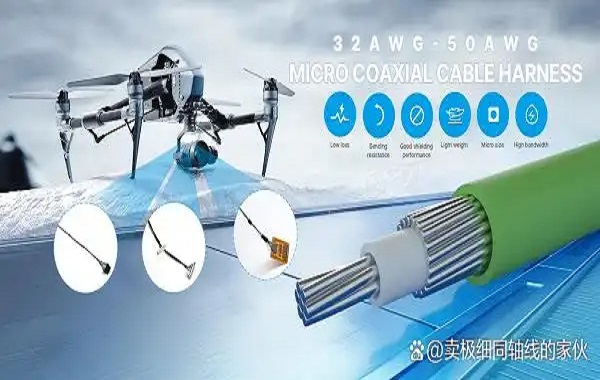
“Without the consent or authorization of this site, no one shall reproduce, reprint, distribute, cite, change, broadcast or publish the content in whole or in part in any form, nor shall there be any other violation of the copyright of this site.