


Categorization:Harness Component
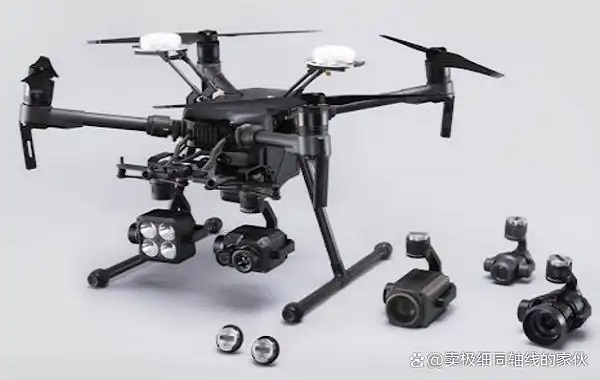
One, the challenges faced by the image transmission system
Industrial drone transmission systems face multiple challenges in actual applications. High-definition video transmission usually operates at GHz frequencies, and improper cable design can lead to signal attenuation and distortion, affecting picture quality. Impedance matching is crucial for the transmission system; any mismatch can cause reflections and interference, resulting in screen jitter or noise. Electromagnetic interference generated by the motor and wireless module inside the drone also affects the transmission signal. In addition, frequent bending, vibration, and temperature variations during flight make it difficult for ordinary cables to maintain stability. At the same time, drones are highly sensitive to weight and space, so the cable harness not only needs to ensure performance but also must be as light and compact as possible.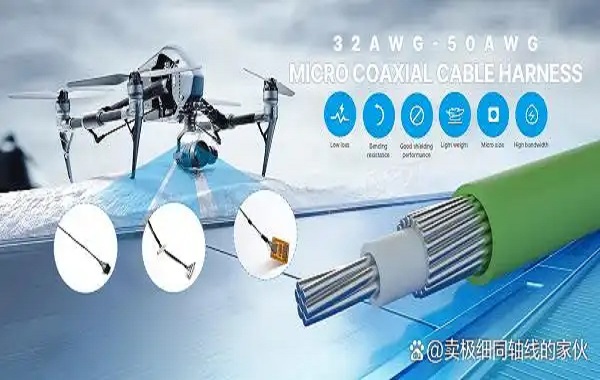
The key points of solution design
To meet the above challenges, ultra-fine coaxial cable束 requires comprehensive optimization in material selection, structural design, and layout. The use of high-conductivity conductors and low-loss dielectric materials can reduce signal attenuation; a multi-layer shielding structure combined with woven layers and metal foil layers effectively resists external electromagnetic interference; and the geometrical structures of conductors, dielectrics, and shielding layers are strictly controlled to ensure impedance consistency. In terms of cable structure and sheath material selection, reinforcing flexibility and bend resistance ensures stability during platform rotation and flight vibration. At the same time, by reducing the outer diameter and optimizing materials, lightweight design is achieved, balancing performance and drone endurance.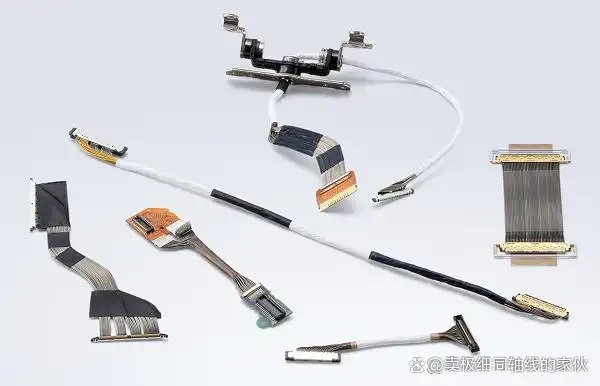
Example of Application Scenarios
For an industrial drone that needs to transmit 4K video, its transmission cable can choose an extremely thin coaxial cable with an outer diameter of about 2mm, equipped with double shielding structure, which can maintain stable transmission at frequencies as high as 6GHz. The connectors use lightweight and small interfaces, and the cables are routed reasonably in the rotating area of the gimbal to avoid sharp angle bends. This kind of design not only ensures the clarity and stability of the image, but also takes into account weight control and durability, enabling the drone to perform at its best in complex environments.
“Without the consent or authorization of this site, no one shall reproduce, reprint, distribute, cite, change, broadcast or publish the content in whole or in part in any form, nor shall there be any other violation of the copyright of this site.