

Categorization:Harness Component

Why Focus on LVDS Signal Cable Harness
LVDS signals are renowned for their high speed, low power consumption, and low noise, but they are very demanding on the transmission environment. In industrial modules, signal wiring often faces challenges such as compact space, frequent bending, and complex interference sources. If the cable harness design is not reasonable, it may result in noise, image judder, or even data transmission errors. In such cases, extremely thin coaxial cable harnesses (micro coaxial cable harness) become an ideal choice. They not only meet the requirements for high-speed signal transmission but also ensure signal integrity and stability in complex industrial environments.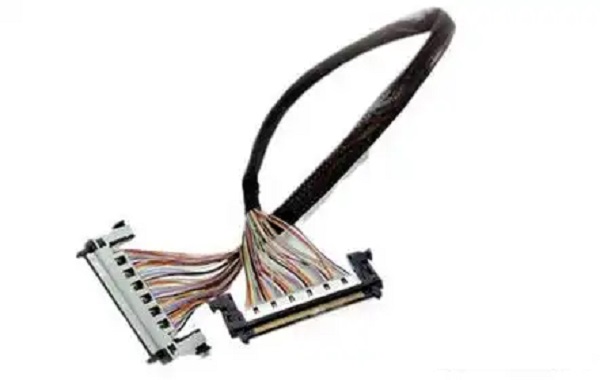
The advantages of extremely fine coaxial beam束
Extremely thin coaxial cables have significant advantages in high-speed industrial modules. The multi-layer shielding structure effectively resists external electromagnetic interference, ensuring the integrity of high-speed signal transmission; the small bending radius design is suitable for module installations with limited space, while maintaining high flexibility and durability; the high-speed transmission capability supports GHz-level signals, meeting the requirements of 4K high-definition video data; high impedance consistency ensures stable transmission of differential signals, reducing offset and distortion. Combining these advantages, extremely thin coaxial cables can significantly improve the performance and reliability of industrial camera module.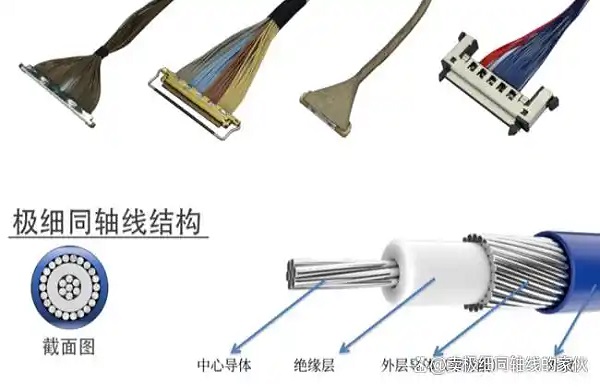
Section 3: Key Points for Onsemi AR0521 Module Harness Optimization
In the Onsemi AR0521 4K industrial module, the optimization of the LVDS cable bundle is crucial. Key points include: selecting a cable bundle with impedance stable at 100Ω to match the LVDS output characteristics; keeping each pair of differential signal lines of equal length to avoid timing imbalance; reducing common mode interference through multi-layer shielding and reasonable grounding; controlling the installation bending radius to ensure that the cable bundle bend is not less than the minimum allowable value; and in high vibration or complex environments, improving overall stability through fixation and reinforcement. Scientific wiring and cable bundle optimization not only improve transmission performance but also extend the service life of the equipment.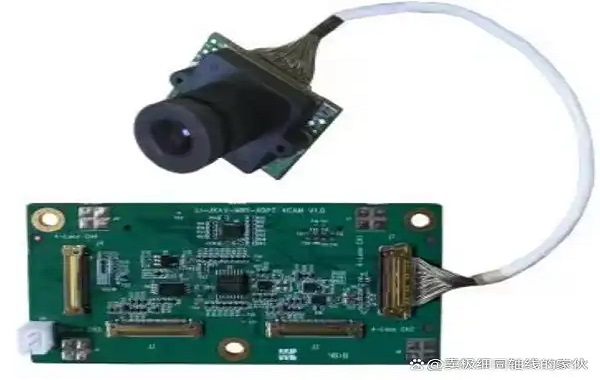
“Without the consent or authorization of this site, no one shall reproduce, reprint, distribute, cite, change, broadcast or publish the content in whole or in part in any form, nor shall there be any other violation of the copyright of this site.