


Categorization:Harness Component

Structure and characteristics of ultra-fine coaxial beam
Extremely thin coaxial cable束 is a type of ultra-micro coaxial cable with a diameter usually not exceeding 0.5mm, consisting of a central conductor, insulation layer, and metal shielding layer. It possesses significant characteristics such as thinness, softness, strong anti-interference ability, and excellent signal integrity. Its lightweight design allows it to easily adapt to highly integrated internal structures of robots, while the metal shielding layer effectively suppresses electromagnetic interference during high-speed signal transmission. Due to its high flexibility, extremely thin coaxial cable束 can bend, turn, and dynamically route within narrow机身 spaces, meeting the requirements of high-density assembly and long-term stable operation inside robots.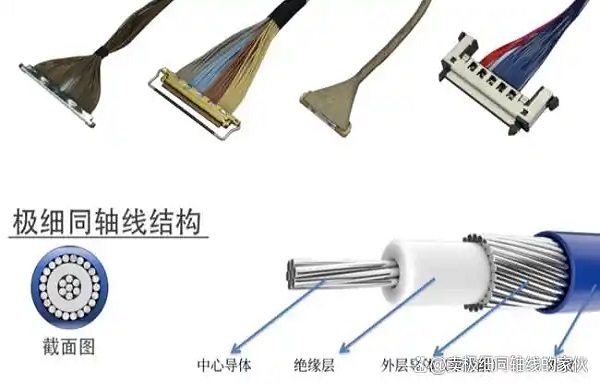
The application advantages of ultra-fine coaxial beam in service robots
Within the service robot, extremely thin coaxial cables can significantly improve space utilization efficiency, meet the demand for compact wiring inside complex equipment, while ensuring the stable transmission of high-speed image and display signals. In the screen display module, it can maintain signal integrity in the dynamic structure passing through hinges and shafts, making the picture smooth and clear; in camera image transmission, it can stably process high-speed data and resist interference from surrounding executive agencies. In addition, its flexibility allows it to adapt to continuous movement in positions such as the robot's head, visual module, and multi-degree-of-freedom joints, reducing the risk of wire fatigue and breakage, providing reliable protection for the robot's long-term operation.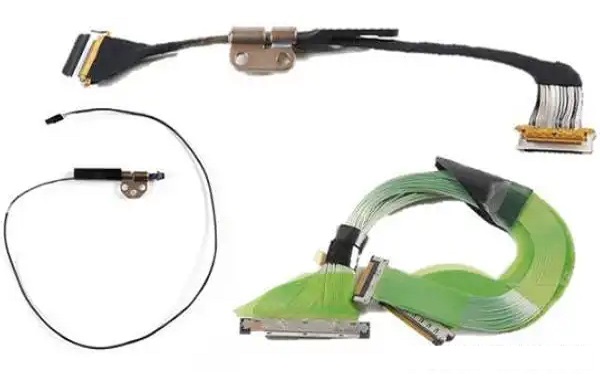
Three, key ideas for service robot wiring design
In practical robot wiring design, extremely fine coaxial cable bundles usually require a comprehensive approach involving reasonable path planning, reliable terminal technology, and dynamic adaptation to the moving structure. By reasonably avoiding high-voltage cables and noise sources, the risk of EMI can be reduced, ensuring the stability of the signal chain; by controlling the bend radius of the cables and avoiding sharp angle folds, their service life can be extended, and the mechanical durability can be improved; by appropriately reserving cable allowance in areas such as joints and rotating axes, the potential risks of damage caused by stretching can be further reduced. Good process handling and precision connectors can enable extremely fine coaxial cable bundles to perform stable and reliable interconnectivity in high-speed vision, display, and sensing systems.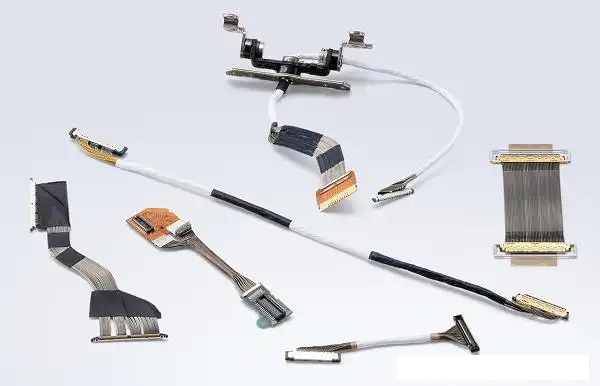
“Without the consent or authorization of this site, no one shall reproduce, reprint, distribute, cite, change, broadcast or publish the content in whole or in part in any form, nor shall there be any other violation of the copyright of this site.