


Categorization:Harness Component
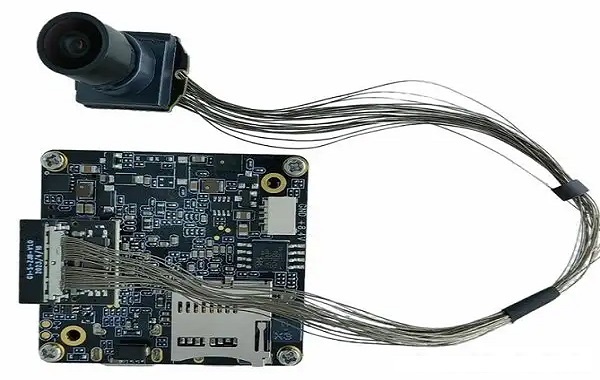
Part 1: Technical Background of Sony IMX728 and High-Speed Interface
Sony IMX728 features an 8.39MP 4K resolution and supports MIPI CSI-2 as well as being compatible with GMSL2 and GMSL3 for long-distance video transmission and PoC power supply capabilities. In high-speed transmission systems, the IMX728 outputs large amounts of data at high rates, demanding strict requirements for cabling losses, impedance, and anti-interference capabilities. The extremely fine coaxial cable束 is an interconnect solution specifically designed for high-speed differential signals, which can effectively enhance bandwidth stability and overall system reliability.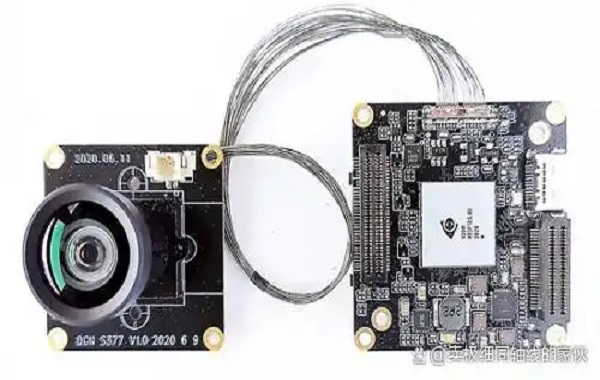
Why is IMX728 more suitable for ultra-fine coaxial cable束
Compared with traditional FFC and twisted pair cables, extremely thin coaxial cable bundles provide independent shielding for each signal line, giving them superior EMI interference resistance and more stable impedance control. Within a transmission distance of 15-20cm, they can maintain lower loss and higher eye diagram margin, thus further improving MIPI signal integrity. At the same time, the high flexibility of micro coaxial cables allows for flexible wiring in applications with compact structures and frequent movement, such as robotic arms and drones. In GMSL2/GMSL3 schemes, a single coaxial cable can enable long-distance transmission and support PoC, significantly reducing the number of cables required, which is an important advantage for vehicle and robotic vision systems.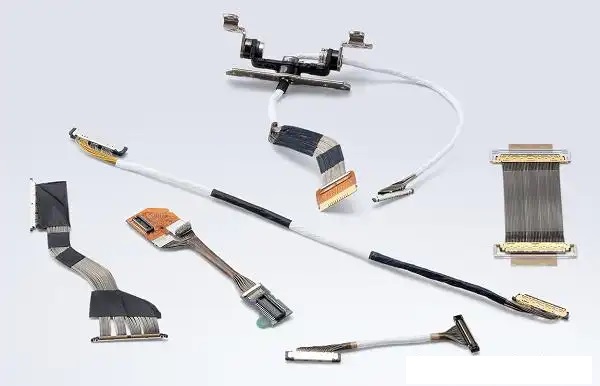
Typical application scenarios demonstration
In vehicle ADAS systems, when paired with GMSL2 and micro coax, the IMX728 achieves a transmission distance of up to ten meters while maintaining stable image quality. In industrial robots, the anti-bending capability of micro coax significantly reduces the risk of wire breakage caused by mechanical motion, ensuring the real-time and reliable nature of visual recognition. In drones and aerial photography equipment, the lightweight and small diameter design of the extremely thin coaxial cable makes it possible to route cables in narrow structures, making it more suitable for lightweight design requirements.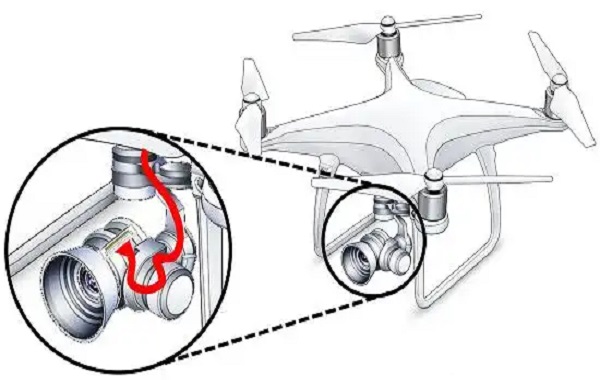
“Without the consent or authorization of this site, no one shall reproduce, reprint, distribute, cite, change, broadcast or publish the content in whole or in part in any form, nor shall there be any other violation of the copyright of this site.