


Categorization:Harness Component
In a laptop, the LCD screen is the core window for user-system interaction, and whether the screen image is high-definition, stable, and free of latency depends not only on the display panel itself but also on the LCD signal cable that connects the screen to the motherboard, which is equally crucial. With the development of laptops towards thinner and higher resolution, extremely thin coaxial cables (micro coaxial cable) have gradually replaced traditional FFC and become the core foundation of laptop display technology.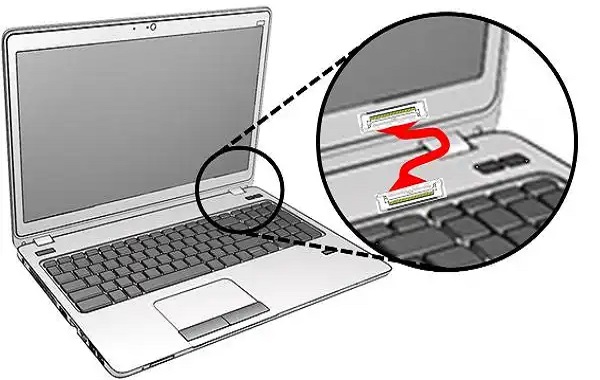
Why does LCD transmission require a very thin coaxial cable bundle?
Traditional FFC is prone to interference under high-resolution conditions and has limited bandwidth, making it difficult to meet the demands of 4K, 8K, and high refresh rate displays. The extremely thin coaxial cable束 possesses stronger anti-interference performance, lower transmission loss, and more stable impedance control, ensuring stable transmission of high-speed video signals between the screen and the motherboard. As screen resolution and refresh rate continue to increase, micro coax has become the mainstream solution for display transmission in modern laptops.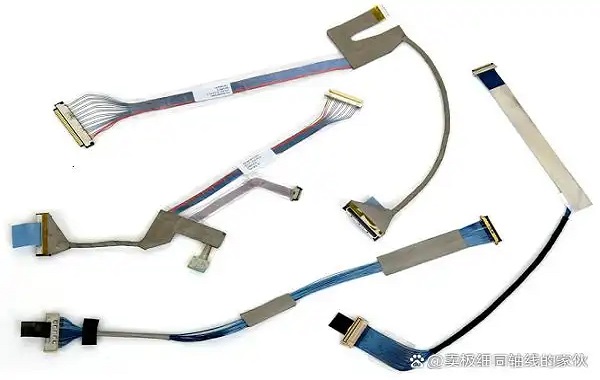
The core performance characteristics of ultra-fine coaxial fiber束
The shielding layer in ultra-fine coaxial structures can effectively isolate electromagnetic noise, ensuring that high-frequency video signals remain pure and stable. The wire diameter is typically less than 0.5 mm, yet it can support data transmission in the GHz frequency range, providing ample protection for high-bandwidth display technologies. At the same time, micro coax has extremely high flexibility, able to withstand the bending actions of notebook screens opening and closing for extended periods, far superior in durability to traditional ribbon cables. Its thin and small size also aligns with the continuous pursuit of thinness and lightness in notebooks.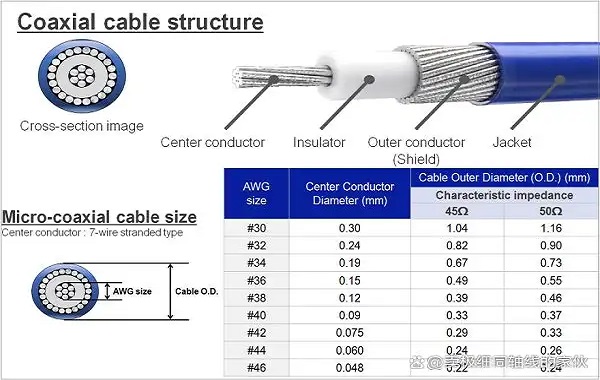
Application in Notebook LCD Display System
In display systems, extremely fine coaxial cables are mainly used for high-resolution video signal transmission, ensuring clear and smooth picture output. They are responsible for connecting the motherboard with the screen, achieving accurate refresh synchronization and signal timing alignment. Currently, widely used high-speed interfaces such as eDP and MIPI DSI all rely on micro coax to support high-frequency and high-bandwidth transmission requirements. With the popularization of display technologies such as OLED and Mini LED, cables need to carry higher data throughput in smaller spaces, and micro coax is playing an increasingly important role in this field.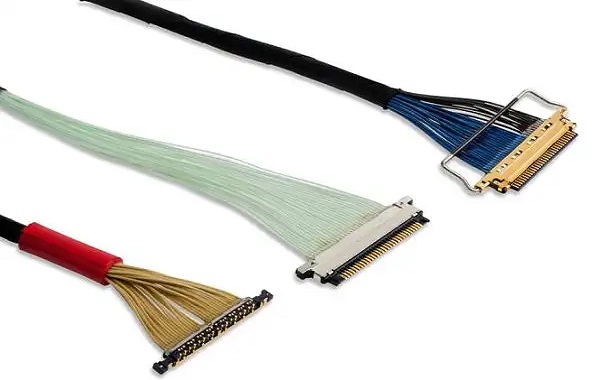
LCD signal cable may not be conspicuous, but it is an important factor affecting the display quality of laptops. The ultra-fine coaxial cable, with its small diameter, high speed, high anti-interference, and high flexibility, enables laptops to achieve higher resolution, more stable picture output, and slimmer structural design. With the development of display technology, micro coax will continue to drive the evolution of laptops towards high-quality image and lightweight design.
I am[Suzhou Huichengyuan Electronic Technology]Long-term focus on the design and customization of high-speed signal cables and ultra-fine coaxial cables, committed to providing stable and reliable high-speed interconnection solutions. For selection, customization, or technical consultation, please contact us.Manager Yin: 18913228573 (WeChat same number)。
“Without the consent or authorization of this site, no one shall reproduce, reprint, distribute, cite, change, broadcast or publish the content in whole or in part in any form, nor shall there be any other violation of the copyright of this site.