


Categorization:Harness Component
Part 1: Challenges of USB 3.2 high-speed signals on cables
USB3.2 signals are transmitted in differential mode, which imposes strict requirements on cables. High-speed signals are susceptible to attenuation, reflection, and interference. If impedance mismatch or insufficient shielding occurs, signal stability will decline significantly. At the same time, devices such as laptops, camera modules, and tablets have limited internal space. Traditional multi-strand electronic wires are thick and rigid, making it difficult to route them. The requirements for high-speed signals on cables far exceed the capabilities of ordinary electronic wires, which is also the reason for the complexity of USB3.2 cable design.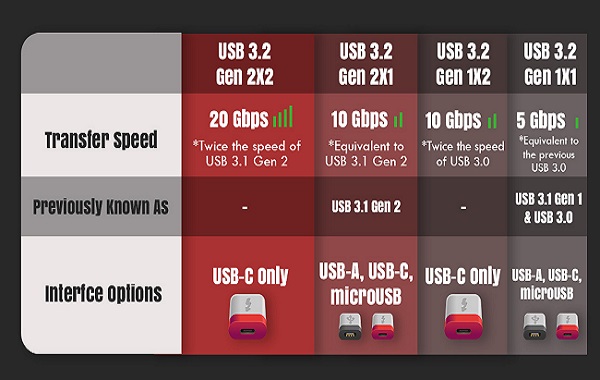
The advantages of ultra-fine coaxial beam
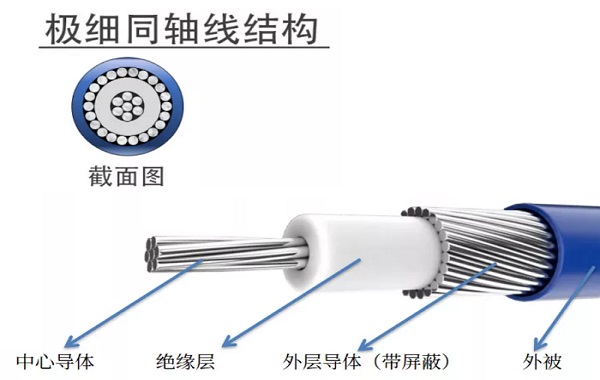
The ultra-thin coaxial cable bundle is composed of a central conductor, insulating layer, metal shielding layer, and outer sheath, with each signal line having an independent channel. Its coaxial structure can strictly control impedance, reduce reflection and signal distortion; the 360-degree metal shielding effectively resists external electromagnetic interference; the cable diameter is only 1 millimeter or even thinner, allowing free wiring in confined spaces. At the same time, multiple coaxial cables can be combined into an integrated cable bundle to achieve the integration of high-speed data, control signals, and grounding shielding. These advantages make it an ideal choice for high-speed interfaces such as USB3.2 and Thunderbolt.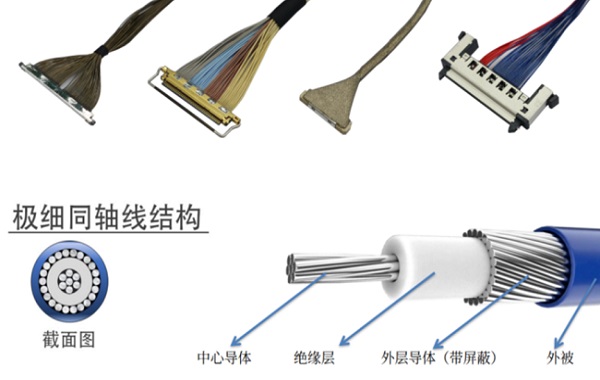
Why USB 3.2 No Longer Uses Traditional Electronic Wires
Traditional electronic wires cannot meet the stability and shielding requirements of high-speed signals. In ultra-thin devices, ordinary cables are difficult to bend and store, and high-frequency signals are prone to crosstalk and error codes, and they also cannot pass strict EMI tests. The development of device thinning and modularization has put higher requirements on cable size, flexibility, and reliability, and ultra-fine coaxial cables just solve these problems, achieving that high-speed signals can not only "run fast" but also "run steadily."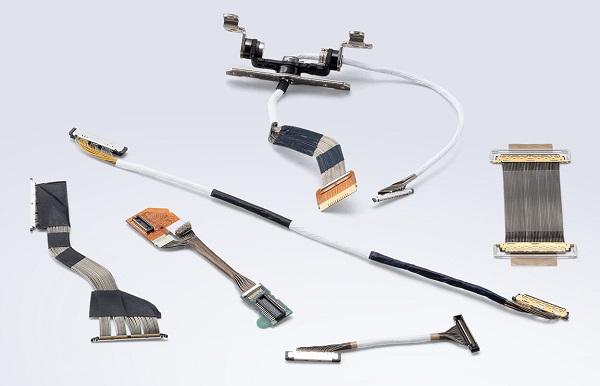
“Without the consent or authorization of this site, no one shall reproduce, reprint, distribute, cite, change, broadcast or publish the content in whole or in part in any form, nor shall there be any other violation of the copyright of this site.