


Categorization:Harness Component

The main challenges in layout arrangement
In a multi-sensor fusion environment, the arrangement of extremely thin coaxial cable bundles needs to take into account electromagnetic compatibility, spatial limitations, and signal synchronization simultaneously. Electromagnetic interference that may exist between different sensors could lead to noise superposition and signal distortion if not properly arranged; with limited internal space for the equipment, the cables must be tightly routed while maintaining a reasonable bending radius to avoid damage caused by long-term mechanical pressure; for multi-channel high-speed signals, it is necessary to ensure consistent cable length to avoid timing differences, which in turn could affect the accuracy of data fusion.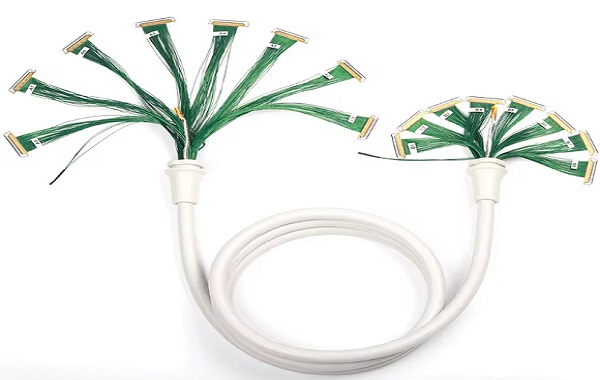
Typical harness layout strategies
To enhance the signal stability of the system, common layout methods include layering high-speed and low-speed signals to reduce mutual interference; adopting differential routing for critical paths to improve anti-interference ability; reducing the impact of external noise through overall shielding layers or segmented shielding structures; at the same time, concentrating wiring by functional modules to make sensor cable bundles easier to manage and maintain, and the overall structure more stable.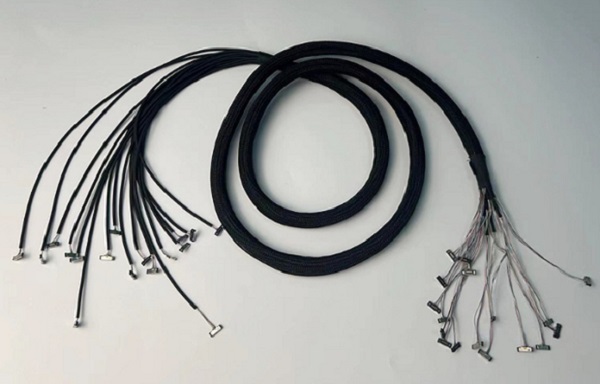
The future development trend
With the continuous increase in the number of sensors and the continuous improvement of data bandwidth, the arrangement of extremely thin coaxial cables will become more dependent on intelligent and simulation-based design. Using AI for path optimization, predicting interference hotspots, or adopting more flexible and durable new materials are all expected to become mainstream solutions in the future, providing a higher level of guarantee for the high-speed interconnection of complex systems.
“Without the consent or authorization of this site, no one shall reproduce, reprint, distribute, cite, change, broadcast or publish the content in whole or in part in any form, nor shall there be any other violation of the copyright of this site.