

Categorization:Harness Component
In today's image transmission systems, CSI (Camera Serial Interface) has become the mainstream standard. Whether it is a smartphone camera, vehicle image system, or industrial vision and AI camera module, the CSI interface is the key channel for data transmission. With the continuous improvement of resolution and frame rate, data rates have significantly increased, and signal integrity issues have also become prominent. To achieve high-speed and stable image transmission, extremely thin coaxial cables (Micro Coaxial Cable) are gradually replacing traditional FPC or FFC ribbon cables, becoming the ideal choice for high-speed CSI connections.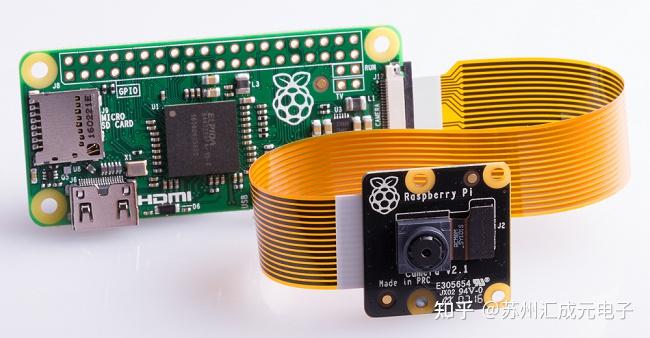
Why the CSI interface can not be separated from extremely thin coaxial cable bundles
CSI interface belongs to high-speed differential signal transmission, especially under the MIPI CSI-2, CSI-3 protocols, where the single-channel rate can often reach several Gbps. Slight impedance mismatch, crosstalk, or electromagnetic interference (EMI) can lead to image instability or even frame loss.
Traditional FPC/FFC ribbon cables are thin, light, and cost-effective, but their shielding capability is limited, especially in long-distance transmission or complex wiring scenarios, where they are prone to external interference.
Compared to ultra-fine coaxial cable bundles, each signal line has an independent shielding layer, which is equivalent to "building an independent tunnel" for each signal. This not only prevents external interference but also strictly controls the impedance consistency. This is crucial for high-speed differential signals.
In other words, CSI high-speed signal transmission is like racing cars on a highway, FPC is like an open ordinary highway, and coaxial cable is like a closed tunnel—the difference in stability and efficiency is self-evident.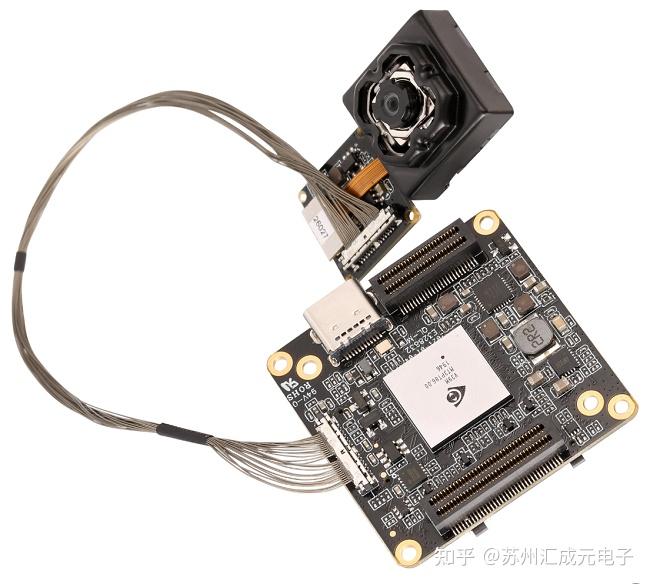
In applications, extremely fine coaxial cables are almost a standard.
In vehicle imaging systems such as ADAS, surround view, and reverse image, a vehicle often equips multiple cameras, with transmission distances often exceeding one meter, and a very high requirement for signal anti-interference ability. Nowadays, almost all large car manufacturers use extremely thin coaxial structures for their camera wiring harnesses.
In the field of industrial vision and AI modules, multi-channel synchronous acquisition has extremely high requirements for timing accuracy. Even slight deviations in cable impedance and length can lead to timing differences. The coaxial structure can ensure signal synchronization, stable transmission, and also has flexibility and durability.
Many camera module modules are FPC structured at the tail, but in fact, the end of the FPC extends a Micro Coax line to connect the mainboard, realizing the final transmission of high-speed signals.
Three, key engineering points for designing the CSI harness
When designing the CSI high-speed channel, besides selecting high-quality ultra-fine coaxial cable bundles, the following points should also be noted:
Impedance continuity: The entire transmission path (cable, connector, solder joint) must be impedance matched, otherwise signal reflection is likely to occur.
Reasonable wiring and length control: differential lines should be kept symmetrical to avoid uneven delays; shorter line lengths are more conducive to signal integrity.
Connector compatibility: It is recommended to use high-speed connectors compatible with Micro Coax such as Hirose, I-PEX, etc., to ensure the high-frequency performance of the signal interface.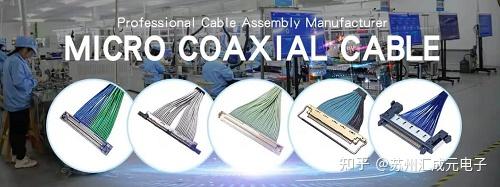
The rapidization of the CSI interface is a trend, and the ultra-thin coaxial cable束, with its excellent electrical performance, compact structure, and excellent anti-interference ability, has become the standard solution for MIPI CSI high-speed signal transmission. Whether it is in intelligent vehicles, industrial vision, or AI edge devices, it is the "hidden core channel" that ensures the stable operation of the high-speed image system.
I amSuzhou Huichengyuan ElectronicLong-term focus on the design and customization of high-speed signal cable harnesses and ultra-thin coaxial cable harnesses, committed to providing stable and reliable high-speed interconnection solutions. If you have relevant needs or would like to learn more, please contact:Manager Yin 18913280527 (WeChat same number)。
“Without the consent or authorization of this site, no one shall reproduce, reprint, distribute, cite, change, broadcast or publish the content in whole or in part in any form, nor shall there be any other violation of the copyright of this site.