


Categorization:Harness Component
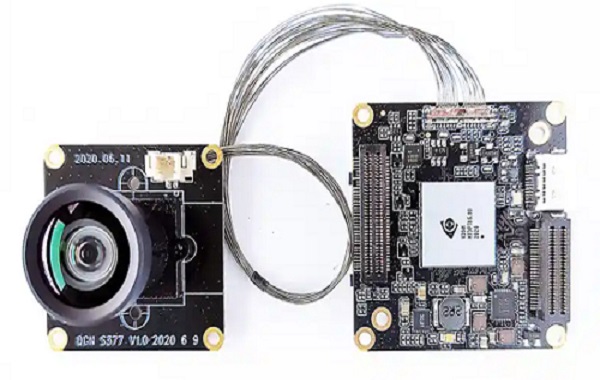
Image acquisition module overview
The image acquisition module usually consists of a lens, image sensor, driving chip, and wiring components. Its core function is to convert optical signals into electrical signals and transmit them to the main control board for processing. It is widely used in mobile phone cameras, monitoring equipment, vehicle imaging systems, and industrial machine vision systems. With the increasing demand for high-speed imaging, the module has higher requirements for the high-speed transmission capability, low noise, and stability of the wiring.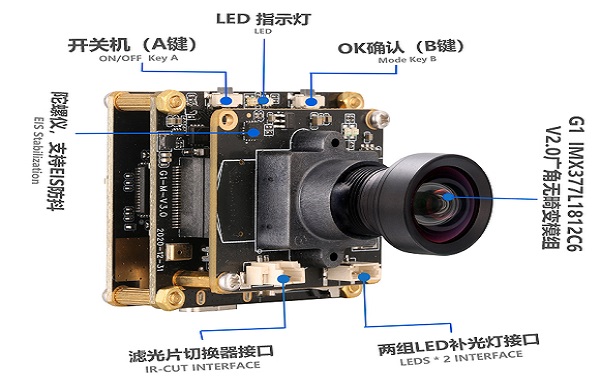
The main sources of signal interference
In the image acquisition module, the main sources of signal interference are electromagnetic interference, crosstalk, and insufficient grounding and shielding. High-frequency electromagnetic radiation generated by surrounding components may couple with the wiring harness, causing signal distortion. When multiple signals are transmitted in parallel, interference may occur between adjacent lines, and the problem is particularly evident under high-resolution and high-speed transmission. If the shielding inside the module is not perfect or the grounding is unbalanced, it is also easy to introduce noise interference. These interference factors have a comprehensive impact on the signal integrity and system stability of the image acquisition module, and optimization is needed from both wire selection and overall system design.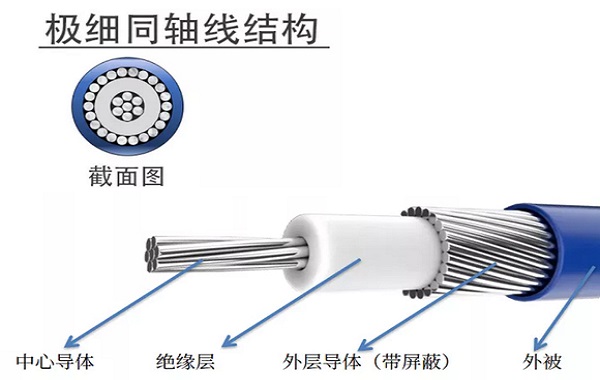
Advantages and Applications of Extremely Fine Coaxial Beam
Compared with traditional FPC or ordinary differential lines, extremely thin coaxial cable bundles have obvious advantages in high-speed transmission scenarios. Their coaxial structure comes with a built-in shielding layer, which can effectively suppress external electromagnetic interference, while also supporting high-frequency and high-speed signal transmission, meeting the requirements of 4K/8K cameras and high-speed imaging equipment. The diameter of the extremely thin cables can be less than 0.3 millimeters, compatible with compact modules, with good bending performance, and can be used in mixed design with differential or other signal lines. Combined with reasonable wiring, grounding optimization, as well as filtering and impedance matching solutions, it can significantly improve signal stability and image quality.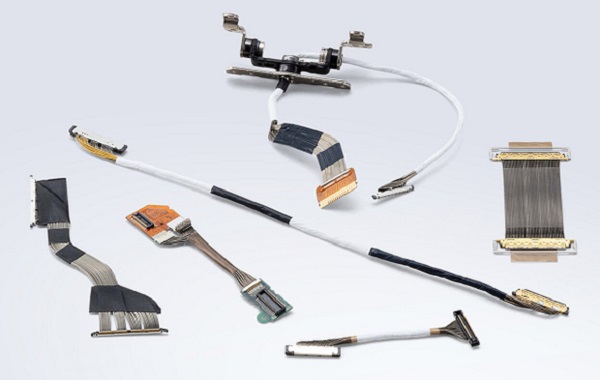
“Without the consent or authorization of this site, no one shall reproduce, reprint, distribute, cite, change, broadcast or publish the content in whole or in part in any form, nor shall there be any other violation of the copyright of this site.