


Categorization:Harness Component
Anti-interference characteristics
Medical equipment is often used in hospitals with complex electromagnetic environments, such as operating rooms where there are high-power imaging equipment, electrosurgical devices, and other devices that may generate strong electromagnetic interference. The extremely fine coaxial cable bundle, with its multi-layer structure consisting of an inner conductor, insulation layer, shielding layer, and outer sheath, effectively shields external electromagnetic waves. The high-density woven layer or metallic foil shielding structure ensures that signals remain stable during transmission, reducing noise and signal distortion, thereby guaranteeing the clarity and accuracy of medical images and monitoring data.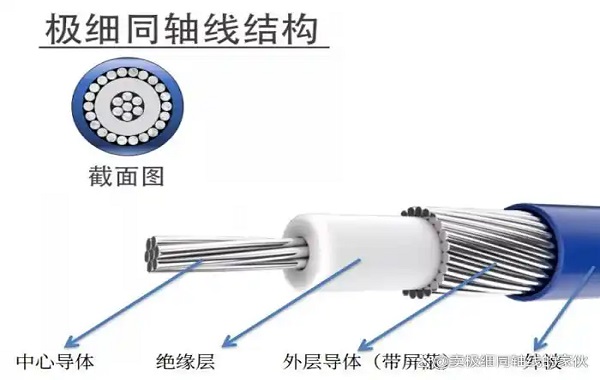
Bandwidth advantage
Modern medical imaging equipment has an increasingly high demand for data transmission speed, such as 4K high-definition endoscopes and real-time imaging systems, which require cables with large bandwidth capabilities. Ultra-thin coaxial cables excel in high-speed signal transmission, supporting rates up to several Gbps, meeting the transmission needs of high-definition video and real-time monitoring signals. At the same time, its compact design can achieve miniaturization layout while ensuring bandwidth, making it very suitable for medical instruments with limited space.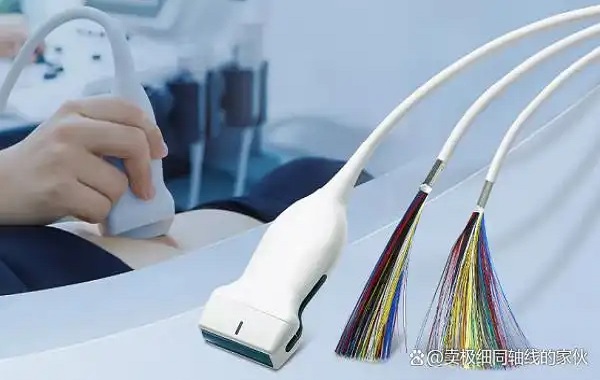
The application value in medical equipment
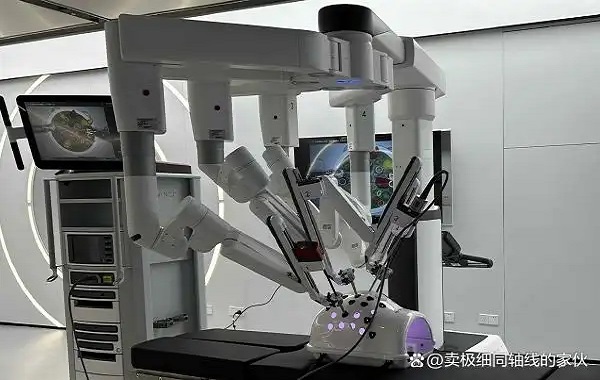
Extremely thin coaxial cable束 can not only be applied to endoscopes, heart monitoring equipment, and imaging systems, but also can transmit high-speed signals in robot-assisted surgeries, ensuring the real-time and accuracy of operations. Its stable performance and flexible design make it an irreplaceable key component in medical equipment, providing important support for the miniaturization and high-performance development of equipment.
“Without the consent or authorization of this site, no one shall reproduce, reprint, distribute, cite, change, broadcast or publish the content in whole or in part in any form, nor shall there be any other violation of the copyright of this site.