With the rapid development of 5G communication, the Internet of Things, and intelligent terminals, the requirements for high-frequency and high-speed signal transmission of devices are constantly increasing. Extremely thin coaxial cable束 (micro coaxial cable) has become an indispensable key component in high-frequency signal design due to its compact size and excellent shielding performance. This article will provide a comprehensive guide to the design of high-frequency signals using extremely thin coaxial cable束, starting from the key design points, combined with the leading I-PEX 20634-160T-02 connector.
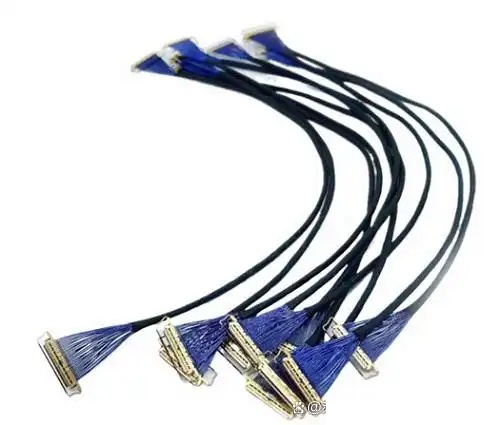
Challenge of ultra-fine coaxial beam in high-frequency design
Extremely thin coaxial cables, with their minimal size advantages, are widely used in portable devices such as mobile phones, tablets, and laptops. In high-frequency signal transmission, they must have excellent impedance matching and low crosstalk characteristics. The following aspects should be focused on during design:
• Screen layer structure: Multi-layer screening can effectively resist external electromagnetic interference.
Insulation materials: material selection directly affects signal stability and durability.
Line diameter control: Accurate control of line diameter is the basis for ensuring signal integrity.
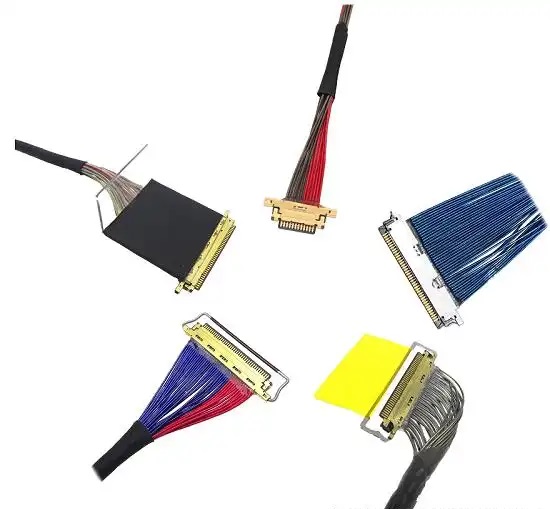
High-frequency signal design key for ultra-fine coaxial cable束
Impedance matching: Ensure that the cable and connector have the same impedance to reduce signal reflection and loss.
Screening performance: adopts a multi-layer screening structure to ensure signal purity.
Material selection: High-quality conductors and insulating materials can improve signal stability.
Flexibility and spatial adaptability: Fine cables need to have good flexibility to adapt to complex spatial layouts.
Signal delay and propagation speed control: By reasonably designing wire diameter and material, reduce time delay error, and ensure synchronous transmission.
• High-temperature stability: High-frequency equipment generates heat, and the wire material must have good heat resistance to prevent performance degradation.
Interface design must ensure the stability of long-term mechanical strength and electrical performance.
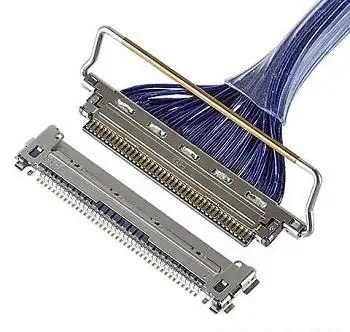
Introduction to I-PEX 20634-160T-02 Connector
I-PEX 20634-160T-02 is a high-performance ultra-thin coaxial connector from the CABLINE®-CA series of I-PEX company, designed for high-speed signal transmission.
Main specifications and features:
Contact spacing: 0.4 mm, suitable for high-density wiring.
• Stitch count: Multiple choices provided including 10, 12, 20, 30, 40, 50, and 60.
Compatible wire diameter: Supports ultra-fine coaxial cables from AWG #38 to #46.
Hybrid type: Horizontal insertion type, easy to install.
Mechanical lock buckle design: Prevents the connector from falling off or not fully engaging, improving stability.
Wide application fields: Widely used in high-speed data transmission scenarios such as Thunderbolt™ 3 (20 Gbps/lane).
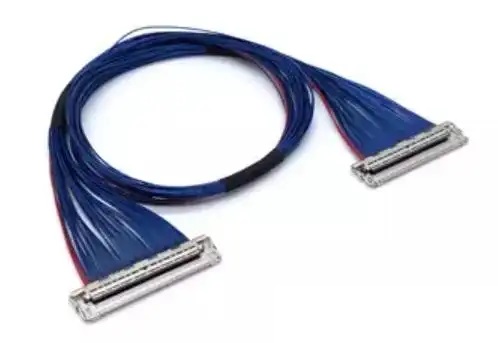
This connector uses high-quality electroplating technology, providing excellent electrical performance and durability, and offers reliable interface protection for extremely thin coaxial cables. Rational impedance matching, excellent shielding, and the combination of high-quality connectors are the core elements for stable transmission of high-frequency signals.
We have been focusing on the design and customization of high-speed signal cable harnesses and ultra-fine coaxial cable harnesses for a long time, committed to providing stable and reliable high-speed interconnection solutions. If you have any related needs or want to learn more, please contact: Manager Yin.
18913280527 (WeChat number)。