


Categorization:Harness Component
With the continuous development of products such as smartphones, wearable devices, and industrial cameras towards thinness and miniaturization, extremely thin coaxial cables have become an indispensable key component for high-speed and high-frequency signal transmission. However, due to their extremely thin wire diameter, many engineers and users may worry about whether their mechanical strength is sufficient and whether they are prone to breakage. This article will take KEL USL20-30S as an example to deeply analyze the real reliability of extremely thin coaxial cables from three dimensions: structure, performance, and usage.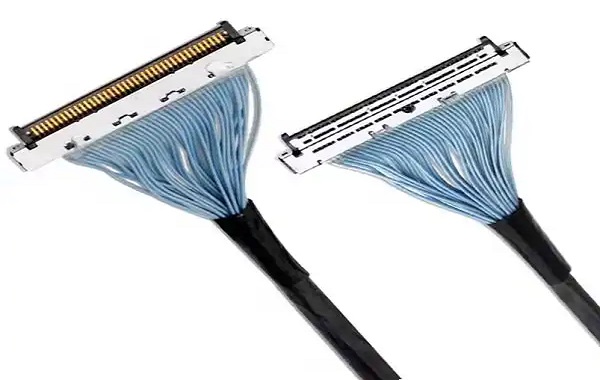
Why are extremely thin coaxial beam bundles widely used?
Compared with traditional cables, ultra-fine coaxial cable束 has a smaller wire diameter and higher flexibility, enabling stable high-speed signal transmission in limited spaces. Its structure is typically composed of an inner conductor, insulation layer, shielding layer, and outer sheath, with each layer of material undergoing precise process control to ensure the best electrical performance and mechanical stability. This multi-layer structure not only provides good shielding effects but also allows for flexible wiring in high-density equipment.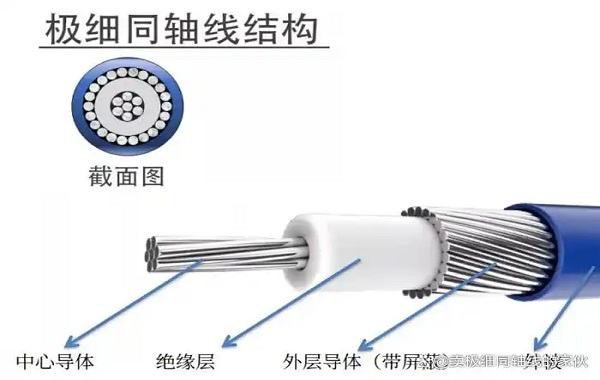
Why do people feel that ultra-fine coaxial cables are prone to break?
The finer the wire diameter, the more easily the mechanical strength is affected, and it is more prone to fatigue damage under conditions of repeated bending, twisting, or stretching, which is also the source of the common "easily broken" impression among the public. In fact, many failure issues are not defects in the wire harness itself, but are caused by factors such as too small installation bending radius, the wire harness being pulled, wiring being compressed, or improper assembly processes. In other words, irregular design and installation are often more likely to be the cause of failure than the wire harness itself.
How to improve the break resistance of high-quality products? (Taking KEL USL20-30S as an example)
The high-end ultra-thin coaxial cable assembly solution represented by KEL USL20-30S, through the use of high-strength alloy conductors, flexible insulating materials, and multi-layer shielding structures, significantly improves the tensile and fatigue resistance. The connector is compatible with AWG#42 ultra-fine coaxial cables, featuring a 0.4mm spacing design and an installation height of only 1.0mm, making it suitable for high-end electronic devices with limited space. At the same time, it supports 3.75Gbps high-speed transmission and has a working temperature range of -40℃ to 85℃, ensuring stable operation under harsh conditions.
High-quality ultra-fine coaxial cable bundles can fully meet the stringent reliability requirements of industries such as medical, smart terminals, and security monitoring, thanks to the IDC crimping technology and strict manufacturing tolerance control.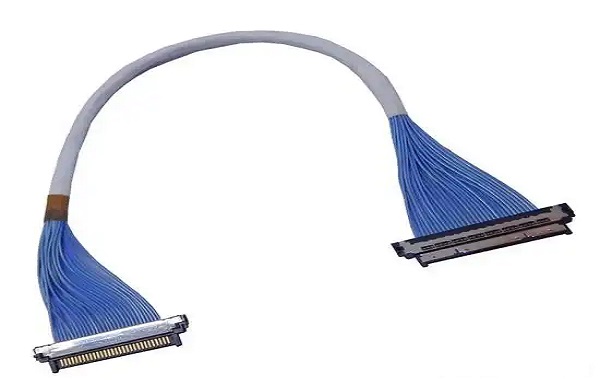
The extremely thin coaxial cable assembly is not "naturally fragile". With reasonable design, standard installation, and the selection of reliable brands (such as KEL USL20-30S), its durability can fully meet the needs of high-end electronic equipment. Choosing the appropriate cable structure and adhering to installation specifications are the key to ensuring long-term stable operation.
I amSuzhou Huichengyuan Electronic TechnologyCommitted to the design and customization of high-speed cable harnesses and ultra-fine coaxial cable harnesses for a long time, we are dedicated to providing stable and reliable high-speed interconnect solutions. If you have any related needs or want to learn more, please contact Manager Yin.18913280527 (WeChat number)。
“Without the consent or authorization of this site, no one shall reproduce, reprint, distribute, cite, change, broadcast or publish the content in whole or in part in any form, nor shall there be any other violation of the copyright of this site.