


Categorization:Harness Component
Whether it is for display modules, camera modules, vehicle-mounted systems, laptops, or VR devices, the commonly used LVDS cables, also known as the familiar differential pair cables, are being replaced by a new type of wire called **Micro Coaxial Cable**.
This is not the result of the industry chasing "new trends," but rather an inevitable choice as high-speed signal transmission technology continuously upgrades. What makes it replace LVDS and become the new favorite? We can analyze it from aspects such as signal characteristics, structural design, anti-interference performance, and processing technology.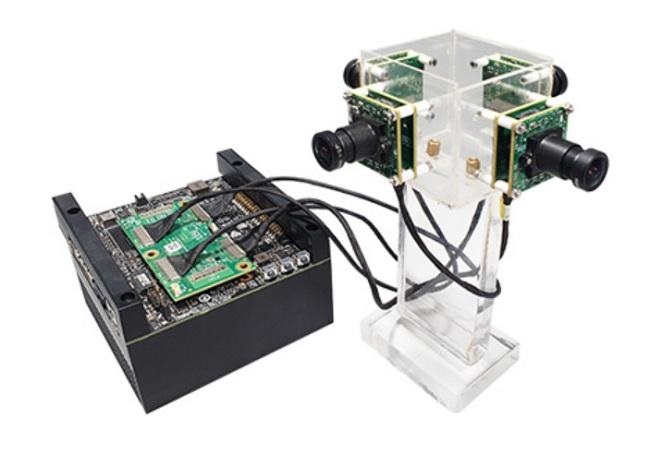
LVDS cable: stable and reliable, but has shown bottlenecks
LVDS (Low Voltage Differential Signaling) is a mature and widely used technology, with its low power consumption, anti-interference, and medium to high-speed transmission capabilities, it has long been the standard solution in the display interface field, such as notebook display cables, industrial displays, and camera modules, etc.
However, as the screen resolution and refresh rate continue to improve, the performance bottleneck of LVDS wiring gradually becomes apparent. Flat cables, although cheap and soft, show obvious shortcomings under high-frequency signal transmission:
Crosstalk is easy to occur between lines.
Signal delay is difficult to match accurately.
The longer the transmission distance, the greater the signal loss.
EMI (electromagnetic interference) issues are prominent.
When the transmission rate reaches several Gbps, these issues are further amplified, often leading to system instability or abnormal display.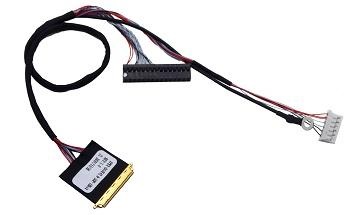
High-frequency signal ideal solution: extremely thin coaxial cable
So-called "extremely fine coaxial cables" are high-performance cables that are miniaturized from traditional coaxial structures, with diameters usually around 0.3mm to 0.5mm, and even finer. They still retain the typical structure of central conductor, insulating medium, shielding layer, and outer sheath, but have significant advantages in performance:
Excellent shielding performance: Each wire is equipped with an independent shielding layer, effectively suppressing external electromagnetic interference.
High impedance consistency: it is conducive to ensuring the integrity of high-speed differential signals.
High-frequency loss is low: signal integrity and stability are significantly improved.
Flexible and volumetrically superior: with a small wire diameter and good bending properties, it is suitable for compact or foldable space wiring.
Therefore, when a product requires higher bandwidth, stronger EMC performance, and more reliable signal transmission, micro coax often becomes a more secure choice.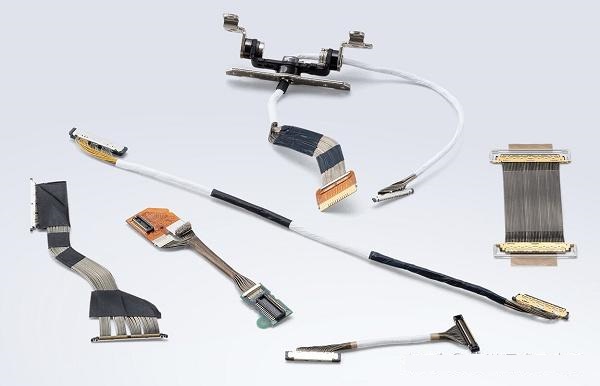
Why are more and more devices choosing Micro Coax?
To meet higher data rates: applications such as 4K/8K display, AI camera, VR devices, etc., have led to a sharp increase in signal bandwidth. The crosstalk and loss of LVDS wiring under high frequency are difficult to control, while micro coax can easily support multi-Gbps level transmission.
In response to stricter EMC requirements: The fields of vehicle electronics, industrial automation, and AI servers have extremely high requirements for electromagnetic compatibility. The shielding layer of the coaxial structure can effectively isolate interference sources.
Adapting to slim and lightweight structural design: Modern equipment has limited space and frequent bending, flat wiring is easy to be damaged and has poor anti-interference ability; micro coax has stronger flexibility and is more suitable for high-density wiring.
Superior signal synchronization: The unified shielding structure ensures better consistency in signal delay, significantly reducing the error rate.
Manufacturing technology is becoming more mature: with the launch of standardized interfaces and the popularization of automated processing technology by manufacturers such as I-PEX and Hirose, the cost and stability of micro coax have been greatly improved.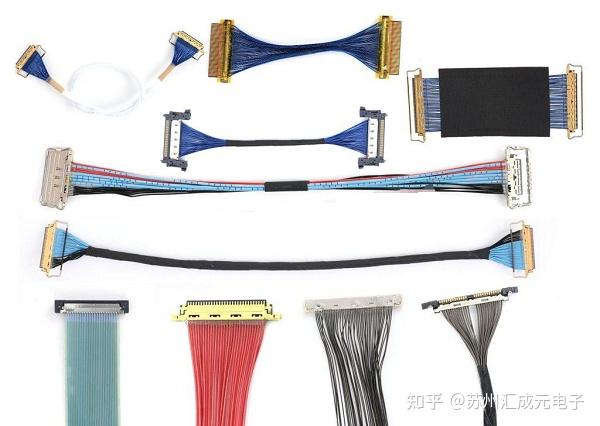
Not all applications are suitable for replacement.
Micro coax is currently mainly used in high-speed, anti-interference, and high-reliability fields, such as:
High-speed camera module connection with the mainboard;
High-speed signal transmission for foldable screens and hinge positions
Vehicle-mounted display and ADAS system
Internal high-speed channel of VR/AR headsets.
For products that are cost-sensitive or have lower signal rate requirements, such as mid-to-low-end industrial displays or ordinary consumer electronics, LVDS cables still offer a cost-performance advantage.
Therefore, the future trend is hierarchical coexistence: the high-speed part uses micro coax, while the low-speed part still uses LVDS.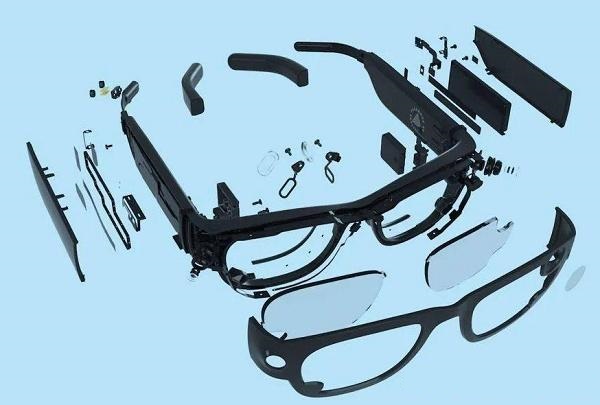
Five, Future Trend: Moving towards the Micro-sized Era of High-frequency Interconnection
With the advancement of interface standards such as eDP, DisplayPort, and SerDes towards higher bandwidth, the application scope of micro coax will continue to expand. It can also be combined with flexible circuits (FPC) to form a thinner and more integrated hybrid cable structure.
It can be anticipated that micro coax will become the mainstream interconnection method for high-end electronic equipment in the coming years.
Its value lies not only in the improvement of transmission performance, but also in the enhancement of system stability and overall reliability.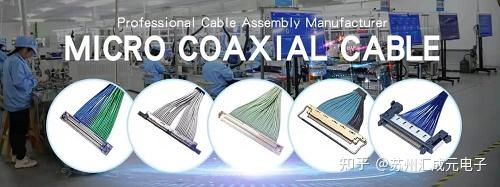
The popularity of ultra-fine coaxial cables is not accidental.
It solves many limitations of LVDS wiring in high-frequency signal transmission—stronger shielding, lower loss, higher consistency, and more flexible routing capability.
Although LVDS still has its survival space, micro coax is gradually becoming the core force of the new generation of high-speed interconnection.
I am[Suzhou Huichengyuan Electronics]Focusing on the design and customization of high-speed signal cable harnesses and ultra-fine coaxial cable harnesses, committed to providing customers with efficient and reliable high-speed interconnect solutions.
Welcome to contact us for product or technical consultation:Manager Yin 18913280527 (WeChat same number)。
“Without the consent or authorization of this site, no one shall reproduce, reprint, distribute, cite, change, broadcast or publish the content in whole or in part in any form, nor shall there be any other violation of the copyright of this site.