In today's pursuit of thinness and speed in electronic products, the extremely thin coaxial cable (Micro-coaxial cable) has become the "invisible blood vessel" in precision instruments such as mobile phones, laptops, and medical equipment. It can transmit high-speed signals within narrow spaces, ensuring the normal operation of the devices. However, many people do not know that the key to its performance is not only the tiny central conductor but also the outer shielding layer. What role does the shielding layer play? Why do design engineers attach so much importance to it? This article will take you to a deep understanding of the design logic and actual function of the extremely thin coaxial cable shielding layer.
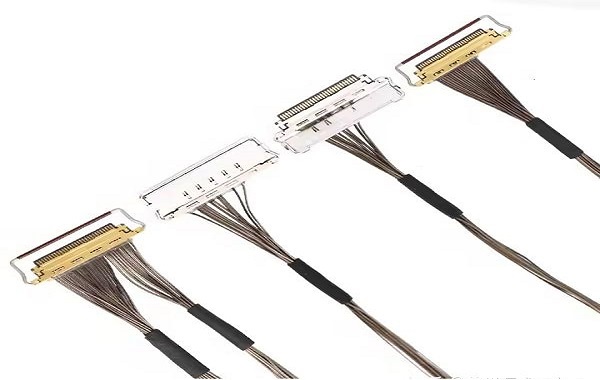
A very fine coaxial cable is a type of coaxial cable with a very small diameter. It is often used in high-frequency applications due to its low loss and high signal integrity.
A super-fine coaxial cable is a ultra-thin coaxial cable with a diameter usually less than 1 millimeter. Despite its small size, it is still capable of transmitting high-speed, high-frequency signals and is widely used in laptops, smartphones, drones, medical imaging equipment, and aerospace fields. In electronic devices with limited space and complex wiring, it becomes an ideal choice for high-density signal connections due to its small size, light weight, and good flexibility.
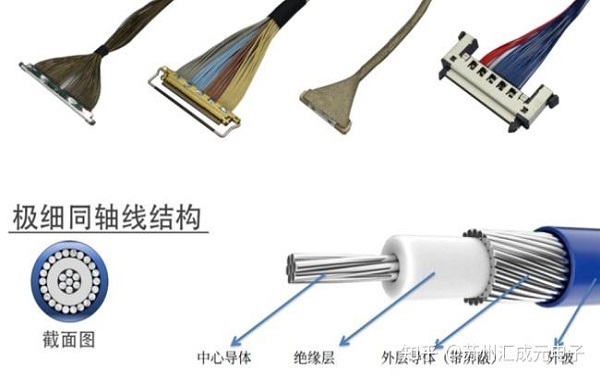
Part two: The structure and form of the shielding layer
The structure of the extremely thin coaxial cable is similar to that of a general coaxial cable, usually consisting of the following several parts:
Central conductor: The core channel for transmitting signals
Insulating medium: Separates the center conductor from the shielding layer, maintaining stable impedance
3. Shielding layer: metal braiding, metal foil, or composite structure, which serves as electromagnetic protection
Outer sheath: Protects the internal structure from mechanical damage
In these sections, the shielding layer is the key to ensuring signal quality.
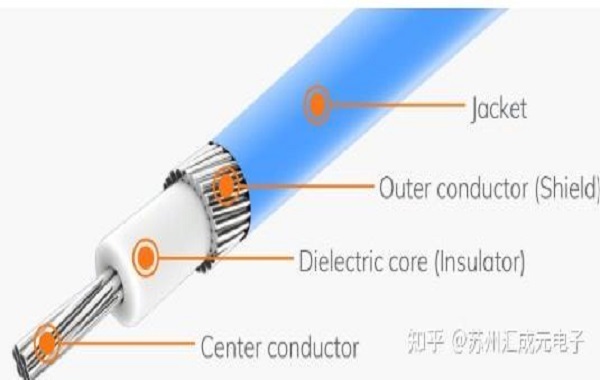
The main function of the ultra-fine coaxial shield layer
Resist external electromagnetic interference (EMI)
The shielding layer acts as a shield for signals, effectively isolating external electromagnetic radiation, preventing interference from entering the signal, and simultaneously suppressing signal leakage from the central conductor. This two-way protection ensures the stability and anti-interference ability of signal transmission.
Maintain signal integrity
In high-speed high-frequency transmission, impedance consistency is particularly important. The shielding layer provides a grounding path and stabilizes the transmission impedance, reducing signal reflection and distortion, making data transmission faster and more accurate.
Reduce internal interference of the device
In devices, multiple extremely thin coaxial cables may work in parallel. The shielding layer effectively prevents crosstalk between adjacent cables, which is particularly important in high-density modules such as camera modules, antennas, and displays.
4. Support power and signal sharing
In some applications, the central conductor is used for signal transmission, while the shielding layer serves as a power return path or grounding channel, achieving multiple functions with a single wire, saving wiring space and ensuring system stability.
Layer structure difference
Different types of shielding layers vary in performance and flexibility:
5.1 Metal weaving: good flexibility, mature manufacturing process
5.2 Metal foil: High coverage rate, excellent shielding effect, but slightly poor flexibility
5.3 Composite (foil + woven): Combining high shielding performance and certain flexibility, it is a commonly used solution in high-frequency scenarios.
The shielding layer is a隐形 guardian of extremely fine coaxial cables, not only protecting against electromagnetic interference but also ensuring signal integrity, reducing internal crosstalk, and in some scenarios,兼顾power supply functions. When selecting extremely fine coaxial cables, the type and structure of the shielding layer are important factors affecting performance, which need to be determined based on specific application requirements.
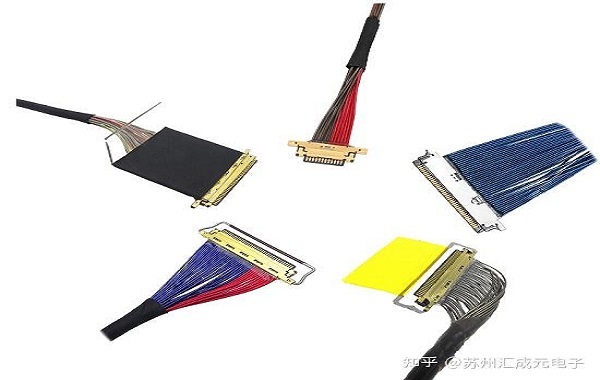
The ultra-thin coaxial shielding layer plays a crucial role in high-speed signal transmission. It can prevent external interference, maintain signal integrity, reduce internal interference, and support power supply functions when necessary. For engineers, choosing the shielding layer type and structure reasonably is a key link to ensure the stable performance and reliable data transmission of equipment. With the increasingly high requirements for thinning and high-frequency of electronic products, the design and application of shielding layers will become more and more important.
I amSuzhou Huichengyuan Electronic TechnologyLong-term focus on the design and customization of high-speed cable harnesses and ultra-fine coaxial cables, committed to providing stable and reliable high-speed interconnect solutions. For more information, please contact:YinManager18913280527 (WeChat number)。