

Categorization:Harness Component
One, impedance continuity is the foundation of high-speed links.
MIPI D-PHY and C-PHY both impose strict requirements on differential impedance (commonly 90Ω±10%). Extremely thin coaxial cables, due to their fine wire diameter and thin dielectric, are susceptible to impedance discontinuity caused by any changes in shielding structure or dielectric deviation, leading to reflections and eye diagram distortion. Therefore, when selecting, it is necessary to clearly define the target impedance of the connector series (such as I-PEX 20455, 20373, etc.) and ensure that the impedance path between the connector, cable, and PCB remains continuous. Impedance control is the first prerequisite for the reliability of high-speed links.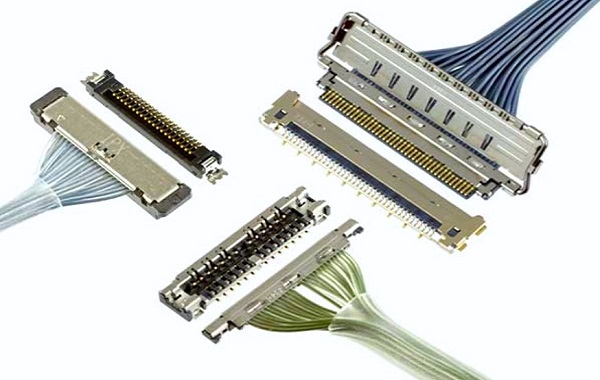
The shielding structure and EMI performance must match the interface design.
MIPI signal rates can reach several Gbps, with high risks of high-frequency noise and crosstalk. Many I-PEX and HRS interfaces have a metal shell grounding structure. If the cable harness only uses a single layer of shielding or the shielding coverage is insufficient, it will cause EMI leakage and differential crosstalk. Therefore, in MIPI applications, it is recommended to prioritize the use of extremely thin coaxial cables with double shielding (copper foil + braid) to ensure a complete and continuous grounding path to the interface terminal, thereby effectively reducing system electromagnetic interference.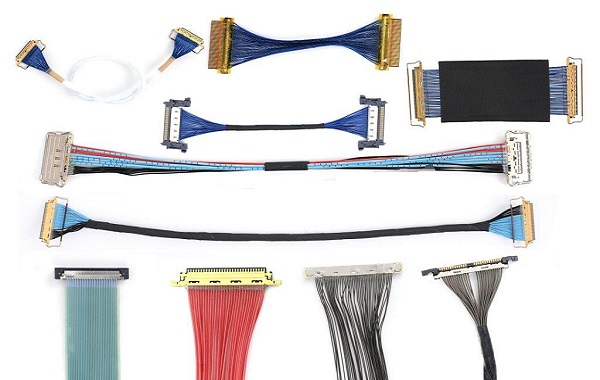
Three, structural design, insertion and extraction life, and processing consistency are equally critical.
High-speed harnesses must not only meet electrical performance requirements but also take into account structural space, durability, and manufacturing processes. In terms of harness length, MIPI D-PHY is generally recommended not to exceed about 150mm under 1.5Gbps conditions; if length is limited, low-loss media (such as FEP, PTFE) should also be selected. In terms of reliability, there are significant differences in the locking method of connectors and the number of insertion and extraction times, such as I-PEX 20879 which has a locking clip structure and can meet high-frequency insertion and extraction requirements. On the processing level, shielding termination, crimp depth, grounding tab length, and other factors all directly affect impedance consistency, and it is necessary to choose harness manufacturers with precise processing capabilities to ensure stable quality.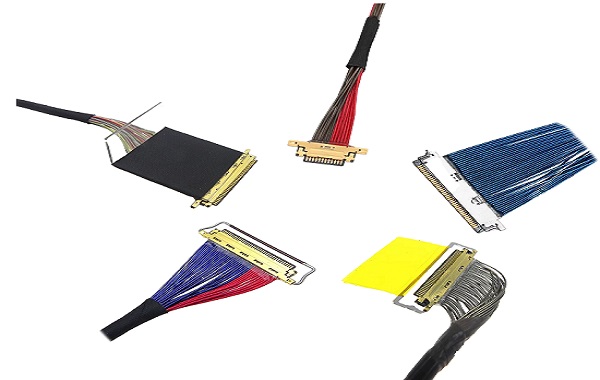
“Without the consent or authorization of this site, no one shall reproduce, reprint, distribute, cite, change, broadcast or publish the content in whole or in part in any form, nor shall there be any other violation of the copyright of this site.