With the development of artificial intelligence and machine vision, the NVIDIA Jetson series has become the mainstream platform for edge computing and visual processing. As the camera pixel, frame rate, and bandwidth continue to improve, the signal quality of MIPI CSI-2 becomes particularly important. In applications with limited space, complex structures, or the need for anti-interference, traditional wiring schemes are often difficult to meet the requirements, making extremely thin coaxial cables a more reliable transmission method.
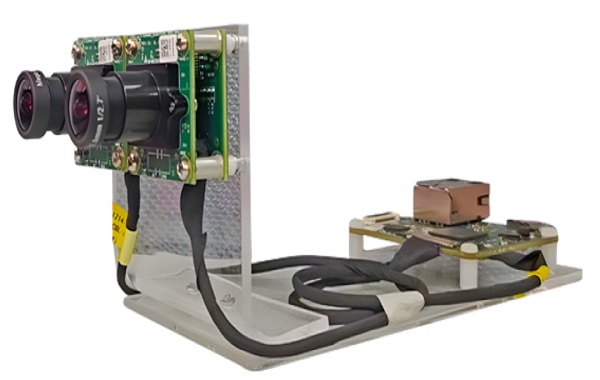
The challenges of high-speed transmission for Jetson camera
The Jetson platform requires high-speed differential transmission of a large amount of image data through the MIPI CSI-2 interface. In high-frequency environments, the signal is prone to be affected by loss, interference, timing deviation, and mechanical vibration. Especially in scenarios such as robots, drones, and rotating modules, the cables need to have higher stability and durability. Traditional ribbon cables have obvious limitations in shielding performance, mechanical life, and signal integrity, therefore, a more professional transmission structure is needed to ensure reliability.
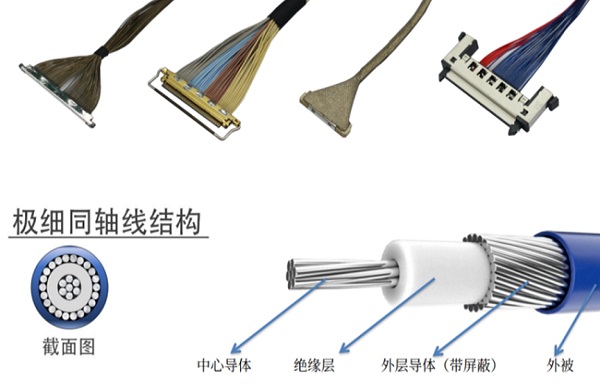
Two, Structure and Advantages of Ultra-fine Coaxial Cable Beams
The extremely thin coaxial cable bundle is composed of the inner conductor, insulating layer, shielding layer, and sheath, and can complete high-speed differential signal transmission within a space of only a few millimeters. It has strong shielding ability, which can effectively reduce external interference; high flexibility, suitable for winding and moving mechanisms; and maintains low loss in high-frequency transmission, significantly improving the quality of image signals. In the application of Jetson cameras, this structure is more suitable for complex environments, but it also puts higher requirements on process accuracy, impedance control, and overall design.
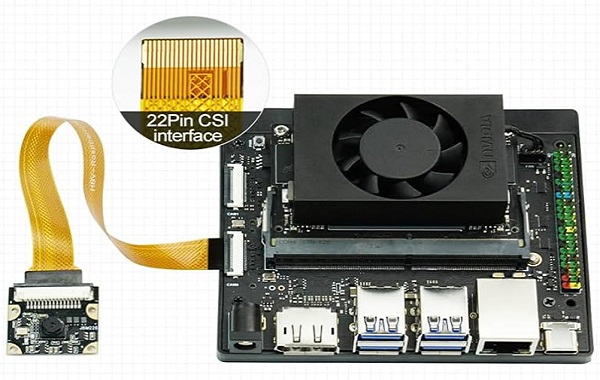
Design focus for Jetson system
When connecting Jetson's MIPI CSI-2 interface with extremely fine coaxial cables, signal distribution and optimization need to be achieved through an adapter board. Throughout the entire link, impedance continuity should be maintained, the lengths of all differential pairs should be consistent, and good shielding and grounding treatment should be ensured. The adapter board needs to have fan-out design, differential wiring, shielding transition, and necessary protective measures to ensure that the system avoids reflections, crosstalk, and signal distortion under high-speed operation. For moving equipment, attention should also be paid to bend and vibration resistance.
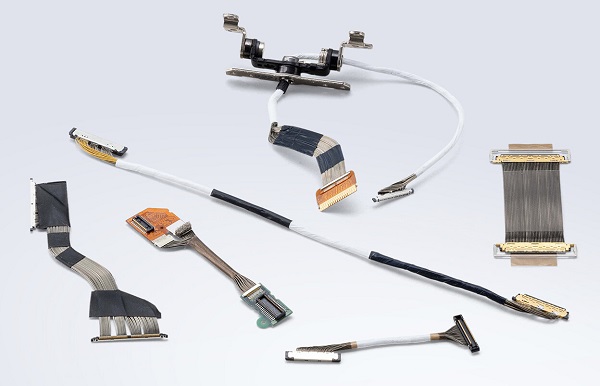
In the high-speed camera application on the Jetson platform, extremely thin coaxial cables can significantly improve the stability and anti-interference ability of MIPI CSI-2 transmission, while meeting various needs such as compact space, moving structure, and complex environment. For visual systems requiring high reliability and high bandwidth, this is a more professional and stable transmission solution.
I am
Suzhou Huichengyuan Electronic TechnologyLong-term focus on the design and customization of high-speed signal cable harnesses and ultra-fine coaxial cable harnesses, committed to providing stable and reliable high-speed interconnection solutions. If you have any related needs or want to learn more, welcome to contact
Manager Yin: 18913280527 (WeChat number)。