

Categorization:Harness Component
Advantages and limitations of extremely fine coaxial lines
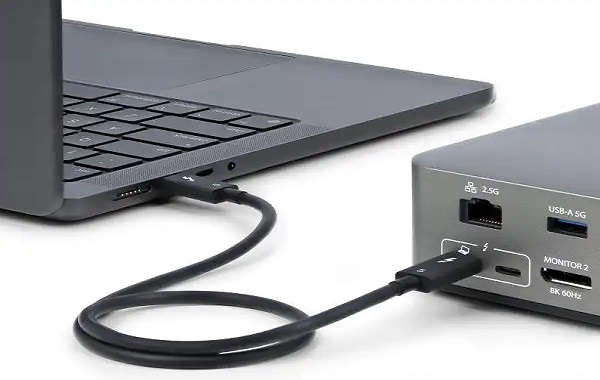
Extremely thin coaxial cables are widely used in notebooks, tablets, docking stations and other products due to their compact structure, good shielding performance, and controllable cost. They offer stable and reliable short-distance transmission. However, with the increase in speed, their bandwidth is limited, signal loss increases, and they are prone to interference in complex electromagnetic environments. Additionally, frequent bending or plugging and unplugging requires attention to mechanical reliability. These factors make optical fibers an increasingly viable alternative solution.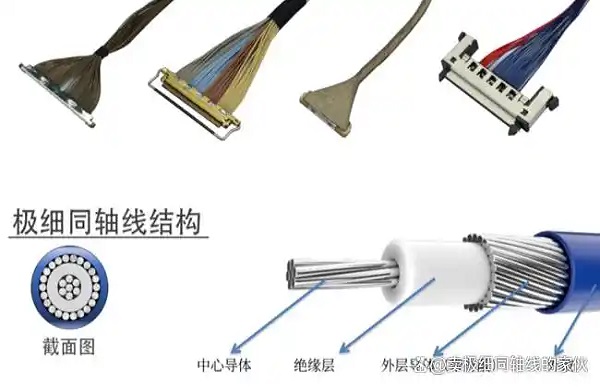
The potential advantages of fiber optics
Optical fiber transmission has the advantages of low loss, long-distance transmission, strong anti-interference ability, and large bandwidth expansion. In data centers, server interconnections, and high-end communication equipment, optical fiber has become mainstream, providing an ideal solution for high-speed, long-distance, and high-reliability applications.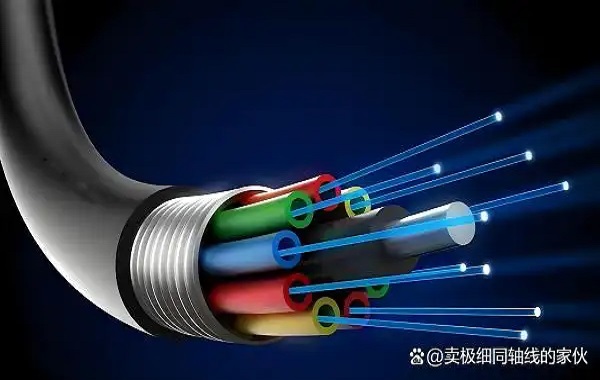
The difficulties and coexistence trends of fiber replacement
Fiber optics still faces challenges in the micro cable assembly field, such as high cost, complex structure, non-uniform standards, and vulnerability to micro-bending. In short-distance, cost-sensitive, or space-limited scenarios, coaxial cables remain the mainstream; fiber optics take the lead in long-distance, high-speed scenarios; some applications may adopt a hybrid optical-electrical solution, using fiber optics in the core link while still using coaxial cables within the equipment. Both are more likely to complement and coexist in the future, rather than completely replace each other.
“Without the consent or authorization of this site, no one shall reproduce, reprint, distribute, cite, change, broadcast or publish the content in whole or in part in any form, nor shall there be any other violation of the copyright of this site.