


Categorization:Harness Component
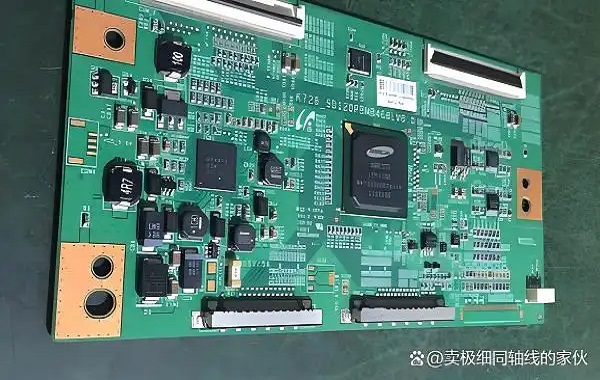
New challenges of T-CON connection
With the screen resolution increasing from 1080p to 4K, 8K, the data volume grows exponentially, and the high-speed signal frequency increases. Traditional ribbon cables are prone to interference and signal distortion during transmission, making it difficult to meet the demand. At the same time, ultra-thin narrow bezel designs lead to extremely close spacing of components, and high-speed signal lines are susceptible to electromagnetic interference, affecting the stability of the image. In addition, thin and lightweight has become the mainstream trend of display products, and cables and interfaces must be sufficiently small to accommodate narrow bezels and limited internal space.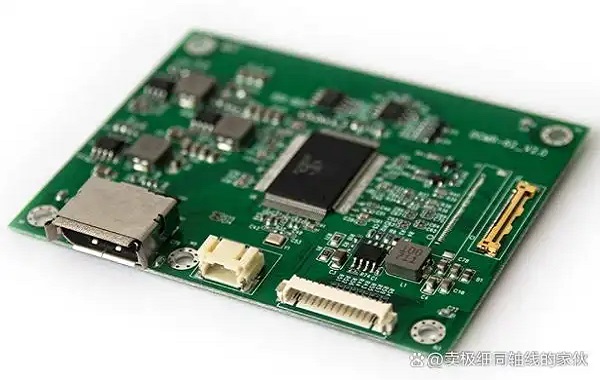
The advantages of ultra-fine coaxial lines
Extremely fine coaxial cables, with their unique structure, excel in high-speed display connections. Their coaxial shielding design effectively isolates external electromagnetic noise, ensuring stable signal transmission; they exhibit excellent performance in impedance control and signal loss, reducing reflections and distortions to ensure smooth, high-resolution images without screen flicker; their slender diameter is suitable for routing in limited spaces without affecting slim design; the matching connectors typically feature full shielding and lock structure, ensuring stable contact and further reducing interference.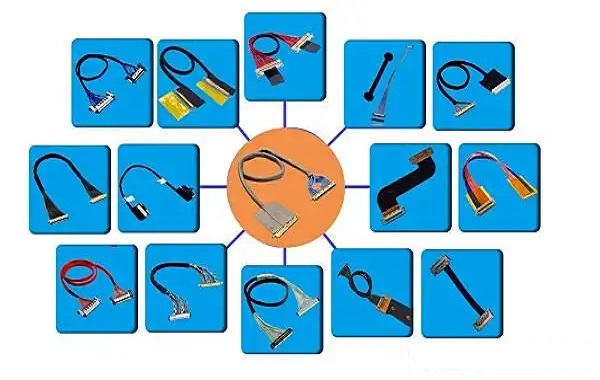
Three, key considerations in applications
In practical applications, attention must still be paid to some design details. The connector model should be selected according to bandwidth, interface direction, and spatial layout; high-frequency signals must be matched with impedance to avoid reflections; cables must have sufficient bending and fatigue durability; compared to traditional ribbon cables, micro coax has a higher cost, and a balance between performance and price needs to be made during design. By selecting the model and layout reasonably, extremely thin coaxial cables can give full play to their advantages of high speed, anti-interference, and thinning.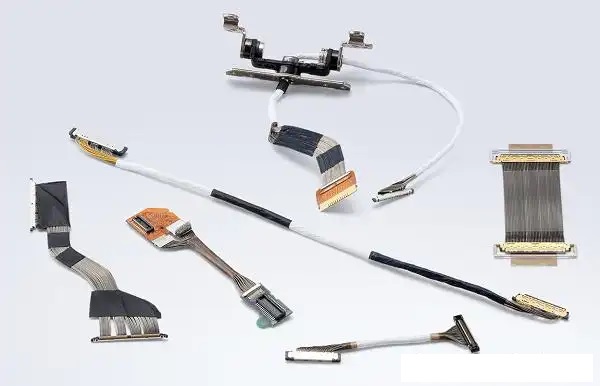
“Without the consent or authorization of this site, no one shall reproduce, reprint, distribute, cite, change, broadcast or publish the content in whole or in part in any form, nor shall there be any other violation of the copyright of this site.