


Categorization:Harness Component
I-PEX 82982-100B-01-D: 20Pin, 40AWG ultra-fine coaxial cable assembly, providing a more flexible cabling solution for high-density connections
Inside laptops, tablets, display devices, and other miniaturized electronic products, the spacing between connectors is becoming smaller, and the available space for wiring inside the devices is also increasingly limited. At the same time, high-speed data signals demand higher requirements for signal integrity and anti-interference capability. Under such application environments, traditional general-purpose wires are increasingly difficult to meet the multi-faceted needs of "small wire diameter, high-density wiring, and high-speed signal transmission," and ultra-fine coaxial cable assemblies have therefore become a type of connection solution that is increasingly attracting attention in engineering design. The product introduced in this article is I-PEX 82982-100B-01-D, which belongs to the CABLINE-CA series 20Pin ultra-fine coaxial cable assembly products. According to relevant product information, this model uses 40AWG ultra-fine coaxial wire material, with a cable length of 300mm, and a connection structure of 1--1, meaning that the corresponding wire positions on both ends are connected one to one. The connector model used at the end of the wire material is 20634-120T-02, which adopts a 0.4mm-level ultra-fine spacing design, suitable for internal connections in space-limited, high-density electronic devices. For engineers, the value of such products not only lies in "thinner wire diameter" but also in the ability to achieve more compact signal connections within limited space; for purchasers, clearly defining key information such as original model, wire gauge, connector model, wire position definition, and length is an important basis for domestic compatibility replacement, supplier evaluation, and cost optimization.
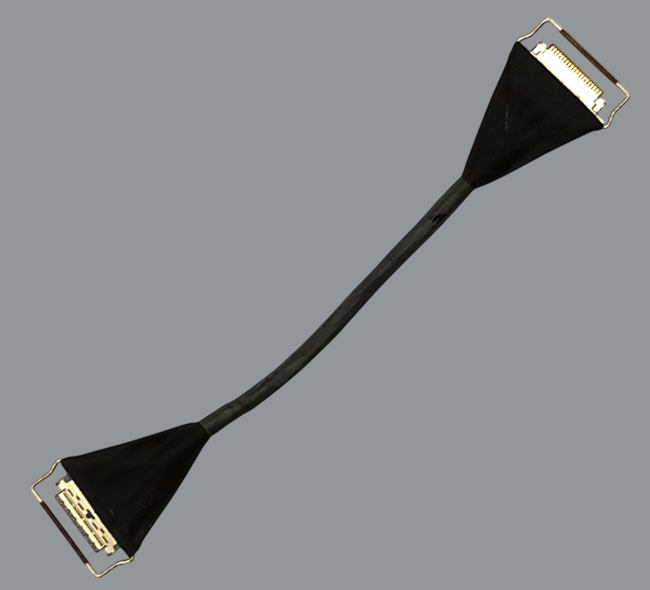
The difference between ultra-fine coaxial cable bundles and RF cable bundles? Engineering selection cannot be based solely on the word "coaxial".
Extremely thin coaxial cables and RF cables share certain structural similarities and may both adopt coaxial structures, achieving signal transmission through a central conductor, insulating medium, and shielding layer, which makes it easy to confuse the two during the actual selection process. However, from the perspective of engineering applications, their design focuses are not entirely the same. The core advantage of extremely thin coaxial cables usually lies in "miniaturization, high-density wiring, and signal integrity control under high-speed digital signal transmission environments," making them particularly suitable for scenarios with narrow internal spaces in devices, small connector spacing, and a large number of signals. RF cables, on the other hand, are usually more concerned with RF performance indicators such as impedance control, insertion loss, return loss, and standing wave during the RF signal transmission process, and are commonly used in applications such as antennas, wireless communications, and RF modules. Therefore, "both being coaxial" does not mean that the two types of cables can be directly interchangeable. Engineers need to make a comprehensive judgment based on factors such as signal type, operating frequency, transmission rate, impedance requirements, cable length, bending space, and connector interfaces during selection. For I-PEX 82982-100B-01-D type 20Pin, 40AWG extremely thin coaxial cables, the product positioning is more突出 on high-density, miniaturized internal interconnection requirements for devices; if the project requires RF module to antenna RF transmission, then suitable RF cables should be selected according to specific RF indicators, and cannot be replaced simply because of the similar cable appearance.
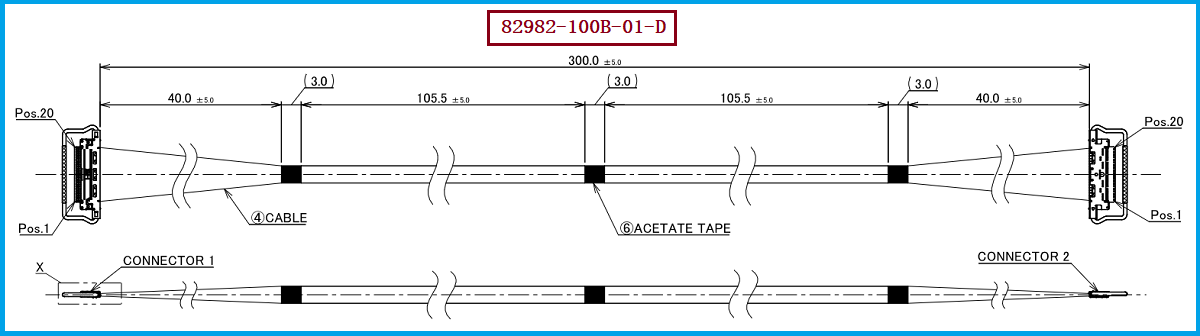
Three, selection, compatibility, and alternative solutions reference and suggestions: engineers look at parameters, buyers look at the supply chain, we provide alternatives starting from compatibility.
For customers in need of alternative solutions for I-PEX 82982-100B-01-D, it is recommended to first lock in several core matching conditions during the selection process: Firstly, 40AWG ultra-fine coaxial cable material, followed by 20Pin specification and 1-1 pin definition. At the same time, confirm the cable length, connector structure at both ends, and specific matching relationship. Among them, the connector model used at the end of this type of wire material is 20634-120T-02. Therefore, when replacing domestically, it is not only necessary to compare the cable outer diameter or AWG specification, but also to comprehensively confirm the connector's mechanical dimensions, terminal arrangement, mating relationship, wire sequence, and assembly process. For engineers, if the original equipment has completed the structural design according to the I-PEX CABLINE-CA system, the alternative solution should prioritize compatibility verification around the original connector interface and installation space, and then further confirm the electrical performance and high-speed signal transmission performance. For purchasing personnel, it is advisable to focus on whether the supplier has the mass production capacity for 40AWG ultra-fine coaxial cables, connector termination capability, product consistency control capability, and customization production capacity. Our company can provide: I-PEX 82982-100B-01-D compatible alternative cable solutions, which can match and customize products around key conditions such as 20Pin, 40AWG, 1-1 pin definition, and matching connectors, and provide ultra-fine coaxial cable solutions for customers in need of domestication, supply chain optimization, or second supplier introduction. For formal introduction projects, it is recommended to further verify the dimensions, wire sequence, connector matching, and actual signal performance at the sample stage to ensure that the alternative products can meet the whole machine design requirements.
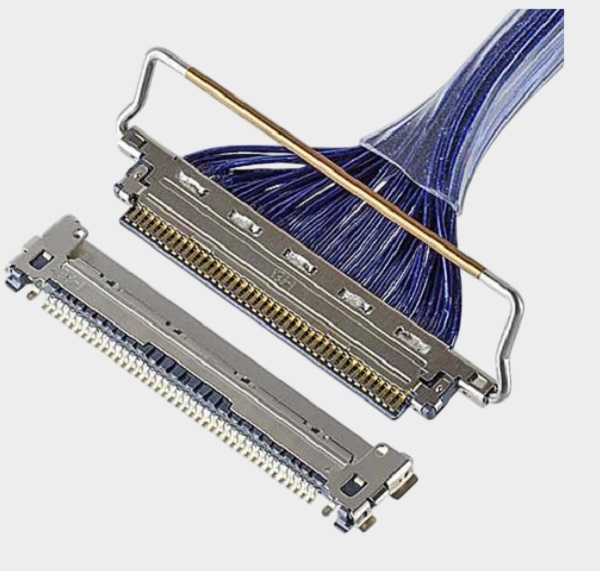
Why choose to replace the ultra-fine coaxial cable束 with domestic alternatives? From engineering verification to procurement and supply chain, the focus is not just on "whether it can be replaced."
For electronic device manufacturing enterprises, when selecting a supplier of ultra-fine coaxial cable assemblies, "whether it can be produced" is just the first step; what is more important is whether the supplier can manufacture consistently over the long term according to engineering requirements. Products such as I-PEX 82982-100B-01-D feature 20 pins, 40 AWG, 1-1 line positions, and small connectors, and their manufacturing process requires high standards for ultra-fine wire material handling, termination precision, line sequence control, and product consistency. Therefore, engineers should focus on the mechanical compatibility, electrical connection reliability, and signal performance in actual applications when introducing domestic substitute products; purchasing personnel should further evaluate the supplier's production capacity, delivery stability, quality control, and continuous supply capability. Our company specializes in the production and manufacturing of ultra-fine coaxial cable assemblies and can conduct compatibility and substitute development around original product models, wire specifications, connector models, line position definitions, and lengths for customers who need to substitute for imported brand similar products. For the I-PEX 82982-100B-01-D introduced this time, we can provide corresponding compatibility and substitute cable assembly solutions to help customers extend from a single brand procurement to a more flexible supply chain system, providing new choices for domestic substitution, cost optimization, and supply chain alternatives while meeting project technical requirements.
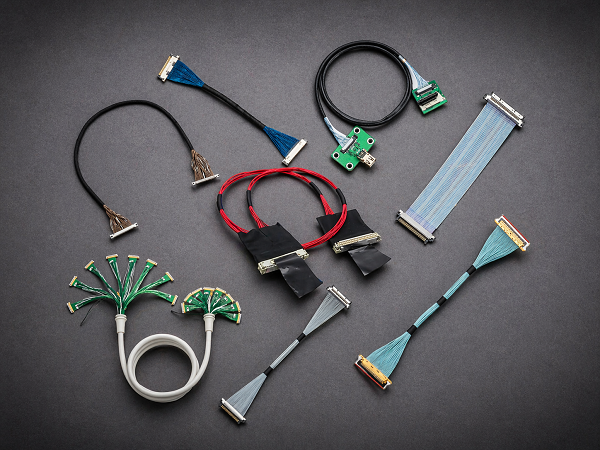
I-PEX 82982-100B-01-D is a 20Pin, 40AWG, 300mm CABLINE-CA series ultra-thin coaxial cable assembly with 1--1 wire position definition. The cable ends are matched with 20634-120T-02 connectors. Engineers need to focus on the matching relationship between cables, connectors, wire sequence, mechanical dimensions, and actual signal applications when selecting such products. For purchasers, further examination of the supplier's research and development, manufacturing, quality, and continuous delivery capabilities is required. At the same time, although ultra-thin coaxial cable assemblies and射频 cables both have coaxial structures, there are differences in application positioning and key performance indicators. In actual projects, selection should be based on the specific signal type and application scenario. Our company focuses on the manufacturing of ultra-thin coaxial cable assemblies and can provide customers with I-PEX 82982-100B-01-D compatible replacement cable solutions to help electronic equipment customers achieve more flexible supply chain choices.
I am[7A Electronic Network]We can provide structural optimization and signal consistency evaluation services and product solutions for high-speed ultra-fine coaxial cable assemblies. For more information, please contact Manager Yin.18013280527 (WeChat number).
“Without the consent or authorization of this site, no one shall reproduce, reprint, distribute, cite, change, broadcast or publish the content in whole or in part in any form, nor shall there be any other violation of the copyright of this site.