

Categorization:Harness Component
One: Product Introduction——35Pin ultra-thin coaxial cable assembly provides a compact connection solution for high-speed equipment
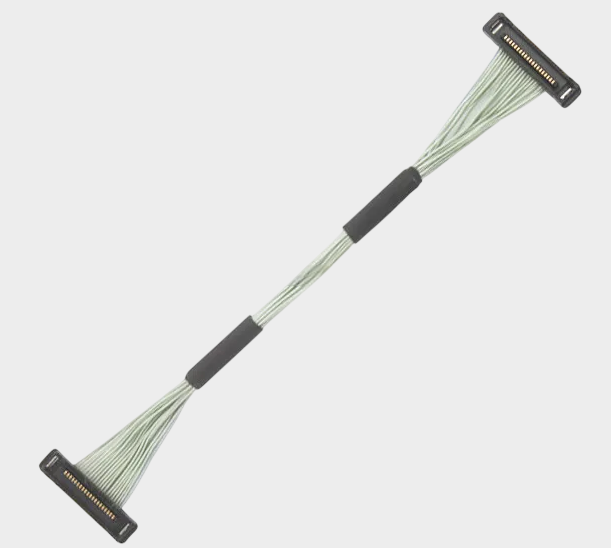
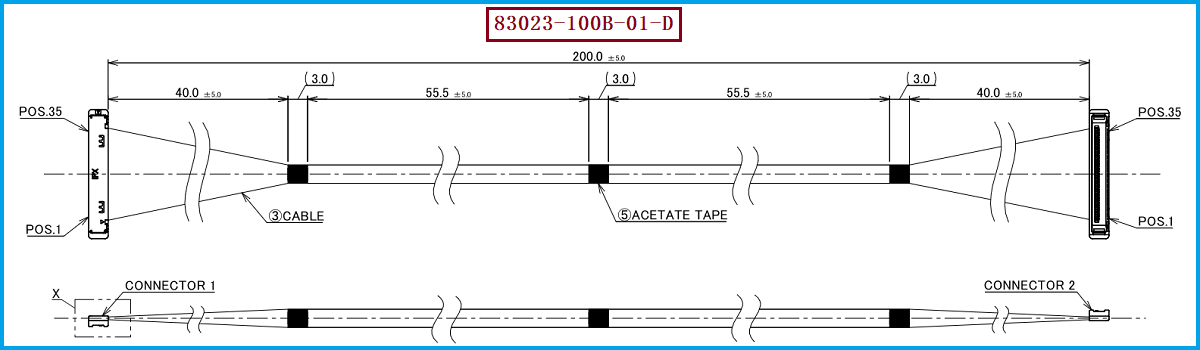
In notebook computers, ultra-thin display devices, camera module, and industrial electronic equipment, the internal wiring space is increasingly compact. At the same time, there are higher requirements for high-speed signal transmission, cable flexibility, and long-term reliability. Ultra-thin coaxial cables, with their multi-channel, high-density, and flexible wiring features, have become an important choice for internal connections of precision electronic equipment. The product introduced in this article is the I-PEX 83023-100B-01-D ultra-thin coaxial cable, which belongs to the CABLINE®-SS series with a 35Pin, 200mm, 1-1 connector configuration at both ends. This series of connectors uses a 0.4mm terminal spacing and a compact structure, suitable for high-speed connection designs with limited space. The product is matched with the cable end connector model 20373-R35T-06, which can be adapted to cables with specifications of 36AWG, 38AWG, 40AWG, and 42AWG. The specific application needs to be confirmed by combining the cable structure, impedance, and termination process. Our company focuses on the research and development and production of ultra-thin coaxial cables and can develop corresponding compatible alternative solutions based on the product models, engineering drawings, and equipment interface requirements provided by customers.
Two: Knowledge of bend resistance - How to conduct bend resistance tests on extremely thin coaxial cable bundles?
The bend resistance of extremely thin coaxial cable bundles is directly related to the connection stability of the equipment during opening and closing, rotation, movement, and long-term use. Especially in laptop screen hinges, movable display modules, and internal wiring of precision equipment, the cables may bend repeatedly. If the bending radius is too small, the cable fixing is unreasonable, or the termination area is subjected to continuous pulling, conductor fatigue, shielding layer damage, insulation layer cracking, and even impedance changes and abnormal signal transmission may occur. Therefore, the bend resistance test should be designed according to the actual application of the product. Before the test, first confirm the cable specifications, free bend length, bending radius, fixing method, and expected operating environment; then fix the cable bundle according to the specified method on the bend test device, allowing it to bend back and forth in the set direction, and set the bending angle, speed, cycle number, and load conditions according to the project requirements. During the test, the presence of instantaneous open circuits or abnormal resistance can be observed through the conduction monitoring equipment, and the cable sheath, connector termination area, and cable fixing area should be checked before and after the test. For high-speed signal applications, impedance and signal integrity changes should also be evaluated according to product requirements. It should be noted that bending radius, test angle, cycle number, and judgment criteria cannot be generalized; they should be determined in combination with the specifications of the cable manufacturer, the actual movement path of the equipment, and the customer acceptance standards; it is not appropriate to determine the long-term dynamic bend resistance of the cable bundle solely based on a single bend test. Our company can conduct corresponding bend resistance verification in the production process of extremely thin coaxial cable bundles in accordance with customer application scenarios, providing references for product design, sample evaluation, and batch introduction.
 Three: Perspective of Engineers and Purchasers—Specifications of wire, manufacturing processes, and reliability verification are equally important
For engineers, when selecting ultra-fine coaxial cable assemblies, it is necessary to not only check the 35Pin, 200mm cable length, and connector configurations at both ends, but also to pay special attention to wire specifications, pin definition, cable exit direction, bending space, and connector termination structure. In terms of wire gauge, there are differences in conductor size and electrical characteristics between 36AWG, 38AWG, 40AWG, and 42AWG, and it cannot be solely judged by the wire diameter thickness for its high-speed transmission capability or bend life. Especially for 42AWG wire material, attention should be paid to I-PEX's hints on characteristic impedance matching for this series of wire materials, and verification should be carried out according to actual signal design. For purchasers, in addition to focusing on quotations and delivery dates, they should also confirm whether the supplier can provide clear model correspondence, sample verification support, batch consistency control, and necessary quality inspection documents. The manufacturing quality of ultra-fine coaxial cable assemblies not only depends on whether the connector and wire material match, but also closely related to wire stripping size, core wire positioning, shielding layer treatment, welding or termination technology, stress relief, and finished product inspection. Our company can produce and verify compatible alternative cable assemblies around I-PEX 83023-100B-01-D according to customer needs, and evaluate the cable size, conductivity, insulation performance, and bend life in line with actual application requirements, helping customers reduce risks in the design introduction and supply chain switching process.
Four: Selection, Compatibility, and Alternative Solutions Reference and Recommendations
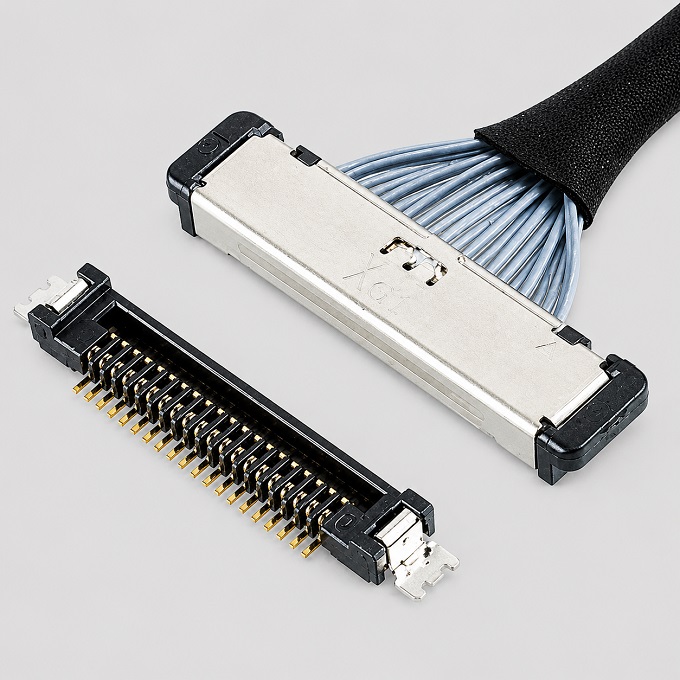
When evaluating compatible alternatives for I-PEX 83023-100B-01-D, it is recommended that engineers and purchasing personnel prioritize checking the complete part number, 35-pin pin count, 200mm length, 1-1 connector structure at both ends, as well as the connector model at the wire end 20373-R35T-06. The wire material adaptability range for this connector includes 36AWG, 38AWG, 40AWG, and 42AWG; however, when actually replacing, it is still necessary to confirm the compatibility of the target wire material with the termination process, and not to equate the adaptable wire specifications of the connector directly to all optional configurations of the entire cable assembly. If the device requires long-term and repeated bending, test conditions should be formulated at the sample stage based on the actual installation space and movement trajectory, and the conduction stability, wire appearance, termination area, and necessary high-speed signal indicators should be verified. If used for high-speed display, camera, or other high-speed data devices, it should also be confirmed that the signal pin position, grounding solution, impedance requirements, and system-level signal integrity are met. For purchasing alternatives, it is recommended to first confirm the technical feasibility through drawings and sample testing before proceeding with small-scale trial production and bulk import. Our company can provide I-PEX 83023-100B-01-D compatible cable assembly alternative solutions and can conduct customized assessments based on the original drawings, samples, and specific technical requirements provided by the customer, assisting the customer in achieving a balance between connector matching, wire material selection, bend resistance performance, and supply stability.
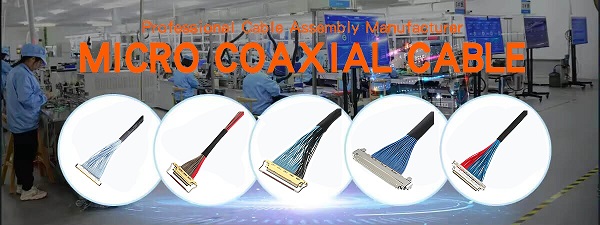
The ultra-fine coaxial cable assembly not only needs to meet high-density connection and compact wiring requirements but also needs to maintain reliable electrical performance and mechanical stability in actual operating environments. For I-PEX 83023-100B-01-D (35Pin, 200mm), engineers should pay close attention to the connector model 20373-R35T-06, cable specifications 36AWG, 38AWG, 40AWG, 42AWG, and bend test verification requirements; purchasers should focus on evaluating specification consistency, alternative compatibility, quality control, and batch supply capacity.
I am【7A Electronic Network】Committed to the compatibility replacement and mass production support of ultra-fine coaxial cable assemblies for high-speed interfaces and precision connectors, please contact: Manager Yin for project consultation.18013280527 (WeChat number).
“Without the consent or authorization of this site, no one shall reproduce, reprint, distribute, cite, change, broadcast or publish the content in whole or in part in any form, nor shall there be any other violation of the copyright of this site.