


Categorization:Harness Component
One, 50Pin High-Density Connector Solution: Product Features and Application Value of I-PEX 82445-100B-02-D Ultra-Fine Coaxial Cable Assembly
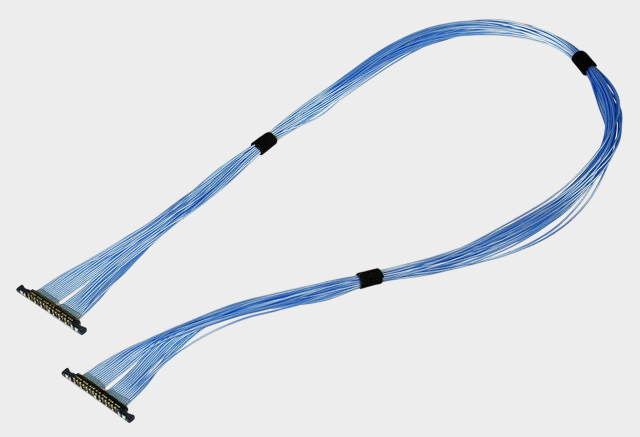
With the continuous development of laptops, tablets, high-definition display modules, and small camera equipment towards thinness and high-speed performance, the internal signal connection space of the devices is becoming increasingly limited, and higher requirements are placed on the size, flexibility, signal integrity, and assembly reliability of the cables. The I-PEX CABLINE-UA II series ultra-fine coaxial cable uses a connector scheme with 0.3mm pin spacing, which can meet the requirements for high-density wiring and high-speed signal connections. This article introduces the I-PEX 82445-100B-02-D ultra-fine coaxial cable, which corresponds to 50Pin, 44AWG Micro Coax ultra-fine coaxial cable material, 200mm nominal length, and 1-N wire position definition. It is suitable for engineers to use as a reference in the design of internal connection schemes for miniaturized equipment. The series' official documentation provides a reference transmission capability of 5Gbps/lane NRZ, but the actual performance still needs to be evaluated in combination with the cable material, cable length, PCB design, and system signal integrity requirements. For engineers, choosing a cable cannot be based solely on the number of pins and the external dimensions; they should also synchronize the confirmation of the connector model, wire position definition, cable structure, and installation space. For procurement personnel, they need to pay attention to product specification consistency, supply stability, and the verifiability of alternative solutions to reduce the risks of subsequent development and procurement.
What are the specific requirements for the material of ultra-fine coaxial cable束?How does 44AWG wire material affect signal and reliability?
The performance of extremely fine coaxial cable bundles is not only dependent on the connector but is also closely related to the materials and structure of each component of the cable. Taking 44AWG extremely fine coaxial cables as an example, they are usually composed of a central conductor, insulating medium, shielding layer, and outer sheath. The material of the central conductor and its twisting structure affect the electrical conductivity, flexibility, and bending performance; the material, thickness, and uniformity of the insulating medium affect the characteristic impedance and high-frequency signal transmission; the structure and coverage of the shielding layer are related to the suppression of external electromagnetic interference and the control of signal crosstalk; the outer sheath needs to balance insulation protection, wear resistance, and actual wiring requirements. For high-speed signal applications, it is not sufficient to judge whether the cable bundle meets the requirements solely based on the AWG specification, because cables with the same wire gauge may also exhibit different electrical and mechanical properties due to differences in conductor structure, insulating material, shielding method, and outer diameter. When engineers select types, they should confirm the cable specification based on the system's impedance requirements, signal rate, bending conditions, and working environment, and confirm its applicability through necessary electrical testing and reliability verification. Purchasers should pay attention to cable specification documents, batch consistency, management of key material changes, and incoming material inspection requirements to avoid impedance offset, changes in shielding performance, or a decrease in long-term reliability due to material differences. It should be noted that the publicly available series materials for I-PEX 82445-100B-02-D can support the 44AWG cable specification, but the specific conductor metal, insulating material grade, shielding layer structure, and sheath material should still be based on the corresponding cable specification document or formal technical document, and should not be determined solely based on the product model.
Three, connector model and pin definition: from engineering adaptation to procurement verification, ensure that alternative solutions can be implemented
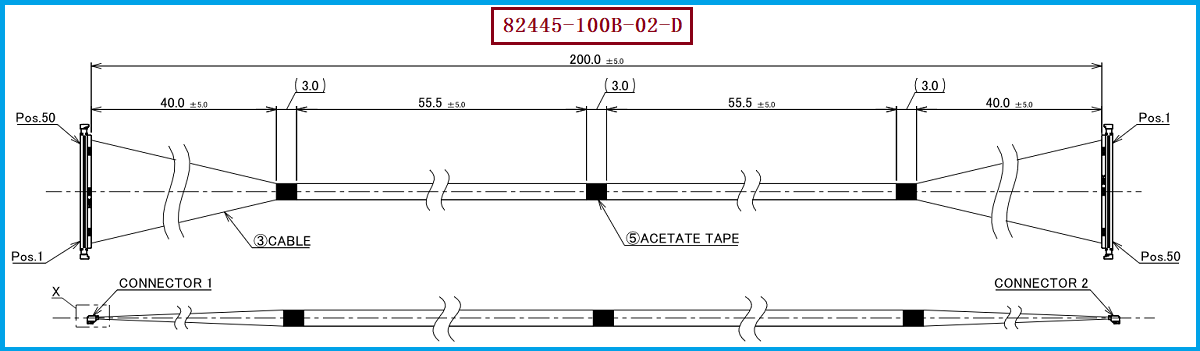
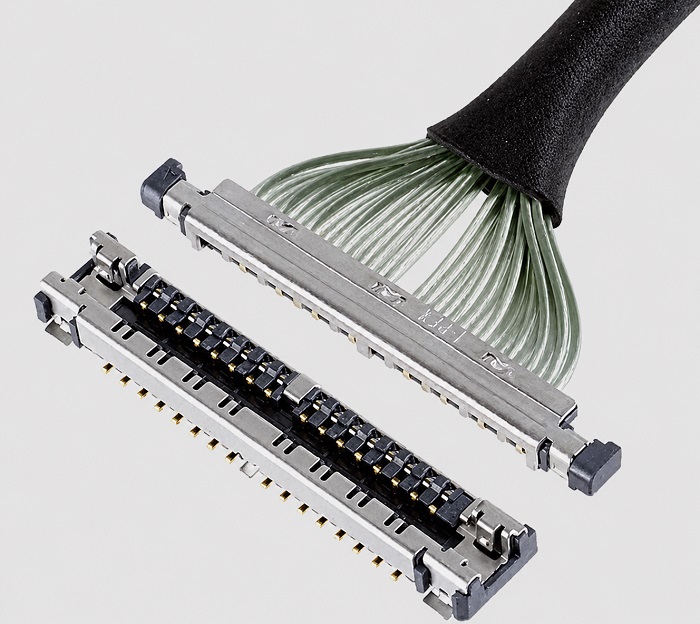
For I-PEX 82445-100B-02-D, the known key configurations are CABLINE-UA II series 50Pin, 44AWG ultra-fine coaxial cable, 200mm nominal length, and 1-N wire position definition; the specified cable end connector model for this project is 20497-050T-30. It should be particularly noted that the 20497-050T-30 belongs to the plug shell model of the CABLINE-UA II series. The actual cable assembly also involves the metal cover, termination process, and cable configuration, so when performing compatibility substitution, it is necessary to check the complete connector assembly and corresponding drawings, and not to assume complete compatibility solely based on the same shell model. Engineers should focus on confirming the wire correspondence of the 50 signal positions, connector shape and mating dimensions, cable length measurement benchmark, cable exit direction, shielding grounding method, and high-speed signal performance; purchasing personnel should confirm the specifications of the alternative products, sample verification results, inspection standards, and mass production consistency. Our company focuses on the production and manufacturing of ultra-fine coaxial cable assemblies and can carry out compatibility substitution scheme assessment and sample development based on the customer-provided reference part number, drawings, and technical requirements. Our company can provide: I-PEX 82445-100B-02-D compatibility substitution cable assembly scheme, focusing on the 50Pin connection configuration, 44AWG ultra-fine coaxial cable, 200mm nominal length, and 1-N wire position definition for specification verification, and evaluating the cable structure, connector assembly, and processing technology based on actual project requirements. For customers with domestic matching, second supply source, or cost optimization needs, confirmation can be made that the alternative scheme meets the requirements of the original equipment through sample size verification, electrical performance testing, and assembly verification.
Four, selection and compatibility and alternative solution reference and suggestions: taking into account performance, cost, and batch delivery
When selecting or replacing the I-PEX 82445-100B-02-D ultra-fine coaxial cable assembly, engineers are advised to first base their decision on the original drawings and equipment interfaces. Confirm the 50Pin connector configuration, 20497-050T-30 cable end connector model, 44AWG cable specification, 200mm nominal length, and 1-N wire position definition. Then, combine this with the actual working frequency and system impedance requirements to verify the cable electrical parameters. If the original design uses a 50Ω ultra-fine coaxial cable, further confirm the characteristic impedance of the replacement cable and the impedance continuity in the connector transition area. If necessary, conduct TDR, insertion loss, return loss, and crosstalk tests; if the equipment has repeated bending or narrow axis routing requirements, verify the bending radius, bend life, and mechanical reliability of the termination area. For procurement personnel, it is recommended to clarify key materials, inspection items, sample confirmation procedures, and change control requirements before formal bulk importation. It should be emphasized that compatibility replacement does not mean that it can be directly interchangeable without verification. The final decision should be based on customer drawings, connector matching requirements, and actual test results. By combining material selection, cable assembly processing, connector assembly, and performance verification, it is possible to meet equipment design requirements while also considering cost control, supply flexibility, and bulk delivery stability.
I-PEX 82445-100B-02-D is a 50Pin ultra-thin coaxial cable assembly reference model for high-density internal connection applications. Its 44AWG wire material, 200mm nominal length, and 1-N wire definition are important foundations for selection and development. The material selection of the ultra-thin coaxial cable assembly not only affects flexibility and mechanical reliability but also concerns characteristic impedance, shielding effect, and high-speed signal transmission performance. Our company can provide I-PEX 82445-100B-02-D compatible and alternative cable assembly solutions, and can carry out specification evaluation and production manufacturing according to customer drawings, samples, and technical requirements, providing adaptation verification support for engineers and more supply options for purchasing personnel. Welcome to contact our company to communicate specific wire specifications, connector configurations, sample verification, and batch requirements.
I am【7A Electronic Network】If you need to select, purchase, develop, or find alternative solutions for ultra-fine coaxial cable assemblies, please feel free to contact Manager Yin at any time:18013280527 (WeChat number).
“Without the consent or authorization of this site, no one shall reproduce, reprint, distribute, cite, change, broadcast or publish the content in whole or in part in any form, nor shall there be any other violation of the copyright of this site.