In recent years, the design and manufacturing capabilities of domestic connectors have rapidly improved, and questions such as "whether domestic connectors can replace imports and whether they can be used in high-reliability fields" have become the most concerned topics among the industry and procurement sides. This article takes the product characteristics of the international connector brand Pancon Connectors as a reference, discusses whether domestic connectors can be adapted to aerospace and deep space applications at the level of SpaceX, and provides feasible paths and suggestions in terms of technology and process.

What is the "SpaceX level" connector requirement?Aerospace-grade electronic connectors have extremely high requirements for reliability and environmental adaptability, usually including but not limited to:
● Wide range of extreme temperatures (such as -150°C to +125°C or wider) and large temperature cycles;
●Stringent vibration, impact, and mechanical fatigue requirements;
● Material volatilization, thermal expansion, and contact stability under vacuum/low-pressure environments.
● Extremely low contact resistance drift and long-term corrosion resistance.
●Very high process and material traceability (material batch, heat treatment, coating thickness, process records).
Space/aerospace devices usually also need to pass special "space qualification" and a series of tests (such as thermal vacuum cycles, random vibration, accelerated life, etc.), and a comprehensive verification of each failure mode. For general requirements of aerospace/space-grade connectors, refer to the industry's description and test entries for "space-grade connectors".
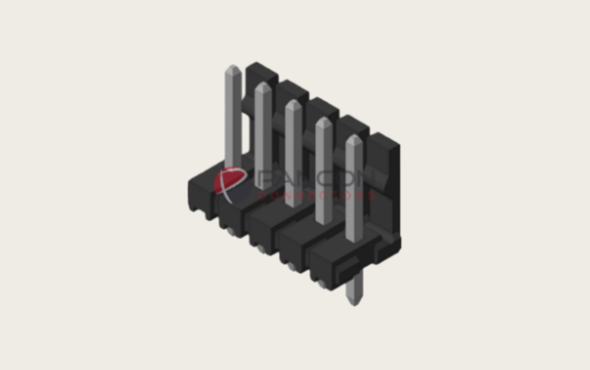
Part Two: Taking Pancon as a reference: its product positioning and points for referencePancon's product line covers DIN-41612 (HI-CON), IDC (MAS-CON), and a variety of board-to-board and wire-to-board solutions. These products are widely used in industrial control, communication, medical, automotive, and other scenarios. Some series have clear specifications for plug and pull life, electrical load, and material selection, which serve as a good reference for evaluating whether domestic products can meet the standards. Pancon's HI-CON and MAS-CON have detailed entries for parameters such as style, rated current, and plug and pull life, and are available in stock and with data sheets in the distribution channels.
Points for reference (briefly)
●Identify and label key performance parameters (insertion/extraction life, current/voltage rating, contact resistance, plating material/thickness).
●Adopt different grades of contact pieces/coating configurations in the product line to meet different reliability levels (such as ordinary tin-plated, silver-plated, or gold-plated), so as to supply in a layered manner according to applications.
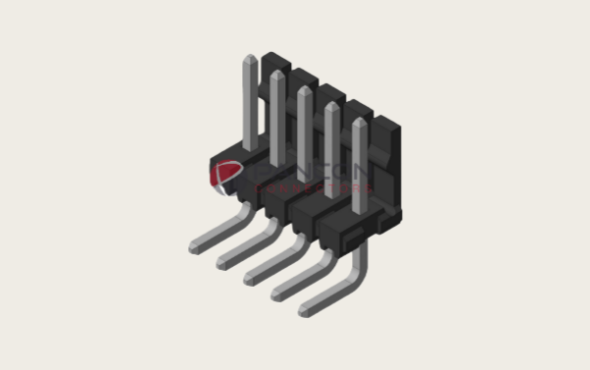
Three, the短板 that domestic connectors must fill in order to reach "aerospace grade"From the perspective of industrial reality, in order to promote "conventional industrial-grade" connectors to the "SpaceX level", the domestic supply chain and manufacturing need to strengthen in the following aspects:
Material and Surface Treatment
●Aerospace requires strict control over material composition, elastic modulus, conductivity, and coating thickness (anti-oxidation, low contact resistance, low wear).
●Use low-volatility materials and special coatings (such as gold with a thickness up to the micrometer level) as necessary to reduce contact resistance drift.
Structural design and mechanical verification
Consider the matching of thermal expansion coefficients, insertion and retention force, and the variation of the end spring recovery force under extreme temperatures.
The design must pass accelerated fatigue, random vibration, and axial/radial impact tests.
Manufacturing tolerance and process consistency
Terminal stamping, coating, and injection molding tolerances must be extremely tight; high reproducibility between batches is required.
Establish strict supplier entry and material inspection (chemical composition, hardness, coating thickness, surface roughness).
4. Test capabilities and validation process
● Must possess the ability to withstand thermal vacuum, long-term thermal cycling, irradiation (depending on specific tasks), aging, and monitoring of contact resistance with aging.
Establish a complete test report and experimental data archive for easy review and recognition by aerospace agencies.
5. Quality Management and Traceability System
Each batch of materials, semi-finished products, and finished products requires a traceable identification number (batch number, work records, test records), and must implement change control and ECN system.
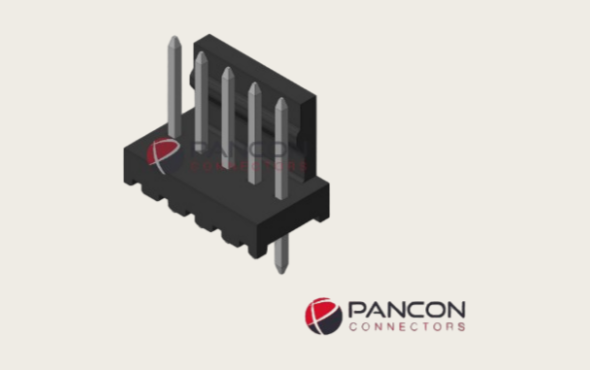
Four, feasible path: how to make "domestic connectors" closer to aerospace level (implementation strategy)Grade product strategy: Divide connectors into industrial grade, reinforced industrial grade, and aerospace pre-research grade, gradually upgrade materials and processes, and avoid a hasty success.
Joint testing and joint certification: Collaborate with universities/test institutions, aerospace units/integral manufacturers for joint verification, and conduct progressive testing in accordance with aerospace test specifications (thermal vacuum, vibration, life span, etc.).
Customization and design redundancy: adopt redundant contact points or increase the contact surface area at critical contact points to resist contact degradation; and optimize the pairing of plastics and metals for vacuum and low-temperature environments.
4. Strict supply chain management: introduce Tier-1 material suppliers, implement incoming material chemical/mechanical/surface inspections, and sign long-term quality agreements.
5. Demonstrate cases first: Conduct demonstration and verification on the ground, test satellite, secondary mission, or non-manned platform, accumulate data, and form reusable test specifications.
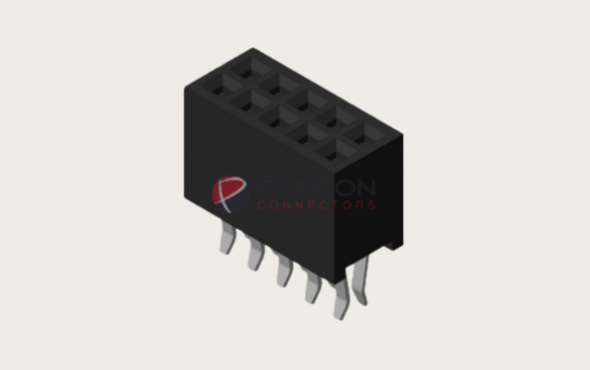
There is still a significant gap in directly using conventional domestic connectors for SpaceX-level missions, but this is not an unbridgeable chasm. By upgrading materials, precise design, tolerance and process convergence, rigorous testing and traceability system construction, as well as in-depth cooperation with authoritative testing institutions and customers, domestic connectors have the potential to achieve an available and verifiable status in certain aerospace and space application scenarios within several years. To achieve this goal, the industrial chain, manufacturing capabilities, and certification capabilities must be improved simultaneously — this is an engineering process with a long-term parallel of investment and return.
If you are interested in domestic alternatives to the Pancon Connectors brand, or have procurement needs, or possess production/sales channels for such alternatives, and are looking to engage in more in-depth cooperation or technical exchanges, please contact:
Manager Zhang (18665383950, same WeChat number)We look forward to joining hands with more industry partners to jointly promote the development of domestically produced high-reliability connectors towards aerospace-level.