With the continuous improvement of reliability, maintainability, and functionality requirements in audio-visual equipment, stage engineering, audiovisual integration, and professional audio markets, connectors are no longer just "passive metal + plastic" components. Taking professional audio interconnection products like Io Audio as a reference, domestically produced connectors will develop towards "intelligent, perceptible, maintainable, and easy to manage" in the future. Below, we will analyze from three perspectives: technological development, engineering feasibility, and user value, to help enterprises in productization and procurement decision-making.

Why do connectors need to "become smart"?Traditional connectors are usually responsible only for mechanical and electrical connections, but in modern systems, connection failures (poor contact, insertion and extraction wear, shielding failure) can cause degradation of sound quality, packet loss of signals, or system shutdown. Placing "sensing" and "feedback" capabilities at the connector end can bring three major values:
●Prevent problems in advance: for example, increased contact resistance, broken shielding, and mechanical loosening can trigger an alarm before the problem worsens.
Reduce manual maintenance costs: Remote diagnosis and localized fault prompts help operations and maintenance quickly locate and replace faulty parts.
●Enhance system intelligence and traceability: Automatically identify interface types, verify compatibility, and record usage life data when equipment is put into service, facilitating quality management and version upgrade decisions.
Taking Io Audio's professional audio interface as an example (XLR, TRS, etc.), its high fidelity and anti-interference properties make the value of "smart connectors" particularly evident: in scenarios such as stage performances, recording studios, and broadcast television, there is a high demand for stability and maintainability. Smart functions can directly reduce the risk of failure and the time required for on-site troubleshooting.
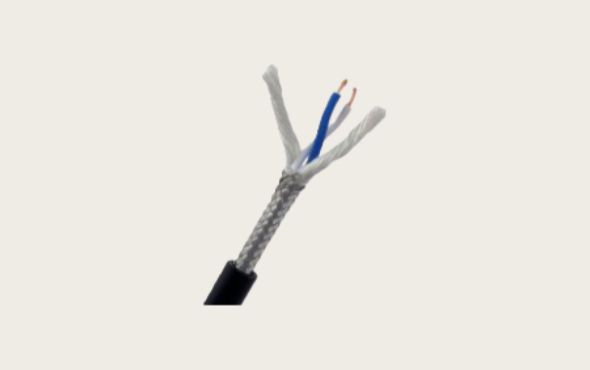
Two, intelligent functions that future domestic connectors may realize (technology and implementation examples)Built-in contact/impedance monitoring sensor (real-time health monitoring)
Function: Integrate miniature resistance/impedance sampling circuits at contact points or near the cable ends, and continuously or periodically detect the changes in contact resistance.
Value: When the contact resistance exceeds the threshold, the system can give a warning (device alarm, console prompt, or operation and maintenance background alarm), and arrange maintenance or replacement in advance.
Design micro-sensing points at locations such as XLR/junction boxes, collect data through microcontrollers/external acquisition modules, and upload it via the bus or field controller.
"Digital ID" and Plug and Play Recognition (Interface Auto-Recognition)
The function is to implant a small EEPROM or NFC tag into the connector housing, so that when the device is connected, the model, batch number, manufacturing date, and compatible parameters can be read.
Value: Ensures that the system wiring will not result in incorrect connections; batch issues are traceable; facilitates automation configuration (such as console reading line parameters).
The implementation idea is: NFC/IC card or low-power Bluetooth (BLE) chip, the connector communicates with the main device through near-field communication.
Intelligent Locking and Fault Protection Mechanism (Mechanical and Electrical Integration)
Function: Add an electronic detection lock for the plug (or a mechanical lock with position sensing), which triggers an alert or blocks sensitive signals when half-inserted or loose.
Value: Prevent stage equipment from being disconnected due to loose contact during performances, enhancing the safety of the system.
Landing idea: Add a miniature limit switch or photoelectric detection at the plug lock, and link the system to alarm.
4. Active Shielding and Adaptive Anti-Interference (Active Electronic Compensation)
The function: The connector is built-in with a small differential amplifier/compensation circuit, which automatically adjusts the shielding balance or output buffering according to the environmental noise, reducing signal loss.
Value: Maintain high signal-to-noise ratio in complex electromagnetic environments (on-site lighting, high-power equipment).
Landing idea: Integrate a low-power differential amplifier module or common-mode rejection circuit, and design it to be controlled by the main device or work automatically.
Life Cycle Usage Record and Predictive Maintenance (Life Counter + Cloud Analysis)
Function: Record insertion and removal times, working hours, temperature history, etc., predict remaining life through algorithms, and remind of replacement when approaching the end of life.
Value: Transition from passive replacement to predictive maintenance, reducing the rate of unexpected failures.
Landing ideas: Built-in micro-counters in connectors or use external collectors to record events, upload them to the operation and maintenance platform for analysis.
6. Rapid diagnostics interface and modular testing (plug-and-test)
Design standardized test contact points or diagnostic pins, enabling engineers or maintenance tools to quickly perform on-site inspections for connector continuity, impedance, and shielding integrity.
Value: Significantly shorten the project debugging and maintenance time.
Landing idea: Reserve test interfaces at panel seats or modules and provide handheld diagnostic tools or software.
7. Programmable/Upgradable Firmware (Supports Future Algorithms)
The internal micro-modules (such as active shielding, diagnostic modules) of the connector support firmware upgrades to accommodate new algorithms or compatibility adjustments.
Value: Extend the product life cycle and iterate features according to scenario needs.
Design microcontroller units and secure firmware update channels (wired/near-field).
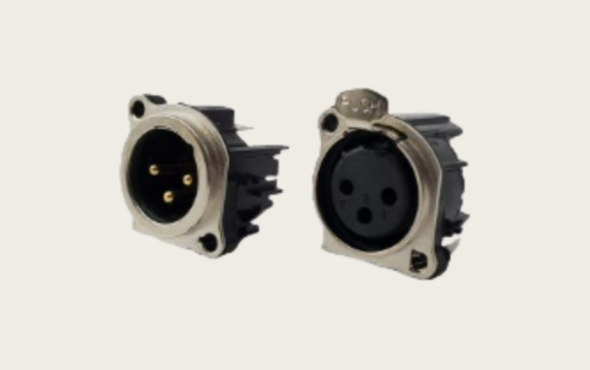
III. Domestication Implementation Path and Engineering RecommendationsTo transform the aforementioned "intelligent function" from a concept into a mass-produced domestic product, it is recommended to refer to the following path:
Modular design: Turn intelligent functions into optional modules (such as "recognition module", "diagnosis module", "active shielding module"), load as needed, and reduce costs.
2. Compatibility first: Expand intelligent features while ensuring mechanical and electrical compatibility with traditional interfaces, to ensure seamless replacement of existing equipment.
3. Low Power Consumption and Simple Communication: Intelligent modules should consider energy consumption issues, prioritize the use of low-power communication (NFC, BLE, single-wire serial port), and can be powered by the main device or supported by extremely low-power batteries.
4. Standardization and Testability: Establish a set of testing standards (such as plug-in life, impedance threshold, diagnostic response time, etc.) to provide clear indicators for customers during acceptance.
5. Data Security and Privacy: If the connector will report usage data or identity information, it is necessary to design data encryption and access control strategies, especially for public performances or broadcasting industries.
Cost and Market Segmentation: Separate the high-end (with all smart functions) and mid-to-low-end (only core reliability) product lines to meet the cost-performance needs of different customers.
Domestic manufacturers have been enhancing their capabilities in precision molds, metal processing, and electronic module integration year by year. Implementing the above path to achieve "domestic intelligent connectors" is realistic and feasible——especially in audio interconnect application scenarios represented by Io Audio. The increased device stability and operational efficiency brought by intelligence will bring significant commercial value to整机 manufacturers.
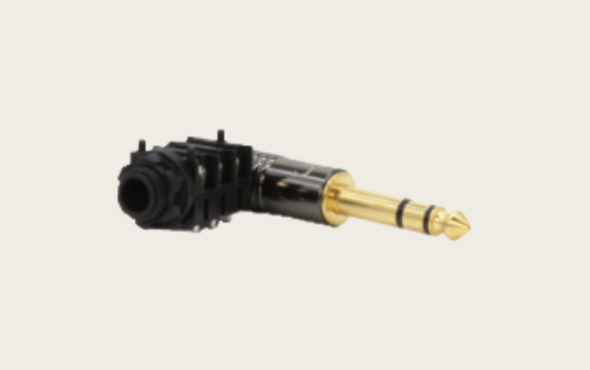
Four, suggestions for whole machine manufacturers and procurement partiesIn the new product design phase, consider the wiring and communication reservation for "intelligent interface" to avoid cost of transformation in later stages.
●Put forward clear technical acceptance standards for suppliers: such as contact resistance limit, insertion and removal life, anti-interference level, diagnostic reporting format, etc.
●Prioritize domestic cooperation manufacturers that can provide sample testing, support customization and localization services, to reduce subsequent maintenance and communication costs.
●For projects that require long-term on-site services (concerts, broadcast live, theaters, etc.), the operational value of smart connectors may be much higher than their initial cost.
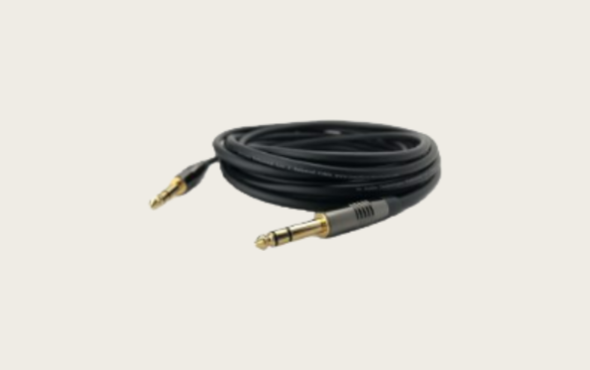
The intelligence of connectors is not just a slogan, but a systematic enhancement of equipment reliability, operation and maintenance efficiency, and user experience. Taking professional audio connectors represented by Io Audio as a reference, domestically produced connectors will, in the future, become not just "connection" components but "perceptible, manageable, and maintainable" system-level nodes through functions such as built-in diagnostics, digital ID, active shielding, and lifecycle management. For whole machine manufacturers, system integrators, and maintenance teams, early planning and adoption of domestically produced intelligent connectors can bring long-term returns in terms of reducing failure rates, shortening maintenance time, and improving user satisfaction.
If you are interested in the domestic substitute products for Io Audio brand connectors or have procurement needs, or if you have production or sales channels for these domestic substitute products and wish to engage in in-depth cooperation or communication, please contact us through the following contact information:
Manager Zhang (18665383950, same WeChat number)We look forward to working together with more industry partners.