


Categorization:Harness Component
I-PEX 82885-100B-02-D is a type of electronic component. The signal stability is closely related to the harness structure due to the following reasons:
Within laptops, display devices, camera module, AI devices, and other high-speed electronic devices, extremely thin coaxial cable assemblies carry the critical task of high-speed signal connections. When issues such as screen flickering, abnormal data transmission, sporadic disconnection, increased image noise, or unstable high-speed interface operation occur, engineers must not only check the motherboard and chips but also focus on inspecting the thin coaxial cable assembly itself. Taking the I-PEX 82885-100B-02-D as an example, this product belongs to the CABLINE-SS 30P thin coaxial cable assembly, which uses a 30PIN, 0.4MM spacing connector structure, and is paired with a wire end connector model of 20373-R30T-06. The cable uses Micro-Coaxial Cable AWG #40, with the corresponding cable assembly length being 100mm. CABLINE-SS itself uses a 0.4mm Pitch and vertical right-angle insertion structure, which is a connector platform for high-density, small spaces, and high-speed signal connections. Therefore, in actual applications, signal stability is not solely dependent on whether the connector can be inserted but is closely related to the impedance control of the thin coaxial wire, wire sequence, termination quality, connector mating, and consistency of the finished cable assembly. For engineers, if the circuit at the motherboard end and module end has been confirmed to be normal, and the problem manifests as sporadic signal anomalies, the cable assembly component should be checked as a complete signal channel rather than just checking an individual pin.
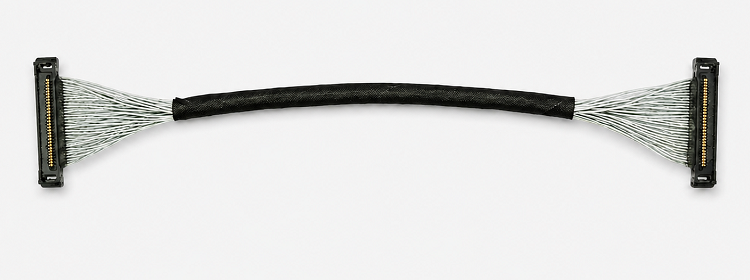
How to deal with unstable signal of ultra-fine coaxial cable束? First, investigate the cable material, impedance, and connection end.
When signal instability occurs in I-PEX 82885-100B-02-D or similar CABLINE-SS ultra-thin coaxial cable assemblies, engineers must first confirm that the cable specifications match the design requirements. This model uses AWG #40 Micro-Coaxial Cable, while the CABLINE-SS official documentation covers different AWG specifications, so when actually replacing or reselecting, it cannot be simply assumed that "any ultra-thin coaxial cable can be directly replaced." A comprehensive judgment is required by combining signal frequency, impedance requirements, wire diameter, and internal device space. For high-speed signals, the characteristic impedance, cable length, end stripping, and termination process of ultra-thin coaxial cables will affect signal integrity. If the cable impedance does not match the system requirements, or if there is insufficient consistency among different cable assemblies, signal attenuation, reflection, crosstalk, or increased error rates may occur during high-speed transmission. It is also necessary to check the assembly status of the 20373-R30T-06 connector, confirming that the 30-pin connection relationship, end fixation, and insertion status are normal, as a 0.4mm spacing is a high-density structure. Any termination position deviation, contact anomaly, or insufficient assembly consistency may affect the high-speed signal channel. CABLINE-SS adopts I-PEX's W-Point contact design, and its product positioning emphasizes contact reliability. Therefore, when replacing cable assemblies, attention should also be paid to the male and female connectors, Pin count, and actual mating status, and not just judged for compatibility based on外观 dimensions.
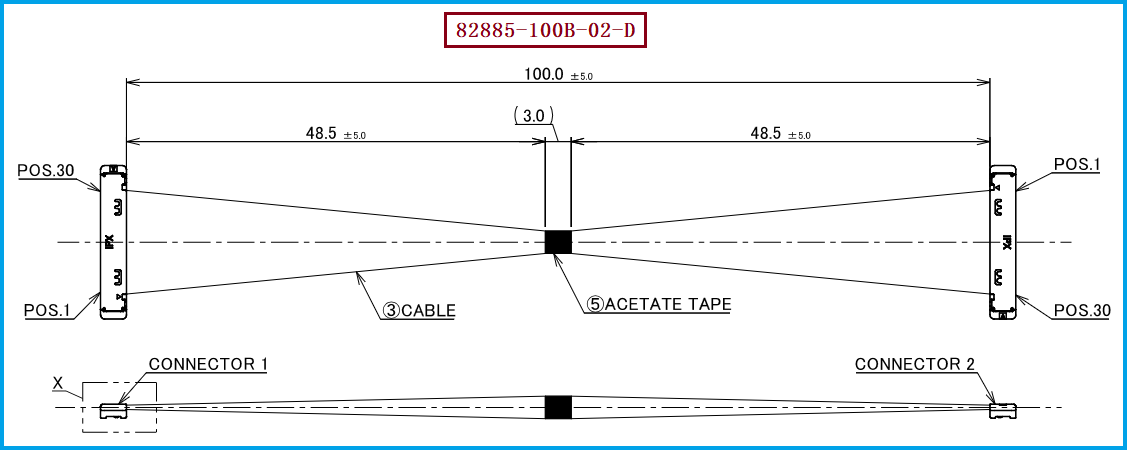
Section 3: Solving signal instability from the perspective of engineering manufacturing, consistency of extremely thin coaxial cable bundles is more important than individual parameters.
For engineers, eliminating signal instability issues should not rely solely on trial and error by replacing a wire harness; rather, they should look for factors affecting signal integrity in the harness manufacturing process. Taking 82885-100B-02-D as a reference, the 30 fine coaxial wires need to be connected according to the specified Pin Assignment. The cable ends use a 20373-R30T-06, 30PIN, 0.4MM Pitch connector, employing AWG #40 fine coaxial wire. Therefore, in the production process, key controls are needed over cutting lengths, wire sequences, wire stripping, coaxial structure integrity, connector termination, Bonding fixation, and product length consistency. If a wire's termination state differs from that of other channels, even without apparent issues in appearance, it may lead to abnormal performance of single-channel high-speed signals; if the harness is excessively bent, compressed, or pulled during assembly, further checks should be made on whether the wire and termination area are affected. For purchasing personnel, this means that when choosing suppliers of fine coaxial wire harnesses, it is not advisable to compare unit prices alone, but rather to confirm whether the supplier can consistently manufacture in bulk according to target connectors, pin numbers, AWG specifications, lengths, and wire sequences, and whether they can control sample testing and mass production consistency. Our company, as a manufacturer of fine coaxial wire harnesses, can provide I-PEX 82885-100B-02-D compatible alternative harness solutions based on the actual equipment structure and signal requirements of customers. We can offer targeted development around the 30PIN, 0.4MM Pitch, 20373-R30T-06 matching structure, and AWG #40 fine coaxial wire material, providing corresponding harness product support for engineering verification, sample trial production, and bulk procurement.
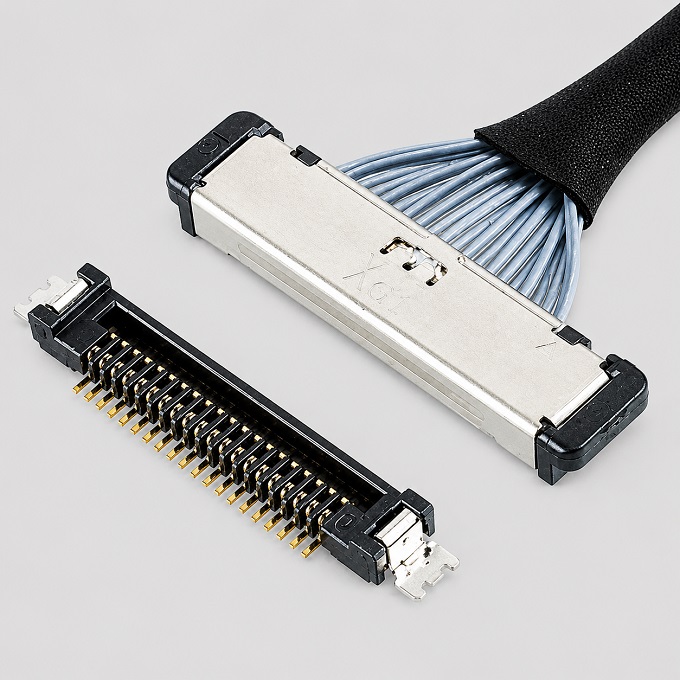
Four, selection and compatibility and alternative solutions reference and suggestions
When selecting or replacing the I-PEX 82885-100B-02-D, engineers and procurement personnel are advised to first determine whether the original device's connector interface is CABLINE-SS 30P series, and then confirm the specifications of the cable end connector, including 20373-R30T-06, 30PIN, 0.4MM pitch, and AWG #40 ultra-thin coaxial cable. They should also check the cable length, Pin Assignment, cable exit direction, and installation space, and then perform impedance and signal integrity verification based on the actual high-speed signal requirements. The official information from I-PEX indicates that the CABLINE-SS series covers 10, 14, 20, 30, 32, 35, 40, and 50 Pin, and supports AWG36, AWG38, AWG40, and AWG42 Micro-Coaxial Cable specifications. Therefore, although different models belong to the CABLINE-SS series, they cannot be regarded as completely interchangeable products. For procurement personnel, if there are pressures related to delivery time, cost, MOQ, or supply stability in the original supply chain, it is recommended to prioritize the complete structural parameters of 82885-100B-02-D as the basis for replacement development rather than simply seeking a "30Pin coaxial cable assembly" for replacement. Our company can provide I-PEX 82885-100B-02-D compatible replacement cable assembly solutions, which can be developed around the customer's actual use of the 20373-R30T-06 connector, 30PIN, 0.4MM pitch, and AWG #40 ultra-thin coaxial cable material, and confirm the length, wire sequence, termination method, and installation space in conjunction with the specific equipment, making the replacement cable assembly more closely aligned with the original product's assembly conditions and application requirements.
When the extremely thin coaxial cable bundle exhibits signal instability, it cannot be simply attributed to "poor cable quality." Instead, it should be judged comprehensively from multiple aspects such as cable specifications, impedance matching, Pin Assignment, connector contact, termination technology, cable length, and assembly environment. For I-PEX 82885-100B-02-D CABLINE-SS 30P extremely thin coaxial cable bundles, conditions such as 30PIN, 0.4MM spacing, 20373-R30T-06 connector, and AWG #40 Micro-Coaxial Cable are key points that need to be confirmed during selection and compatibility replacement. For customers with domestication, second supplier, delivery period optimization, or cost control requirements, alternative cable bundle development can be based on the mechanical and electrical requirements of the original model. While ensuring connector matching and correct wiring order, a complete verification of the actual high-speed signal should be conducted to reduce the risk of equipment signal instability caused by cable mismatch.
I am[7A Electronic Network], focus on the research and development of high-speed ultra-fine coaxial cable assemblies and connectors and alternative solutions, if you have selection or verification as well as product requirements, please contact: Manager Yin18013280527 (WeChat number).
“Without the consent or authorization of this site, no one shall reproduce, reprint, distribute, cite, change, broadcast or publish the content in whole or in part in any form, nor shall there be any other violation of the copyright of this site.