

Categorization:Harness Component
Why are more and more engineers beginning to pay attention to extremely thin coaxial cable assemblies in the era of high-speed MIPI?
With the continuous development of intelligent terminals, industrial cameras, machine vision, AI vision equipment, and high-resolution display devices towards high speed and miniaturization, high-speed interfaces such as MIPI have put higher requirements on the signal integrity, space occupation, and wiring reliability of internal cable harnesses. For R&D engineers, the cable harness not only needs to "connect," but also needs to balance high-speed signal transmission, impedance control, anti-interference ability, and long-term connection reliability within the limited internal space of the device; for purchasing personnel, they also need to further consider supply stability, specification compatibility, alternative feasibility, and mass manufacturing capabilities. In this application context, ultra-fine coaxial cable harnesses are gradually becoming an important choice for high-speed internal connections such as MIPI. Compared with ordinary ribbon cables or traditional connection methods, ultra-fine coaxial cables have an independent coaxial transmission structure, which is more conducive to impedance control during high-speed signal transmission and can reduce external electromagnetic interference and crosstalk between signals, making them particularly suitable for high-frequency, high-speed, and high-density internal connection scenarios. For products that need to balance high-speed transmission and miniaturized design of the device, ultra-fine coaxial cable harnesses can achieve a better balance between "signal performance" and "structural space," which is why more and more engineers pay priority attention to the Micro-Coaxial Cable solution at the design stage of MIPI high-speed connection schemes.
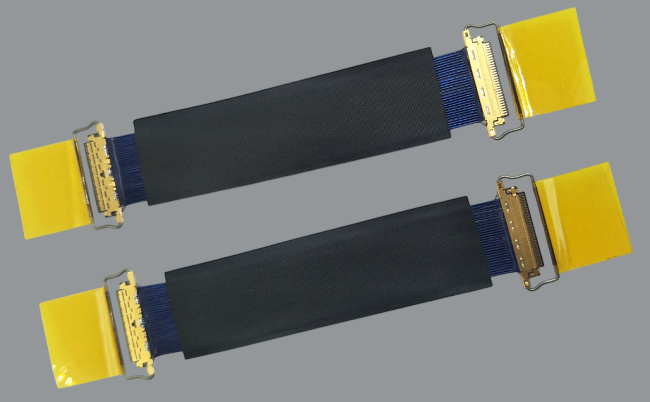
50PIN, 0.4MM pitch design, meets the requirements of high-density, high-speed internal connections for equipment
The ultra-fine coaxial cable assembly product model introduced this time is I-PEX 82863-100B-02-D, corresponding to the I-PEX CABLINE®-CA series 50P Harness solution. According to the relevant product drawings and materials, this cable assembly uses AWG#40, 50Ω Micro-Coaxial Cable (ultra-fine coaxial cable), the wire is blue, and it adopts a 50-way high-density connection structure; the connector model used at the end of the wire is 20634-150T-02, with a 50PIN, 0.4MM Pitch structure. For engineers, the 50PIN high-density configuration can meet the needs of multi-channel high-speed signal connections, while the 0.4MM ultra-fine pitch design helps to reduce the space occupied by the connector on the PCB and inside the equipment, making it more suitable for laptops, industrial cameras, AI vision equipment, high-speed display equipment, and other electronic products with compact internal spaces. At the same time, the AWG40 ultra-fine coaxial cable can achieve the required transmission structure for high-speed signal transmission under a smaller wire diameter, which has practical value for equipment lightweighting, miniaturization, and high-density wiring. For purchasers, specifying key specifications such as I-PEX 82863-100B-02-D, 20634-150T-02, 50PIN, 0.4MM Pitch, AWG40, 50Ω, etc., is also conducive to quickly confirming the product technical boundaries when carrying out domestication, second supplier introduction, or alternative selection, and reducing the selection risk caused by inconsistencies in model, pin count, wire diameter, or connector specifications.
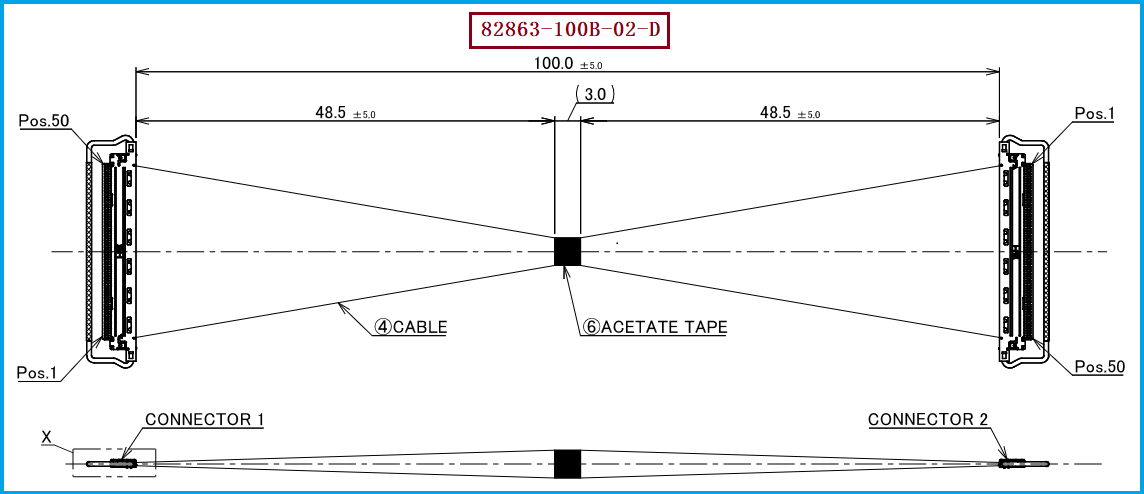
Why is it more recommended to use ultra-fine coaxial cables for high-speed MIPI interfaces, from the perspectives of engineering selection and procurement alternatives?
The MIPI interface is widely used in camera, display, vision, and high-speed data transmission applications, one of its characteristics being the high-speed differential signal, which requires high signal integrity. When devices need to perform high-resolution image acquisition, high-speed image transmission, or high-speed display, the structure of the connection cable itself directly affects the system's signal transmission performance. Ultra-fine coaxial cables adopt a coaxial structure, where the central conductor, insulating layer, and shielding structure form a relatively stable transmission environment. This makes it easier to perform impedance control in high-speed signal applications, while also providing good resistance to electromagnetic interference and crosstalk. Therefore, when engineers are designing high-speed MIPI cameras, display modules, or other high-speed internal interfaces, ultra-fine coaxial cables are usually easier to meet the requirements for stability and consistency of high-frequency signal transmission. On the other hand, MIPI devices are usually subject to the constraints of both "high speed" and "limited space." Ultra-fine coaxial cables with specifications such as AWG40 can meet the requirements for high-speed transmission while reducing the volume of the cable assembly, providing greater design freedom for internal routing, bending, and structural layout. For projects that have already adopted the I-PEX CABLINE®-CA series connectors, if the research and development or procurement department wishes to find a compatible second supplier, it is not necessarily necessary to change the overall connection architecture of the whole machine. Instead, it can be compatible and alternative around the existing connector, Pin number, Pitch, wire diameter, impedance, length, and Pin Assignment, etc. parameters. Our company can provide: I-PEX 82863-100B-02-D compatible alternative cable solutions, which can develop corresponding structures, lengths, wire specifications, and processing requirements according to the actual project requirements of customers, providing alternative choices for engineering verification, sample testing, and subsequent bulk procurement.
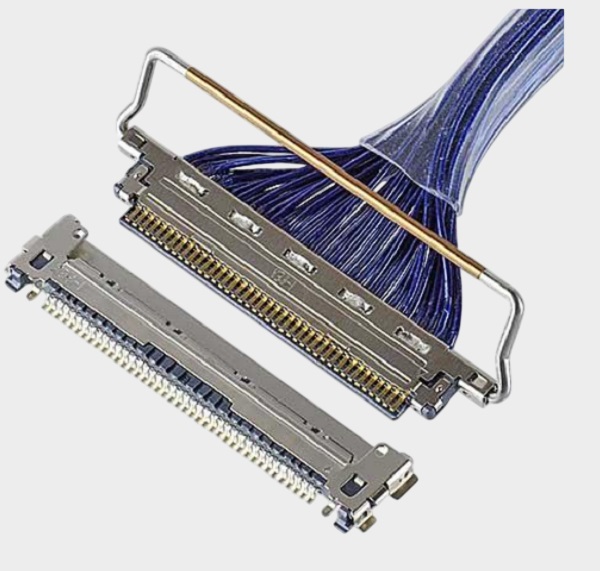
Four, selection and compatibility and alternative solutions reference and suggestions
For engineers and purchasers in need of import-compatible alternatives for the I-PEX 82863-100B-02-D, it is recommended to first confirm that the core parameters of the original product remain consistent, including the 50PIN connection structure, 0.4MM pitch, AWG40 ultra-thin coaxial cable, 50Ω impedance, wire end connector 20634-150T-02, and specific cable length and terminal processing methods, etc. Especially for high-speed MIPI applications, it is not advisable to make alternative judgments solely based on "the same connector appearance" and instead should focus on checking parameters such as connector model, pin count and arrangement, wire AWG specification, impedance, shielding structure, cable length, and both-end pin assignment. If necessary, samples should also be tested for conductivity, voltage resistance, insulation, high-frequency signals, and actual system transmission. For the purchasing department, after confirming the compatibility of technical parameters, a comprehensive assessment can be made from aspects such as sample delivery capability, production consistency, delivery time, cost control, and long-term supply capacity. Our company can provide I-PEX 82863-100B-02-D compatible cable solution. For customers using CABLINE®-CA ultra-thin coaxial connection schemes, corresponding cable processing and alternative development can be carried out based on the actual project requirements, helping customers to increase supplier options without easily changing the original product connection architecture, and providing new solutions for research and development verification, domestic substitution, and bulk purchasing.
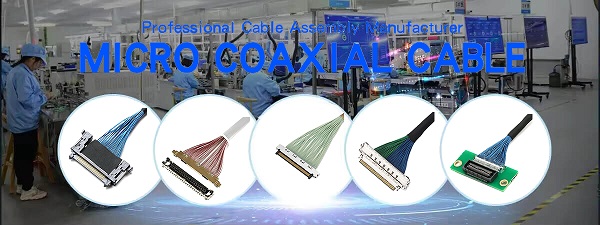
I-PEX 82863-100B-02-D is a 50PIN high-density ultra-fine coaxial cable solution, matched with wire-end connector model 20634-150T-02. The connector features a 50PIN, 0.4MM Pitch design, while the cable uses AWG40, 50Ω Micro-Coaxial Cable. For high-speed MIPI, industrial vision, camera module, high-speed display, and other high-density internal connection applications, the ultra-fine coaxial cable can balance high-speed signal transmission, miniaturized layout, and anti-interference requirements. In response to engineers' needs for compatibility verification in the product development stage and purchasing personnel's demands for supply chain optimization, second supplier introduction, and alternative procurement, our company can provide I-PEX 82863-100B-02-D compatible alternative cable solutions. With mature ultra-fine coaxial cable manufacturing capabilities, we offer customers more flexible high-speed internal connection solutions.
I am【7A Electronic Network】, focus on the research and development of high-speed ultra-fine coaxial cable assemblies and connectors and alternative solutions, if you have selection or verification requirements or product needs, please contact: Manager Zhang18913228573 (WeChat same number).
“Without the consent or authorization of this site, no one shall reproduce, reprint, distribute, cite, change, broadcast or publish the content in whole or in part in any form, nor shall there be any other violation of the copyright of this site.