


Categorization:Harness Component
Product Introduction: 26PIN, 0.3MM pitch, ultra-fine coaxial cable assembly solution for precision electronic equipment
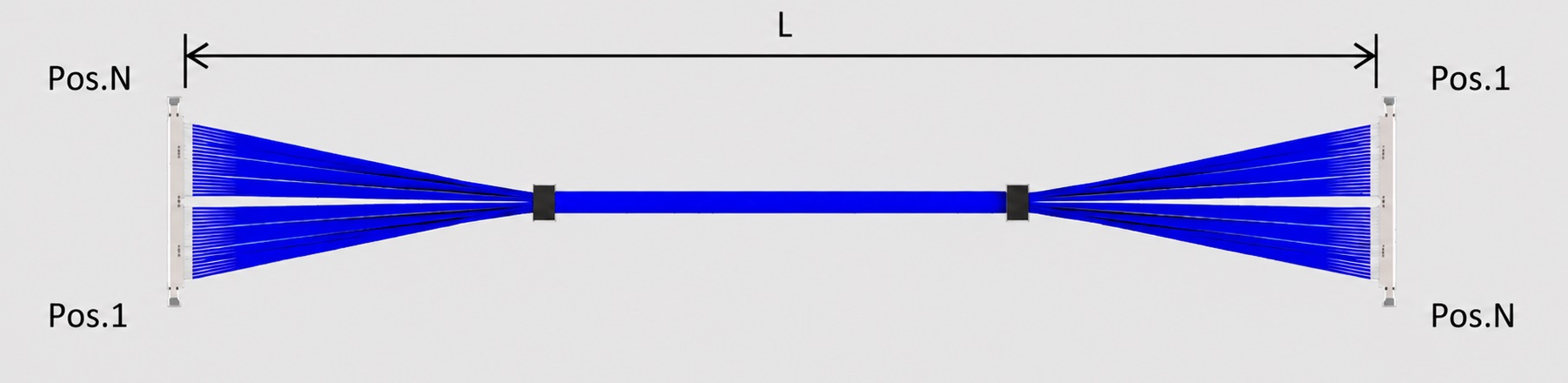
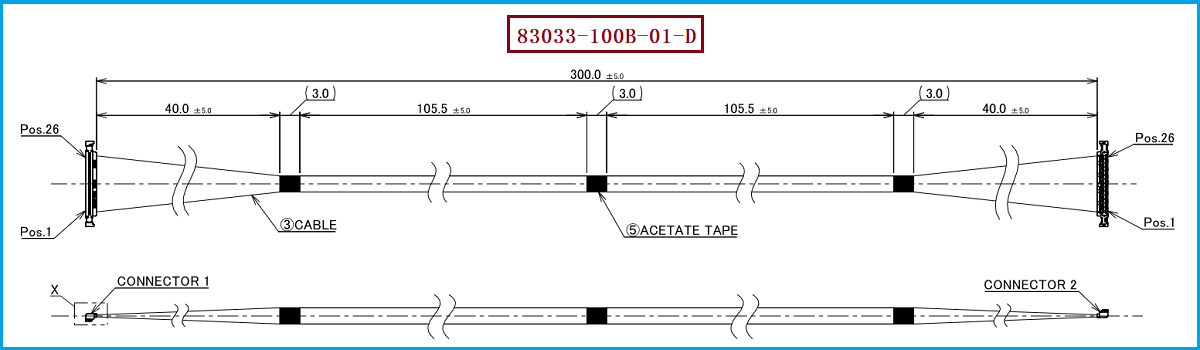
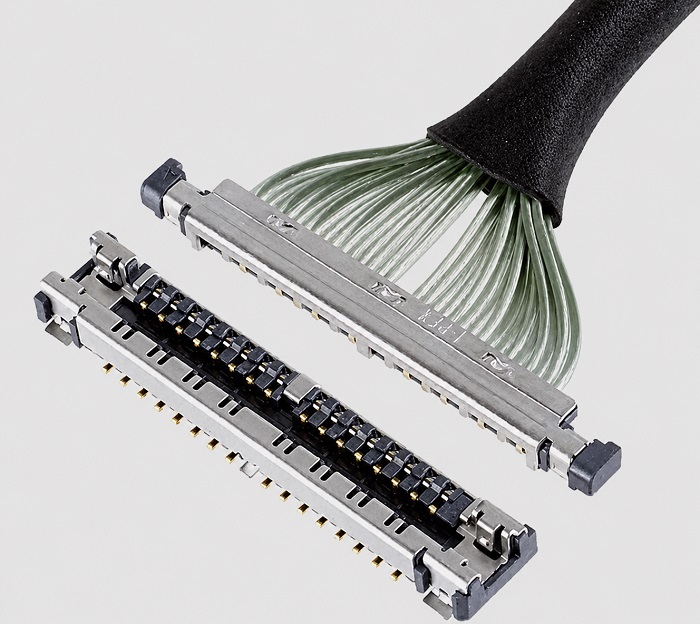
With the continuous development of laptops, ultra-thin display devices, camera modules, and other precision electronic products towards thinness and high integration, internal connection cables not only need to have a smaller size but also need to take into account high-speed signal transmission, electrical insulation performance, shielding effect, and long-term reliability. The extremely thin coaxial cable束 introduced in this article, the I-PEX 83033-100B-01-D, belongs to the CABLINE-UA II series, which corresponds to 26PIN, 44AWG extremely thin coaxial cable, 300mm in length, and a 1-1 wire position structure. The product uses a cable end connector shell model of 20497-026T-30, which has a 26PIN, 0.3MM contact spacing and is suitable for applications requiring high-density connections and compact wiring. According to I-PEX official data, the CABLINE-UA II series adopts a miniaturized plug design, a right-angle cable exit structure, and a multi-point grounding design, with a series reference transmission capability of 5Gbps/lane NRZ. For engineers, when selecting an extremely thin coaxial cable束, in addition to confirming the connector model, wire diameter, length, and wire position definition, it is also necessary to pay attention to the dielectric properties, heat resistance, mechanical flexibility, and matching conditions with the shielding structure. For procurement personnel, specifying complete product part numbers and material requirements helps to reduce the risk of selection due to differences in material structure, process standards, and performance verification among different suppliers. It should be noted that 44AWG is the material specification of the standard cable catalog, and actual alternative manufacturing should still be based on the original engineering drawings, samples, and customer technical requirements.
Why is ultra-fine coaxial insulating material important?
Extremely thin coaxial cables are typically composed of a central conductor, insulating layer, shielding layer, and outer sheath. The insulating material is not merely used to wrap the conductor but also directly affects the cable's electrical characteristics, signal transmission performance, and mechanical reliability. Firstly, the dielectric constant and dielectric loss of the insulating material can affect the cable's characteristic impedance and high-frequency signal attenuation. Therefore, in high-speed signal applications, even if the conductor size remains unchanged, changes in the insulating material or its thickness can lead to impedance shift, increased reflection, or changes in insertion loss. Secondly, the insulating layer can isolate the central conductor from the external shielding layer, reduce the risk of short circuits, and help maintain the stability of the coaxial structure. If there are issues such as uneven thickness, damage, eccentricity, or material properties not meeting requirements, it may affect the cable's electrical safety and signal integrity. In addition, the insulating material must adapt to temperature changes inside the equipment, repeated bending, assembly stress, and long-term use environments. For extremely thin coaxial cable bundles that need to pass through laptop shafts or narrow channels, the flexibility, wear resistance, and dimensional stability of the material are also important. Engineers should evaluate the suitability of different material systems by combining target impedance, operating frequency, temperature range, bending conditions, and spatial limitations when selecting materials. Purchasers should focus on confirming the supplier's provided cable specification sheets, material consistency, and necessary test reports. It should be emphasized that cable quality cannot be solely judged by the name of the insulating material; actual performance also depends on factors such as conductor structure, insulating layer thickness, shielding coverage, outer diameter tolerance, and manufacturing processes. Only by combining material performance with the complete coaxial structure can one more accurately determine whether the cable assembly meets the usage requirements of the target equipment.
Three, selection and compatibility and alternative solutions reference and suggestions: from insulation materials to the matching verification of the complete harness assembly
For the development of compatible alternatives for I-PEX 83033-100B-01-D, engineers and purchasers are recommended to systematically verify the connector, cable, and processing structure based on the original 2D engineering drawings and actual samples. Firstly, confirm the cable end connector housing model 20497-026T-30, as well as the 26PIN, 0.3MM pitch, 44AWG cable specification, 300mm length, and 1-1 wire position correspondence. Secondly, check the cable insulation material and critical dimensions, including insulation layer structure, cable outer diameter, characteristic impedance, dielectric loss, and temperature resistance requirements, to avoid affecting signal quality and assembly compatibility due to differences in electrical properties or processing dimensions of alternative materials. For high-speed signal applications, insertion loss, return loss, crosstalk, and shielding continuity should also be assessed according to actual interface requirements, and performance of the alternative solution should be confirmed through sample testing. Our company can provide: I-PEX 83033-100B-01-D compatible alternative cable harness solutions, which can be manufactured and adapted based on the customer's drawings, samples, and technical specifications, focusing on 26PIN, 0.3MM pitch, 44AWG ultra-thin coaxial cables and specified cable lengths. Specific insulation materials, connector matching structures, and electrical specifications need to be determined based on the original documents during the engineering confirmation stage and should not be determined solely based on the same material number description or appearance to ensure complete compatibility. For purchasers, if they wish to establish a second supply channel or optimize procurement costs, they can arrange sample acknowledgment, small batch trial assembly, and necessary electrical performance verification before gradually introducing bulk procurement. By clearly defining material specifications, acceptance standards, and batch quality requirements, the risks of material changes, assembly anomalies, and subsequent quality traceability can be reduced.
Four, Application Value and Cooperation Suggestions: Ensuring Harness Quality through Material Control and Manufacturing Process
In precision electronic equipment, the reliability of extremely fine coaxial cable assemblies not only depends on connectors and conductors but is also closely related to insulating materials, shielding structures, cable processing, and the quality of terminal assembly. For engineers, understanding the impact of insulating materials on impedance, dielectric loss, voltage resistance, and mechanical properties helps in making a reasonable balance between high-speed signal transmission, compact wiring, and long-term reliability; for purchasers, incorporating cable specifications, requirements for insulating materials, connector models, length tolerances, and testing standards into the procurement technical documents helps improve the accuracy of supplier evaluation and the introduction of alternative products. We focus on the production and manufacturing of extremely fine coaxial cable assemblies and can provide corresponding compatible alternative development and manufacturing services according to customer needs, assisting customers in verifying product specifications, confirming material requirements, and advancing sample validation. For customers with alternative needs for I-PEX 83033-100B-01-D, it is recommended to provide original drawings, samples, or complete technical specifications to further confirm the cable structure, requirements for insulating materials, matching connector solutions, and necessary testing items, establishing a clear technical basis for subsequent mass production.
I-PEX 83033-100B-01-D is a 26PIN ultra-thin coaxial cable assembly from the CABLINE-UA II series, corresponding to 44AWG wire material, 300mm length, and 1-1 wire position structure in the standard catalog. The cable end connector shell model is 20497-026T-30, with a contact spacing of 0.3MM. Insulating material affects the impedance stability, signal loss, electrical isolation, and mechanical reliability of ultra-thin coaxial cables, so material performance, cable structure, connector matching, and actual test results should be considered simultaneously when seeking compatible alternatives. Through standardized selection, sample verification, and manufacturing process control, more flexible supply solutions for ultra-thin coaxial cable assemblies for precision electronic equipment can be provided.
I am[7A Electronic Network], provide structural optimization and signal consistency evaluation services and product solutions for high-speed ultra-fine coaxial cable assemblies according to requirements. For more information, please contact: Manager Zhang18913228573 (WeChat number).
“Without the consent or authorization of this site, no one shall reproduce, reprint, distribute, cite, change, broadcast or publish the content in whole or in part in any form, nor shall there be any other violation of the copyright of this site.