


Categorization:Harness Component
Ultra-thin coaxial cable assembly for high-density electronic devices: I-PEX 83032-100B-01-D product introduction
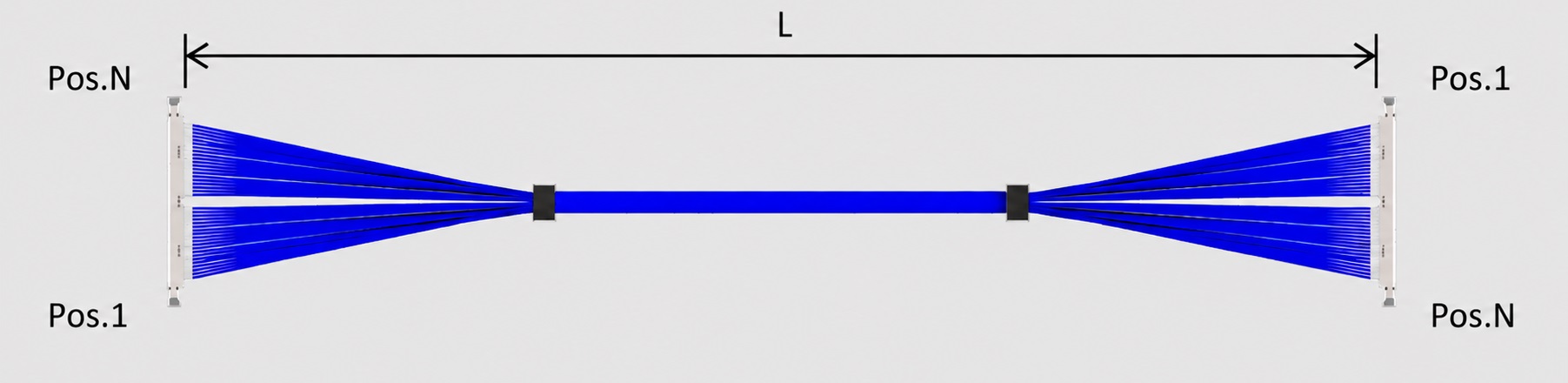
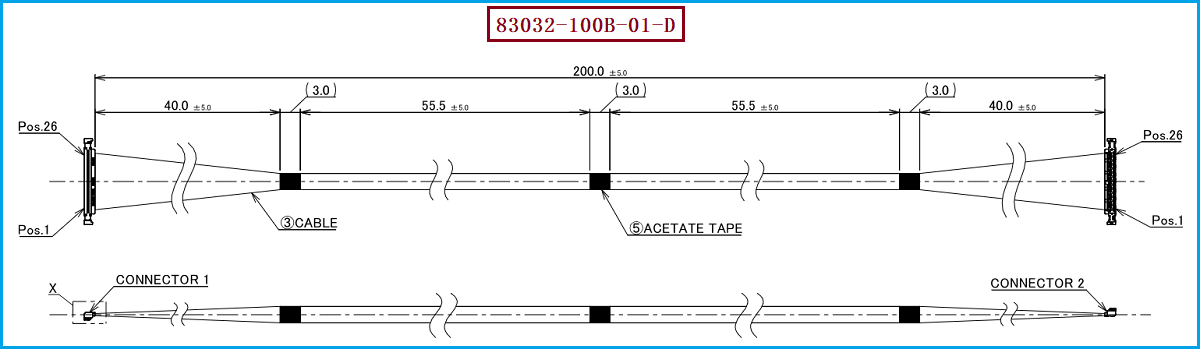
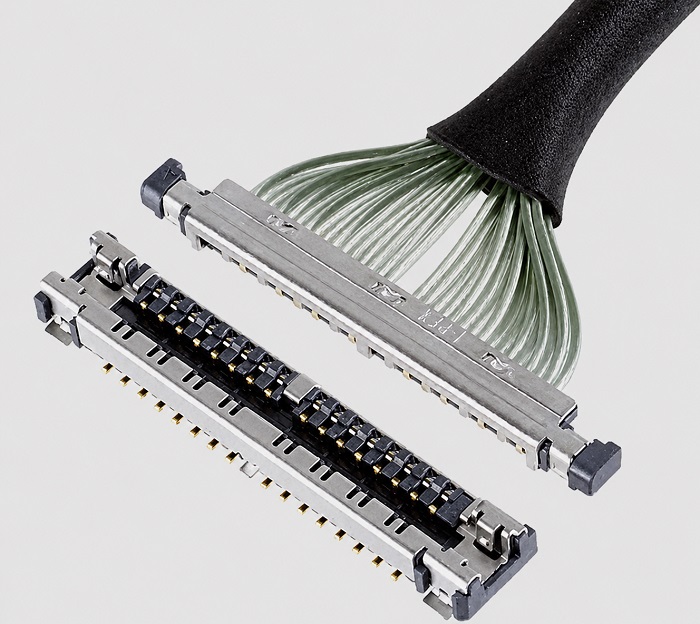
With the continuous development of laptops, ultra-thin display devices, camera modules, and small electronic devices towards thinness, high density, and high-speed signal transmission, internal connection cables of devices not only need to meet the wiring requirements within limited space but also need to consider signal integrity, connection reliability, and assembly compatibility. The I-PEX CABLINE-UA II series adopts a 0.3mm pin spacing, compact plug structure, and multi-point grounding design, which is suitable for high-speed signal connection scenarios with limited space. According to the corresponding product drawings, I-PEX 83032-100B-01-D is a 26Pin, 200mm-long ultra-thin coaxial cable, using AWG44 ultra-thin coaxial cable, and the mating connector model is 20497-026T-30. This series supports various pin number configurations and has connector structures suitable for miniaturized devices. For engineers, when choosing such cables, it is necessary to consider connector size, cable outlet direction, wire position definition, wire material outer diameter, and signal transmission requirements. For purchasers, clarifying complete material number, connector model, cable length, and wire gauge can help reduce selection errors and improve the efficiency of supply chain alternative evaluation.
How important is impedance control for ultra-fine coaxial cables? From the perspective of signal integrity, discuss cable selection.
In high-speed electronic devices, the impedance control of extremely fine coaxial cables is directly related to the quality of signal transmission. Impedance discontinuity can lead to signal reflection, which in turn affects waveform quality, increases the risk of bit errors, and reduces the design margin of high-speed links. The characteristic impedance of extremely fine coaxial cables mainly depends on the size of the central conductor, the insulating material and its dielectric properties, the structure of the shielding layer, and the geometric relationship between the layers. Therefore, it cannot be determined solely by the AWG wire gauge whether a cable meets the target impedance, nor can it be assumed that cables with the same wire diameter have the same high-frequency transmission performance. The I-PEX CABLINE-UA II series documentation lists applicable materials including AWG42, AWG44, and AWG46; its catalog also corresponds 45Ω applications with AWG42 or finer wire gauges, and 50Ω applications with AWG44 or finer wire gauges. For this 83032-100B-01-D (26Pin, 200mm, AWG44), engineers should confirm the impedance match by combining the actual cable specifications, target impedance, working frequency band, and whole machine interface requirements, and evaluate signal integrity through tests such as time-domain reflection (TDR), insertion loss, return loss, and crosstalk when necessary. Purchasers should pay attention to whether the supplier can provide clear cable specifications, impedance control requirements, and necessary test data, rather than just comparing the cable assembly unit price. Only by combining the cable structure, connector termination quality, and system-level signal verification can high-speed signal transmission risks be controlled more reliably.
Three, compatibility assessment for engineers and purchasers: not only to look at the interface, but also to pay attention to processing and verification
For enterprises developing new products, maintaining existing equipment, or seeking secondary supply sources, the compatibility of ultra-fine coaxial cable assemblies cannot be solely judged based on appearance similarity or pin count. Taking I-PEX 83032-100B-01-D as a reference, alternative solutions should focus on checking the CABLINE-UA II 26Pin connector configuration, wire end connector model 20497-026T-30, 200mm cable assembly length, AWG44 wire gauge, and the original specifications for wire position mapping and cable exit structure. At the same time, attention should also be paid to cable outer diameter, stripping length, termination and shielding treatment, fixed accessories, assembly space, and cable bending areas. For high-speed signal applications, it is recommended to complete appearance and size checks, line-by-line continuity tests, short-circuit checks at the sample stage, and conduct impedance, insertion loss, return loss, and crosstalk tests according to product requirements; if the product is used for shafts or moving parts, further verification of bending reliability in actual installation conditions should be carried out. Our company specializes in the production and manufacturing of ultra-fine coaxial cable assemblies and can assess connector matching, wire specifications, and cable structure based on the customer's product drawings, samples, and technical requirements. We provide I-PEX 83032-100B-01-D compatible cable assembly solutions to help customers conduct sample verification and supply chain alternative evaluation. The specific level of compatibility should be confirmed by actual material verification, sample testing, and customer acceptance results.
Four, selection and compatibility and alternative solutions reference and suggestions
During the selection stage, engineers are advised to first confirm that the target device uses the CABLINE-UA II 26Pin interface and verify the mating connector, installation space, and connection direction on the board side. Subsequently, based on the design requirements for high-speed signal interfaces, confirm the impedance, wire gauge, outer diameter, and required electrical performance of the extremely thin coaxial cable. For purchasers, the complete cable part number 83032-100B-01-D, cable end connector 20497-026T-30, length of 200mm, wire gauge AWG44, and wire position definition should be used as the basis for quotation and sample confirmation. At the same time, it is required that suppliers clearly state the material configuration, production inspection items, delivery standards, and test reports that can be provided. If existing products need to be localized, reduce procurement risks, or increase alternative suppliers, the original I-PEX product can be used as a reference benchmark. Alternative suppliers can conduct structural review, sample production, and electrical verification based on drawings and samples. Our company can provide: I-PEX 83032-100B-01-D compatible alternative cable solutions, for engineering development, sample verification, bulk procurement, and supply chain alternative needs, to assist customers in evaluating the matching situation between cable structure and performance. It should be emphasized that compatibility replacement does not mean direct interchange without verification. The final decision should be based on connector mating, size checking, wire sequence testing, and signal integrity testing results in actual application.
I-PEX 83032-100B-01-D is a 26Pin, 200mm, AWG44 ultra-thin coaxial cable assembly designed for compact high-speed signal connection applications. For engineers, impedance control, wire mapping, and electrical performance verification are crucial for ensuring signal integrity; for purchasers, complete model, connector configuration, quality standards, and supply stability are important criteria for evaluating alternative solutions. Our company can provide ultra-thin coaxial cable assembly compatibility evaluation and manufacturing services around this model, helping customers to expand supply options and improve procurement flexibility while meeting actual application requirements.
I am【7A Electronic Network】Specializing in the custom production of extremely thin coaxial cable assemblies and matching connectors, terminals, and board-to-board connectors. If you require a technical evaluation or project cooperation, please contact: Manager Zhang.18913228573 (WeChat number).
“Without the consent or authorization of this site, no one shall reproduce, reprint, distribute, cite, change, broadcast or publish the content in whole or in part in any form, nor shall there be any other violation of the copyright of this site.