


Categorization:Harness Component
A、10Pin ultra-fine structure design: ultra-fine coaxial cable solution for space-limited devices
Inside laptops, tablets, high-speed display modules, camera modules, and other highly integrated electronic devices, traditional wiring is increasingly difficult to meet the requirements of "miniaturization, high-speed signal transmission, and stable connection" simultaneously. Ultra-fine coaxial cables, with their smaller wire diameter, better signal isolation capability, and structural characteristics suitable for high-density connectors, are gradually becoming an important solution for internal connections in high-speed electronic devices.
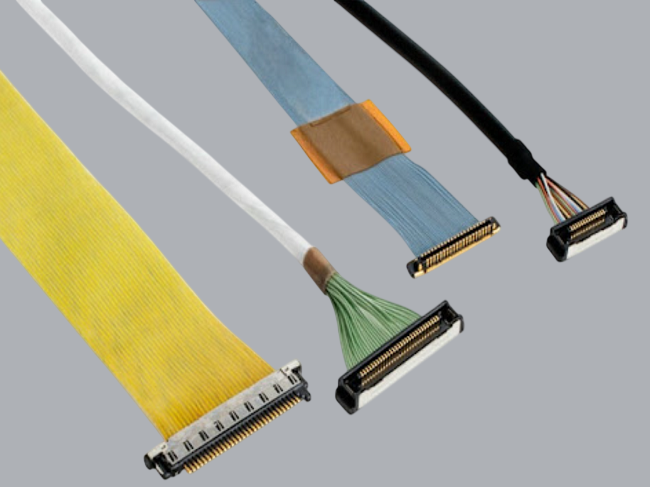
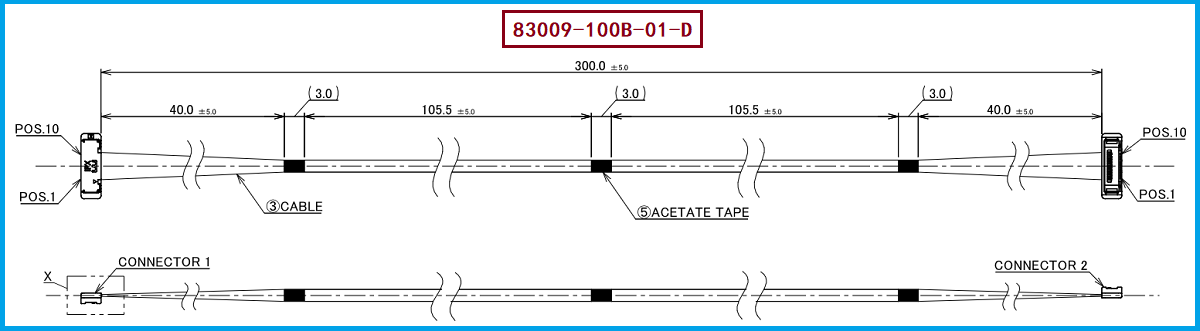
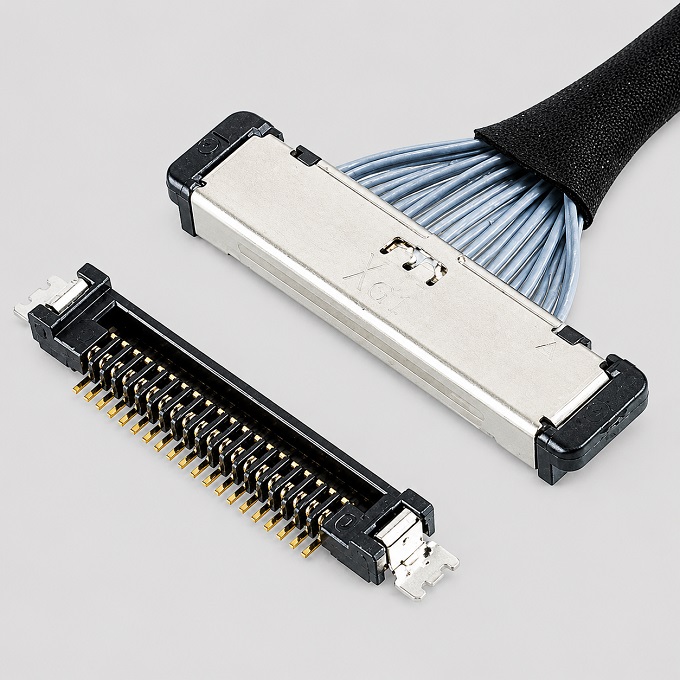
This product introduced corresponds to I-PEX 83009-100B-01-D and belongs to the CABLINE®-SS 10Pin ultra-fine coaxial cable solution. According to the product engineering drawing, this cable assembly uses 10 Micro-Coaxial Cables (ultra-fine coaxial cables), with wire specification of AWG #40 and characteristic impedance of 50Ω. The overall cable assembly length is 300.0±5.0mm, and both ends use the corresponding CABLINE®-SS connection structure. It is directly connected according to the 1--1 wire position definition. The connector model at the cable end is 20373-R10T-06, and the corresponding connector system also involves a metallic shielding cover and a board-end interlocking structure. Therefore, for alternative products, attention not only needs to be paid to the wire material itself, but also to the matching of the connector, the termination process, cable assembly size, and wiring structure.
For engineers, the key to such products is not simply "connecting 10 thin wires together," but ensuring that the wire harness is stably assembled within a limited space and maintains the required mechanical dimensions and electrical performance as much as possible; for procurement personnel, it is necessary to further confirm whether the alternative product can be developed to be compatible with the original material number's key specifications, thus reducing the time and cost pressure brought about by redesign, re-molding, and re-verification. Based on this, our company can provide an I-PEX 83009-100B-01-D compatible alternative wire harness solution, which can manufacture and develop ultra-thin coaxial wire harnesses according to the actual equipment structure and technical requirements of the customer.
Why AWG #40 Not Only Represents "The Wire Is Very Thin": Understanding the Relationship Between Conductor Structure and Electrical Performance
For extremely fine coaxial cables, "AWG #40" initially signifies a very small conductor specification. However, from an engineering design perspective, AWG is not merely a number describing the wire diameter; it is closely related to the conductor's resistance, current-carrying capacity, signal transmission characteristics, and the overall design of the coaxial structure. After the conductor size changes, the electrical characteristics such as resistance per unit length also change accordingly; at the same time, the geometric relationship between the conductor and the surrounding insulation layer and shielding layer also affects impedance and the performance of high-speed signal transmission.
The ultra-fine coaxial cable can be used for high-speed signal connections because it is not a single thin wire but rather a controlled transmission structure composed of parts such as the central conductor, insulating medium, and shielding structure. Taking this product as an example, the engineering drawing clearly specifies the use of AWG #40, 50Ω Micro-Coaxial Cable. Therefore, when making compatible replacements, one cannot simply pursue "the same as AWG #40". Instead, it is necessary to match and control the conductor size, insulating material, and structural dimensions from the overall coaxial structure. For high-speed signals, even if the outer dimensions are close, a significant change in the wire structure may lead to changes in impedance, thereby affecting signal integrity.
This is why engineers usually need to consider conductor specifications, characteristic impedance, line length, connector structure, and termination quality simultaneously when selecting extremely fine coaxial cable assemblies. The connector and the cable material actually form a complete high-speed transmission channel, rather than two separate components. The CABLINE®-SS series data shows that this connector uses a 0.4mm pitch and a miniaturized structure, and is designed for high-speed signal applications; while the engineering drawing of this model 83009-100B-01-D clearly corresponds to AWG #40, 50Ω ultra-fine coaxial cable. Therefore, for the development of alternative products, what truly needs to be controlled is the complete link from "cable conductor structure" to "connector termination," rather than just a single parameter.
Three, selection and compatibility and alternative solutions reference and suggestions: corresponding from material number, connector to wire position definition
For purchasers and R&D engineers, when selecting a compatible alternative product for the I-PEX 83009-100B-01-D, it is recommended to first establish a corresponding relationship based on the key identification information of the original product. This model is a CABLINE®-SS ultra-thin coaxial cable assembly with 10Pin, AWG #40, 50Ω, 300mm, and 1--1 wire position definition. The connector model used at the cable end is 20373-R10T-06. These information constitute the most basic technical boundaries for alternative selection. If the customer's equipment has already completed PCB and structural design, the matching relationship of the connectors, installation direction, cable exit direction, and terminal area size are particularly worth focusing on.
In the actual process of alternative development, it is important to note that "same series connectors" and "same specific harness part number" are not entirely the same concepts. The CABLINE®-SS series covers various specifications such as 10Pin, 14Pin, 20Pin, 30Pin, 32Pin, 35Pin, 40Pin, and 50Pin, and there are harness products with different lengths and wire sequences. Therefore, if the customer's actual requirement corresponds to 83009-100B-01-D, the alternative product should prioritize matching its 10Pin structure, AWG #40 wire, 50Ω impedance, 300mm length, and 1--1 straight-through wire position, and cannot be directly judged as completely compatible simply because "they are all CABLINE®-SS."
From the perspective of the supply chain, purchasing personnel can further pay attention to whether the alternative manufacturers have the stable processing capability of extremely fine coaxial cables, the precision termination capability at the connector end, and the consistency of mass production. Especially for the extremely fine specification of AWG #40, the material handling, stripping, termination, complete line, and fixing processes will all affect the consistency of the final product. Our company focuses on the production and manufacturing of extremely fine coaxial cable assemblies and can provide compatible alternative cable assembly solutions around I-PEX 83009-100B-01-D. We can also technically confirm the pin count, cable length, wire position definition, connector configuration, and cable assembly structure according to the actual application needs of the customer, providing corresponding cable assembly manufacturing solutions for research and development verification and bulk procurement.
Four, Engineering Verification and Bulk Procurement: From "Alternative" to Further Focus on Stability and Consistency
For engineers, whether a very thin coaxial cable bundle is suitable as a substitute product ultimately needs to be verified through actual application. In addition to the basic pin count, cable length, connector, and wire position definitions, the cable assembly and electrical performance should also be verified in combination with the internal space of the device, installation method, signal type, and actual working environment. Especially in high-speed signal applications, the impedance control of the cable material and the termination quality of the connector need to be evaluated as a whole; for extremely thin coaxial cables, the relationship between the conductor structure, the insulating medium, and the shielding structure also determines its transmission performance.
For procurement personnel, it is advisable to further evaluate from the perspectives of bulk supply capability, specification consistency, delivery time, and alternative import costs. An ideal compatibility alternative is not simply to find a "similar-looking" product, but rather to ensure that the product can enter the research and development verification, sample testing, and subsequent bulk procurement process on the basis of meeting the original application requirements of the customer. Therefore, when introducing alternative products, it is recommended to verify the samples according to the actual project requirements in terms of structural dimensions, connector matching, wire sequence, electrical performance, and overall assembly.
Based on the capability of manufacturing extremely fine coaxial cable assemblies, our company can provide a compatible alternative cable assembly solution for the I-PEX 83009-100B-01-D, with corresponding development for the 10Pin, AWG #40, 50Ω, 300mm, 1-1 wire position definition, and the 20373-R10T-06 connector configuration. For R&D teams and procurement departments looking for alternative suppliers for I-PEX specification ultra-fine coaxial cable assemblies, the original part number and engineering drawings can be used as the basis for technical communication. Our company will carry out sample making, specification confirmation, and mass production according to the actual project requirements.
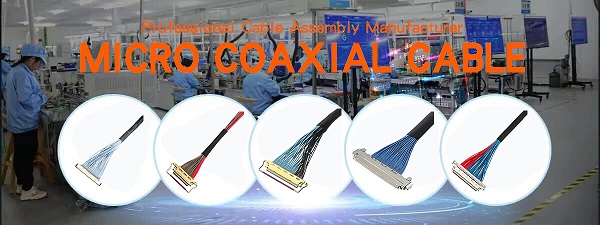
I-PEX 83009-100B-01-D is a 10Pin ultra-fine coaxial cable assembly with defined specifications, featuring an AWG #40 Micro-Coaxial Cable, 50Ω characteristic impedance, 300mm cable length, a 1-1 straight-through line position, and a 20373-R10T-06 cable connector. For engineers, the focus of substitution development is not only on size and connector matching, but also on the relationship between the ultra-fine coaxial conductor structure, impedance, and high-speed signal transmission; for purchasers, it is necessary to consider product compatibility, manufacturing consistency, and bulk supply capabilities.
I am【7A Electronic Network】Devoted to the compatibility, substitution, and mass production support of extremely thin coaxial cable assemblies for high-speed interfaces and precision connectors, for project consultation, please contact: Manager Zhang18913228573 (WeChat same number).
“Without the consent or authorization of this site, no one shall reproduce, reprint, distribute, cite, change, broadcast or publish the content in whole or in part in any form, nor shall there be any other violation of the copyright of this site.