


Categorization:Harness Component
Ultra-thin coaxial cable束 for high-speed image equipment: From Sony IMX to MIPI high-speed signal transmission
With industrial cameras, machine vision, intelligent terminals, medical imaging, AR/VR, automotive vision, and high-performance camera equipment continuously developing towards higher resolution, higher frame rates, and miniaturization, Sony IMX series image sensors often need to transmit image data to processors, ISPs, or SoCs through high-speed camera interfaces such as MIPI CSI-2 in actual product design. MIPI CSI-2 itself is a high-speed image transmission interface for image sensors to application processors, therefore, when connecting the image sensor to the motherboard, it is not only necessary to pay attention to "whether it can conduct", but also more important to focus on engineering factors such as impedance, crosstalk, EMI, loss, connection reliability, and spatial dimensions during the high-speed differential signal transmission process.
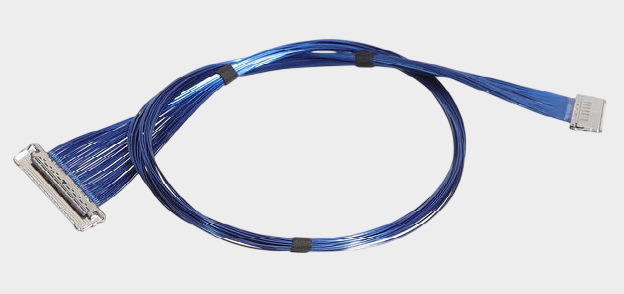
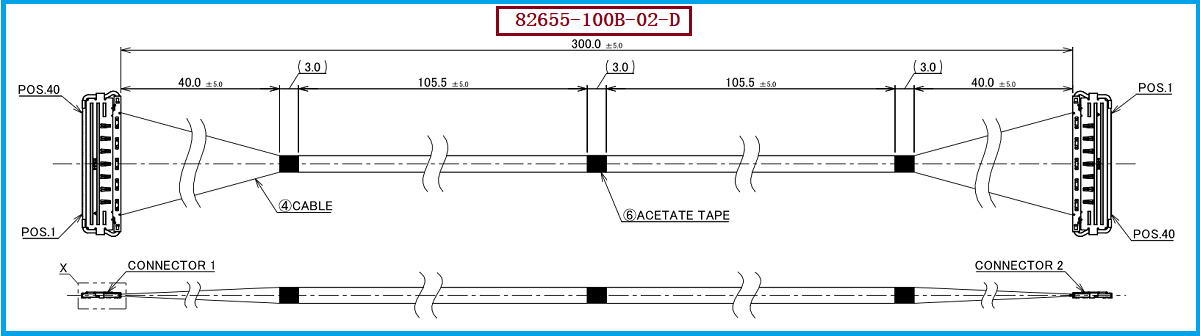
For high-speed camera equipment using Sony IMX series sensors, the value of the extremely fine coaxial cable assembly lies in its ability to reliably interconnect high-speed signals within limited internal space. Taking the I-PEX 82655-100B-02-D as a reference, this model belongs to the CABLINE-CA II 40Pin micro-coaxial cable assembly. The official specifications indicate it as 40AWG Micro-Coaxial, 40Pin, L=300mm, 1-N. The connector model used at the cable end is 20680-040T-01, corresponding to a 40Pin Plug Housing. For projects that require domestication, supply chain optimization, or second supplier introduction, compatibility and alternative design can be centered around the existing connector interface, cable specifications, cable length, Pin definition, and assembly structure.
From the perspective of high-speed signal engineering, ultra-thin coaxial cables are not simply made finer by ordinary wires, but rather form a more controlled high-speed signal transmission channel through the structure of central conductor, insulating layer, and shielding layer. For MIPI high-speed differential signals, the structural consistency, manufacturing process, and connector termination quality of the cable assembly will all affect the final signal integrity. Therefore, in the Sony IMX + MIPI CSI-2 application, cable suppliers not only need to be able to produce "ultra-thin" wires but also need to have the ability to terminate, shield, control size, and maintain consistency in the manufacturing of high-speed micro coaxial cable assemblies.
II-PEX 82655-100B-02-D compatible alternative: 40Pin, 300mm and AWG36~44 wire selection
From the perspective of engineering substitution, the I-PEX 82655-100B-02-D can serve as the core reference model for this scheme. The product adopts the 40Pin CABLINE-CA II series connector structure, with the official standard documentation corresponding to 40AWG Micro-Coaxial Cable, 300mm, 1-N configuration. The connector model at the wire end is 20680-040T-01, while the CABLINE-CA II official documentation indicates that this series of micro-coaxial connectors can correspond to wire specifications such as 36AWG, 38AWG, 40AWG, 42AWG, 44AWG, etc. It is particularly important to note that the I-PEX official page has marked a characteristic impedance mismatch reminder for AWG44, therefore, actual high-speed signal projects cannot solely rely on the "AWG can be assembled" judgment to determine whether it is suitable for the final MIPI application. Instead, it should be confirmed by combining the specific wire structure, impedance, and SI test results.
For engineers, when replacing a design that uses a very thin 40AWG coaxial cable, the first step should be to confirm that the connector specifications and cable outer diameter match. Next, it is necessary to verify the cable length, Pin-to-Pin definition, shielding structure, bending path, and overall assembly space of the entire machine. If the project has higher mechanical strength or current carrying requirements, it is also possible to further evaluate specifications such as 36AWG, 38AWG, or 42AWG based on actual applications. However, it should not be simply understood that "thicker or thinner wire diameter is always more suitable for high-speed MIPI." The actual selection still needs to be judged comprehensively based on transmission speed, cable length, wiring environment, impedance control, and overall SI/EMC requirements.
For purchasing personnel, I-PEX 82655-100B-02-D is not only a purchasing part number but also a technical benchmark when looking for domestic compatible alternative suppliers. Our company focuses on the production and manufacturing of extremely thin coaxial cable assemblies, and can conduct engineering evaluations on connectors, AWG wire materials, cable length, pin definitions, termination processes, and appearance structures based on the customer's original I-PEX cable specifications. We provide配套 services from sample making, small batch verification, to mass production. Our company can provide: I-PEX 82655-100B-02-D compatible alternative cable assembly solutions, helping customers reduce the risk of a single supply source and providing cable end solutions for domestic substitution and supply chain optimization.
Three, Selection and Compatibility and Alternative Solutions Reference and Recommendations: How do engineers and purchasers judge whether it is truly "compatible"?
In actual projects, "same connector model" does not necessarily mean that the entire harness can be directly replaced. For the compatible alternative of I-PEX 82655-100B-02-D, it is recommended that engineers and procurement personnel confirm the connector, wire, length, Pin definition, and mechanical structure as a whole. Firstly, it is necessary to confirm whether the wire end connector is consistent with the original design or has a clear mechanical compatibility; secondly, confirm the specification of the micro-coaxial wire material used, as the current documentation for this connector series supports 36AWG, 38AWG, 40AWG, 42AWG, 44AWG, among which 40AWG is the official standard configuration for the original 82655-100B-02-D.
If the application scenario is the high-speed MIPI transmission of Sony IMX image sensors, it is recommended to focus on signal integrity during the replacement verification phase rather than just conducting ordinary conduction tests. MIPI CSI-2 is a high-speed image interface, so the replacement cable should combine specific platform requirements for high-speed signal verification such as eye diagrams, impedance, insertion loss/reflection loss, and crosstalk. At the same time, the connector shielding, grounding paths, and overall EMC performance of the entire machine should also be evaluated. CABLINE-CA II itself adopts ZenShield full shielding and multi-point grounding design, and is designed for high-speed data transmission and EMI suppression. Official documentation indicates that it is suitable for high-speed data transmission applications up to 32 Gbps/lane.
In terms of compatible alternative solutions, if the customer's original design, PCB Footprint, connector mating relationship, and cable space are all based on CABLINE-CA II, it is recommended to prioritize the use of connectors from the same series for cable end replacement to reduce the risk of PCB end redesign. If the customer wishes to further modify the cable length, AWG, or wire exit direction, it is suggested to conduct a special engineering confirmation based on the original model instead of directly using raw material numbers. For procurement, it is recommended to provide key conditions such as I-PEX 82655-100B-02-D, connector 20680-040T-01, 40AWG, 300mm, 40Pin, 1-N during pricing inquiries, so that different suppliers can quote and sample under the same technical standards, thereby avoiding procurement risks where "prices are the same but actual specifications differ."
Four, from sample verification to mass production: creating a feasible alternative solution for ultra-fine coaxial cable束
For high-speed camera modules, machine vision equipment, and products using Sony IMX image sensors, the consistency in manufacturing of extremely fine coaxial cables, although they are part of the connection components, may directly affect the stability of the high-speed signal chain. Therefore, a truly engineering-valuable alternative solution is not just to provide a visually similar cable, but to establish a complete manufacturing and inspection system around connector assembly, extremely fine coaxial cable termination, shielding treatment, cable length control, Pin definition, appearance dimensions, and batch consistency.
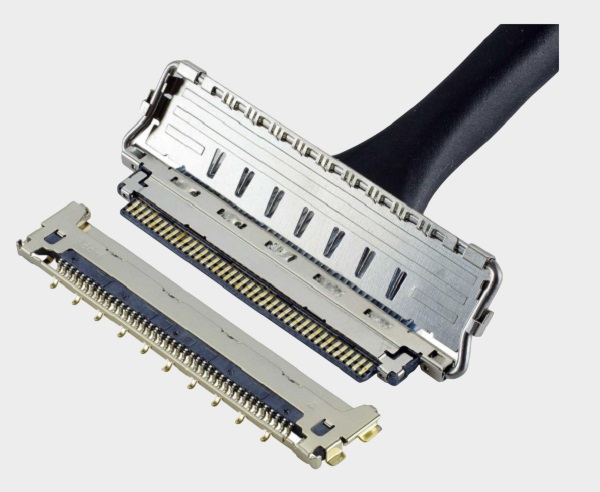
I-PEX official data shows that CABLINE-CA II uses a 0.4 mm pitch, horizontal insertion and removal structure, and provides mechanical lock and full shielding design; the 40Pin version corresponds to Plug Housing 20680-040T-01, while the official standard Harness explicitly includes 82655-100B-02-D: 40Pin, 40AWG Micro-Coaxial, 300mm, 1-N. For customers looking for domestic alternatives, second suppliers, or custom cable assembly manufacturers, this model can be used as an initial technical reference. Our company will conduct sample evaluation based on the actual equipment structure and high-speed transmission requirements of the customer.
Our company specializes in the production and manufacturing of ultra-fine coaxial cable assemblies, providing micro coaxial cable compatible alternative and customized manufacturing services for high-speed camera, machine vision, display and other high-density electronic equipment. For devices using the Sony IMX + MIPI high-speed image transmission architecture, we can cooperate with customers for engineering confirmation from aspects such as wire AWG, connector matching, cable length, pin definition, shielding structure, and assembly dimensions, and gradually introduce mass production based on sample verification. Our company can provide I-PEX 82655-100B-02-D compatible alternative cable assembly solutions, offering customers more flexible choices for ultra-fine coaxial cable supply.
In the high-speed MIPI data link between Sony IMX image sensors and main control SoC/ISP, the extremely thin coaxial cable bundle plays a crucial physical interconnection role. Taking I-PEX 82655-100B-02-D as a reference, its core configuration is 40Pin, 40AWG Micro-Coaxial, 300mm, 1-N, with the cable end using 20680-040T-01, and the corresponding CABLINE-CA II series connectors can be matched with 36AWG, 38AWG, 40AWG, 42AWG, 44AWG micro coaxial cables. For engineers, the focus is on confirming mechanical, electrical, and high-speed signal integrity; for procurement personnel, the key is to ensure that the alternative products truly match specifications, interfaces, processes, and batch consistency. Therefore, if your project is using or planning to replace I-PEX 82655-100B-02-D, especially for Sony IMX high-speed MIPI camera systems, you can use the original part number as a technical reference baseline and further confirm specific cables, connectors, lengths, and termination requirements with our extremely thin coaxial cable engineering team to obtain compatible alternative solutions tailored to the actual project needs.
I am[7A Electronic Network]Committed to the compatibility, replacement, and mass production support of ultra-fine coaxial cable assemblies for high-speed interfaces and precision connectors, please contact: Manager Zhang for project consultation.18913228573 (WeChat number).
“Without the consent or authorization of this site, no one shall reproduce, reprint, distribute, cite, change, broadcast or publish the content in whole or in part in any form, nor shall there be any other violation of the copyright of this site.